
New Guide: Using Battlefield Evidence in Atrocity Crime Cases
A practical guide by ULAG and Lexpat Global Services to help investigators, prosecutors, and the military work more effectively with battlefield evidence in atrocity crime cases.
When investigating and prosecuting grave violations committed in the course of Russia's war against Ukraine, access to evidence remains among the most serious challenges. A significant share of the potential evidence is located on the battlefield — in the form of weapons, documents, reconnaissance data, digital information, remnants of strikes, and the testimony of those who witnessed violations firsthand. Military personnel are often the first — and sometimes the only ones — to reach these sites. That gives them a unique and consequential role in the pursuit of accountability.
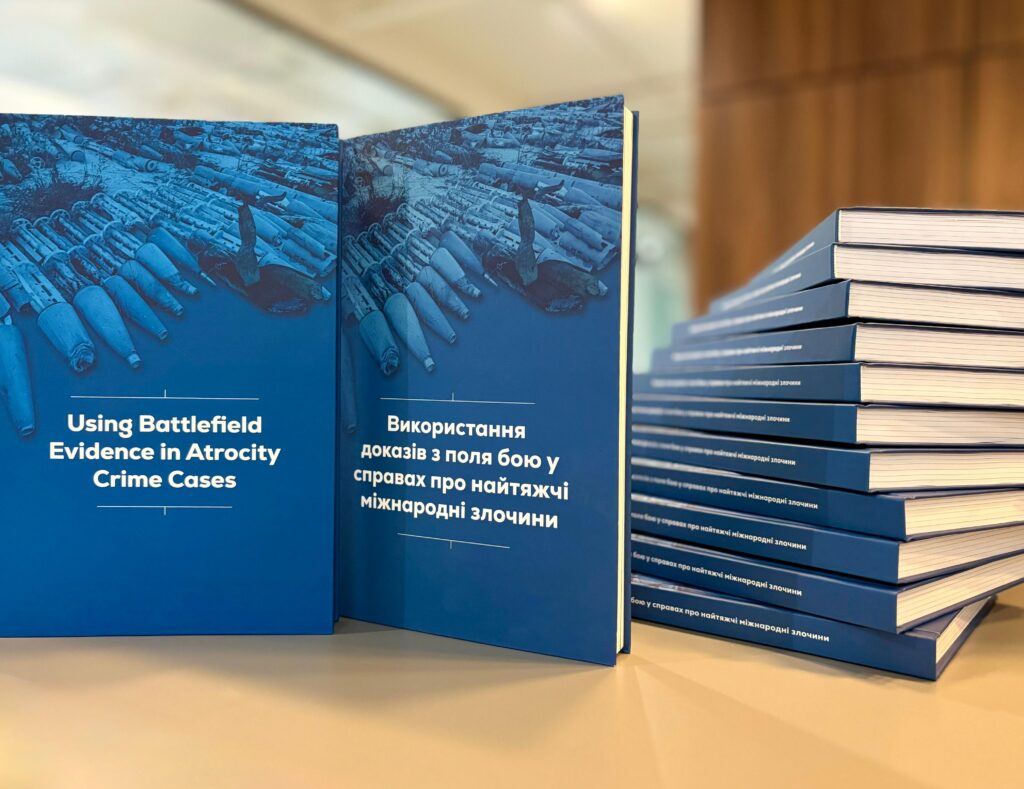
The Guide Using Battlefield Evidence in Atrocity Crime Cases, prepared by the Ukrainian Legal Advisory Group (ULAG) and Lexpat Global Services, was prepared to support this effort.
The Guide treats battlefield evidence (BE) as part of a broader landscape. Mindful that the military's primary responsibility is national defense, not criminal investigation, the Guide aims to enhance the impact they can make in advancing accountability, including as a means to protect soldiers and advance military and national aims.
The Guide provides practical guidance for the collection and preservation of different types of battlefield evidence, be it physical evidence, digital data including open-source intelligence (OSINT), or a person's testimony.
It illustrates that when collected and used properly, BE can help bring perpetrators of grave crimes to account before domestic and international courts — corroborating other evidence, establishing command responsibility, identifying perpetrators, and documenting patterns of conduct essential for international crimes prosecution.
As general editor Gyunduz Mamedov writes in the Foreword: "The quality of evidence we collect today will determine the quality of justice tomorrow. Every fragment, every photograph, every report is a brick in the foundation of future verdicts against war criminals."
Consequently, it is essential that law enforcement and justice sector professionals work together with military personnel to ensure that evidence is professionally and reliably collected, stored, preserved, and eventually shared to build the strongest cases.
The Guide is grounded in international law and good practices[AP1] . It is also mindful of Ukrainian realities, limitations of the current practice, and domestic legislation. The document provides concrete recommendations for legal and institutional reform, actions to be taken by the Defence Forces of Ukraine, as well as steps to improve the evidence collection process — important to ensure a proper realisation of the potential battlefield evidence has.
Its authors bring together expertise in international humanitarian law, international criminal law, experience in international tribunals, digital forensics, and Ukrainian criminal law and procedure, as well as military service — including direct experience in advancing IHL compliance and documentation of violations in Ukraine and other contexts.
The document was developed with input from representatives of the Office of the Prosecutor General, the National Police, the Security Service of Ukraine, and military experts — through interviews and consultations carried out during the preparation process. It also includes practical annexes: reporting tables for IHL violations, chain-of-custody forms, and guidelines on battlefield evidence collection.
The Guide has been endorsed by the Ministry of Defence of Ukraine and the Security Service of Ukraine for use in departmental educational institutions and professional training systems.
It is available in Ukrainian and English.
The document was prepared and produced by the Ukrainian Legal Advisory Group (ULAG) and Lexpat Global Services with support of the U.S. Embassy Kyiv. The views of the authors do not necessarily reflect the official position of the U.S. Government.