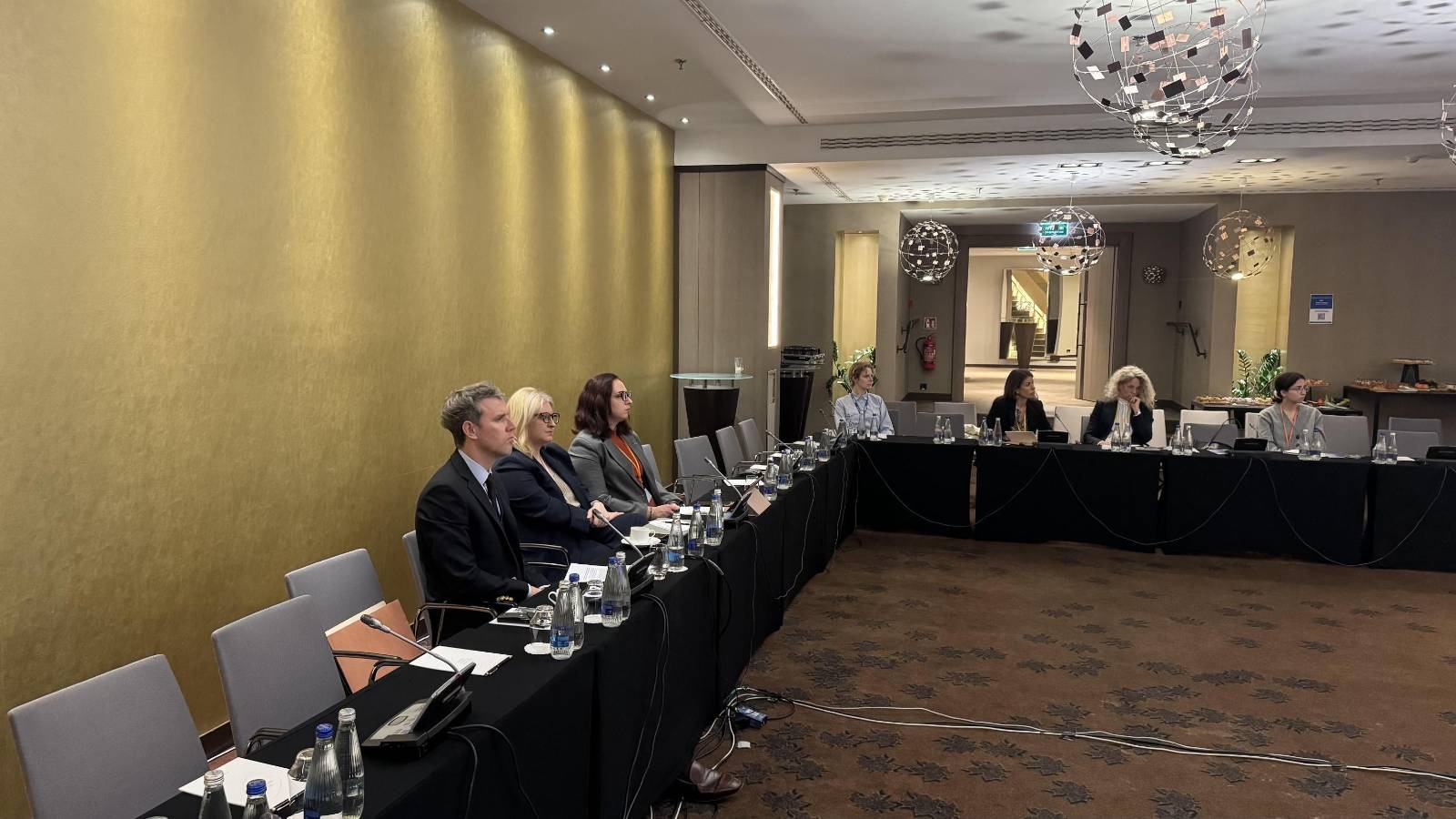
What would a comprehensive state policy on justice for grave international crimes look like, and why does Ukraine need one now?
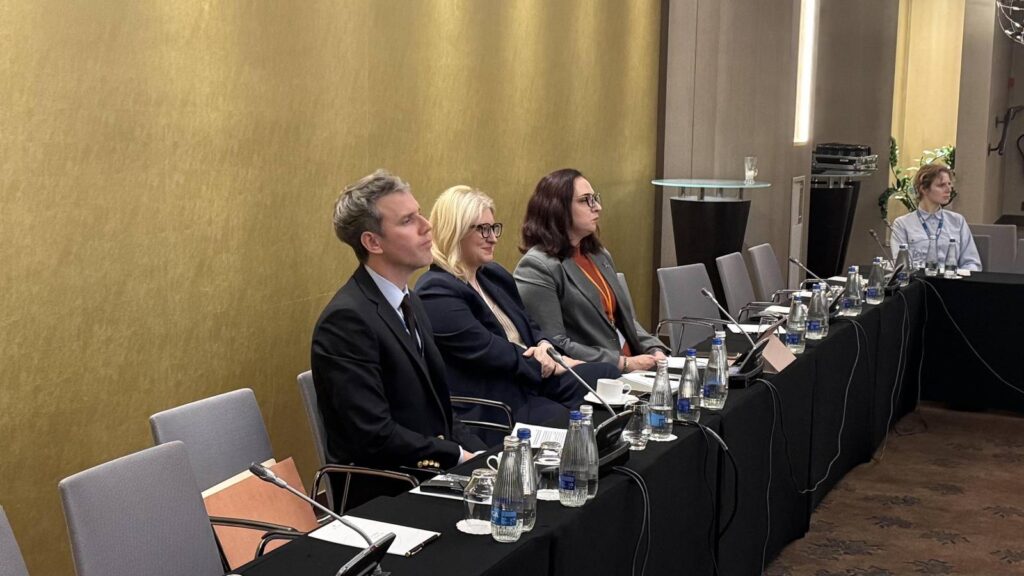
These questions were discussed on 8 October at a side event of the Warsaw Human Dimension Conference 2026 (WHDC), co-organised by ULAG and Civil Rights Defenders. The panellists were Alina Pavliuk (ULAG), Onysiia Syniuk (Human Rights Centre ZMINA), Denys Lysenko (Office of the Prosecutor General), Ivan Dulkai (National Police of Ukraine) and Tinna Goletiani (PravoJustice4EU). The moderator was Christopher D. Russell (OSCE ODIHR).
Ukraine faces an unprecedented challenge: delivering meaningful justice for grave crimes committed in the context of an armed conflict. The domestic system still has legislative and institutional obstacles to overcome so that it can do this in line with international standards, especially given the scale and gravity of the violations. A fundamental problem is the lack of trust among the public and among victims, whose engagement and participation in proceedings are crucial. Responses to these challenges, and reforms meant to strengthen the system, remain fragmented. They need a broader strategic approach at the state level.
Years of efforts by Ukraine’s justice system to prosecute grave international crimes have shown that this work requires a comprehensive approach, said Alina Pavliuk, Legal Coordinator and Analyst at ULAG.
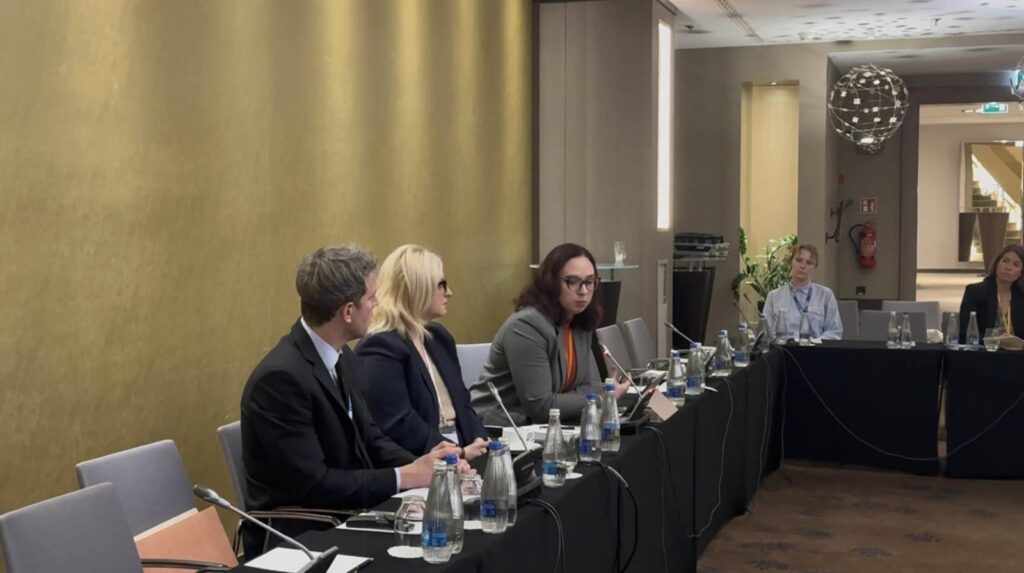
“A first step has already been taken: the prosecution and investigative authorities have developed strategies for addressing the consequences of the war. But the lack of clear case law remains a challenge. It cannot take shape without guidance from the Supreme Court, and the Supreme Court basically does not receive cases in this category,” the ULAG analyst noted during the discussion.
Legislative changes to close existing gaps are also moving too slowly. A state-level vision could drive the development of solutions and build the political will to adopt them.
Engaging other mechanisms also requires systematic cooperation. This applies to the International Criminal Court, the Special Tribunal for the Crime of Aggression and universal jurisdiction. Such cooperation needs to happen at the level of domestic authorities and to have the backing of the state as a whole.
Alina Pavliuk concluded:
“All these elements are currently scattered. They should be brought together in a single strategic document. Such a document would guarantee the stable functioning of the domestic justice system for grave international crimes and institutional support for the approaches developed so far.”
Overcoming challenges beyond the control of individual institutions and improving cooperation between them
In their remarks, the representatives of the National Police and the Office of the Prosecutor General said they support developing a unified state policy on justice for grave crimes.
Ukraine needs a strategic, state-level vision of justice for war-related crimes, says Denys Lysenko, Deputy Head of the Department for Combating Crimes Committed in Armed Conflict at the Office of the Prosecutor General. That vision should engage other key state bodies alongside the justice institutions, both in carrying out tasks and in overcoming shared challenges.
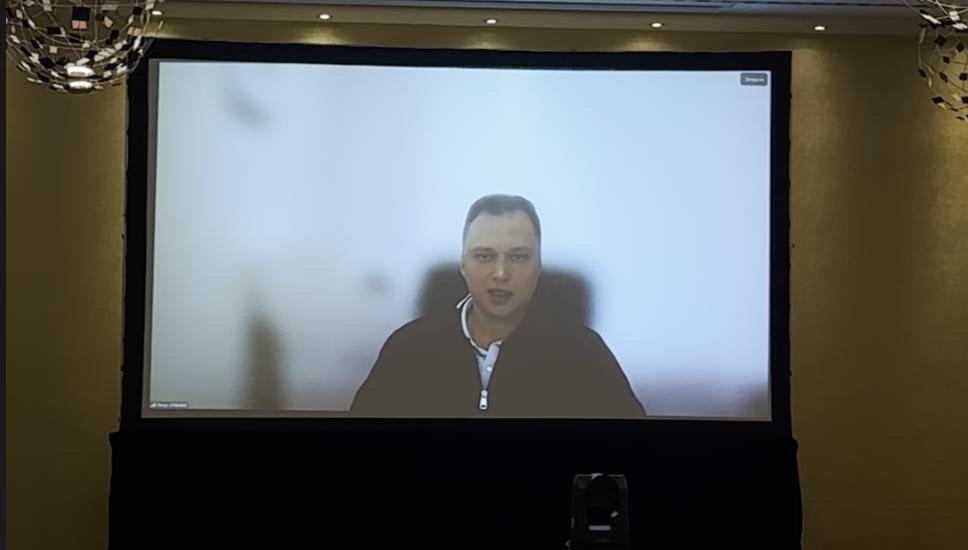
While developing its updated strategy for prosecuting international crimes, the Office of the Prosecutor General identified several issues that go beyond the prosecution service’s mandate and cannot be resolved through interagency coordination alone. Examples include building the capacity of forensic expert institutions and strengthening the involvement of military command and intelligence bodies.
“We raise these issues with other bodies, but a coordinated joint document that obliged everyone to move in the same direction would be far more effective,” Denys Lysenko said during the discussion.
He also stressed that state policy should go beyond pre-trial investigation. It should cover other areas affected by Russia’s aggression and take transitional justice approaches into account.
Ivan Dulkai, Senior Investigator at the Main Investigation Department of the National Police of Ukraine, highlighted practical challenges the National Police can overcome on its own and those beyond its competence. One example is documenting crimes in the temporarily occupied territories, which investigators cannot access. In such cases, the police look for alternative routes, such as interviewing witnesses and gathering open-source information (OSINT).
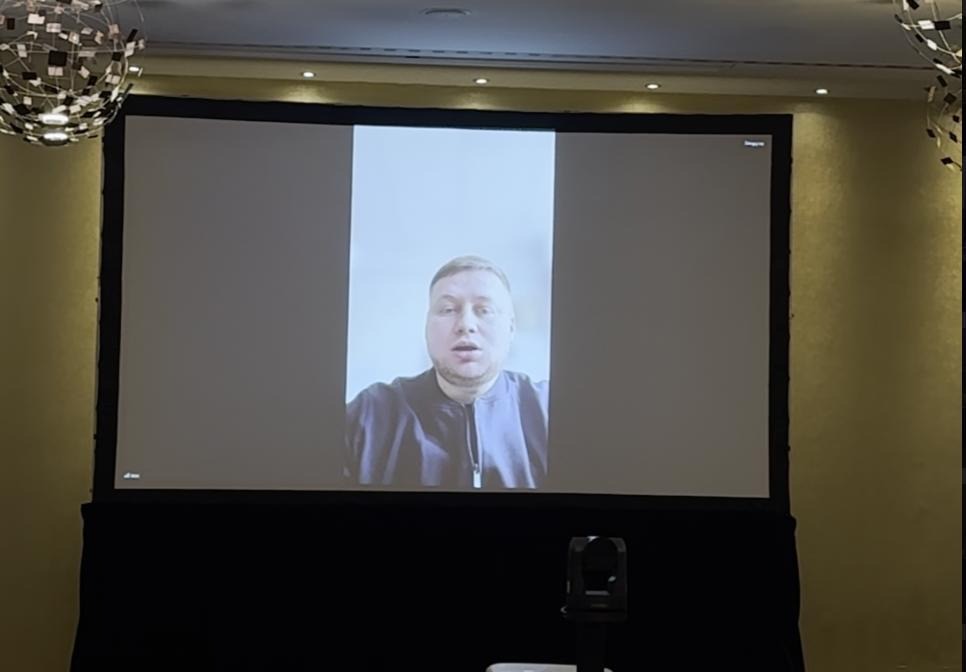
One pressing problem in cases involving grave crimes is the limits of the international mechanisms on locating and arresting perpetrators. Current Interpol’s procedures for issuing wanted notices make it basically impossible to secure the arrest of those responsible for grave crimes. Neither investigative bodies nor Ukraine as a whole can change these procedures alone. Doing so requires the involvement of the wider international community.
He also agreed that domestic legislation must be brought into line with international criminal and international humanitarian law.
Onysiia Syniuk, Head of Research Department at the Human Rights Centre ZMINA, spoke about three questions: how to align different justice tracks, how to define the responsibilities of state institutions, and how to make approaches to accountability for international crimes sustainable.
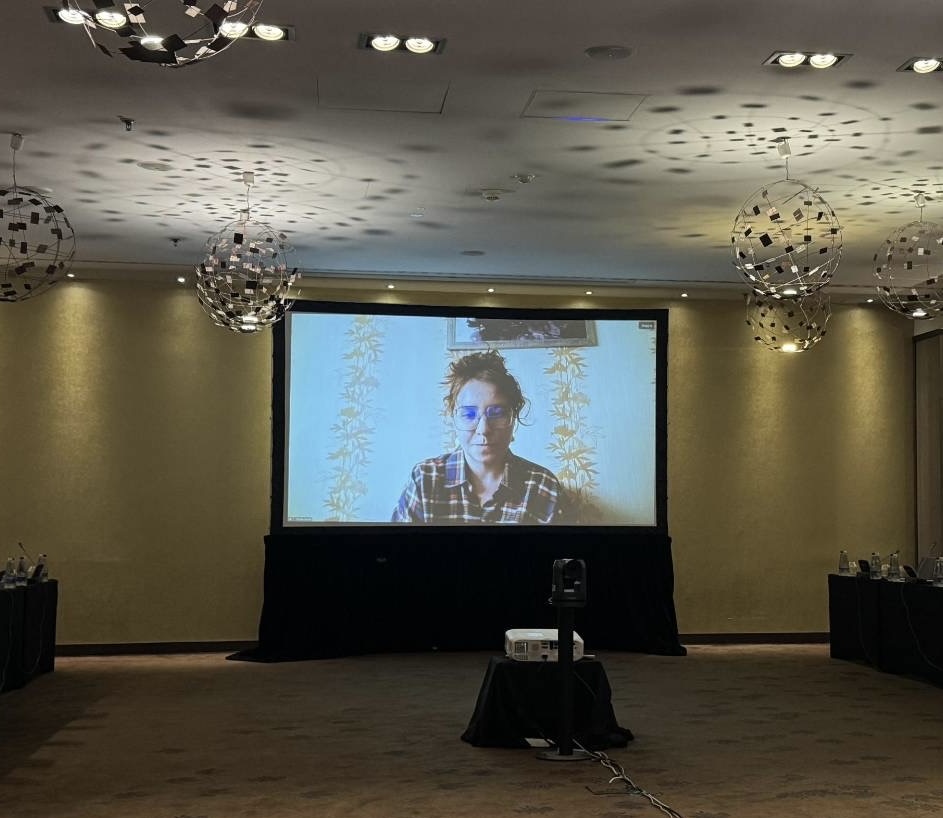
Several areas of policy should reinforce one another, she argued, even though each has its own objectives. These are policy on accountability for international crimes, transitional justice, broader human rights policy and EU integration reforms.
In her view, the approach to transitional justice must reflect the real capacity of the criminal justice system. That means knowing which crimes it can cover, how many proceedings will be conducted in absentia, and how many cases will reach a verdict.
Syniuk also noted that Ukraine’s justice system often develops its practice separately for different crimes recorded during the armed conflict, even though they share common challenges. For example, the prosecution of international crimes overlaps with the prosecution of crimes against national security. Both concern events in the occupied territories. They also involve the same categories of victims and witnesses, who take part in different proceedings for these types of crimes.
Without a clear state vision, she said, several things remain unclear: who is responsible for specific areas of work, what powers state bodies need, and who should coordinate the various institutions and assess progress.
Tinna Goletiani, Head of the Accountability for International Crimes and Transitional Justice Pillar at PravoJustice4EU concluded:
“A unified approach to accountability must be established at the level of state policy, and this will demonstrate the political will to deliver such justice.”
In her view, Ukraine already has examples of horizontal strategies that reflect the priorities of individual institutions but do not set out a vision at the state level. State policy on justice for grave international crimes should not be a formality. It should rest on a concrete vision for how it will be implemented. That means building links and cooperation between institutions and promoting a shared understanding of the core principles. She also stressed that both civil society and international assistance have an important role to play in this process.
* * *
An analysis of the state of justice processes shows the need for a coordinated, strategic vision backed by genuine political will. This is one of the recommendations of ULAG’s report “Needs Assessment of Ukraine’s Justice System”.
This year, developing a state policy was also named as one of the key recommendations of the Dialogue Group on Accountability for International Crimes Committed in Ukraine. The platform brings together key stakeholders: domestic authorities, international organisations and civil society organisations. ULAG is a member of the Dialogue Group and co-chairs Workstream 4 (Supporting Civil Society in Accountability).
To support these efforts, ULAG has set up an expert group to develop a vision for such a state policy. The group brings together representatives of a number of civil society organisations and is supported by NED.
Read next
News
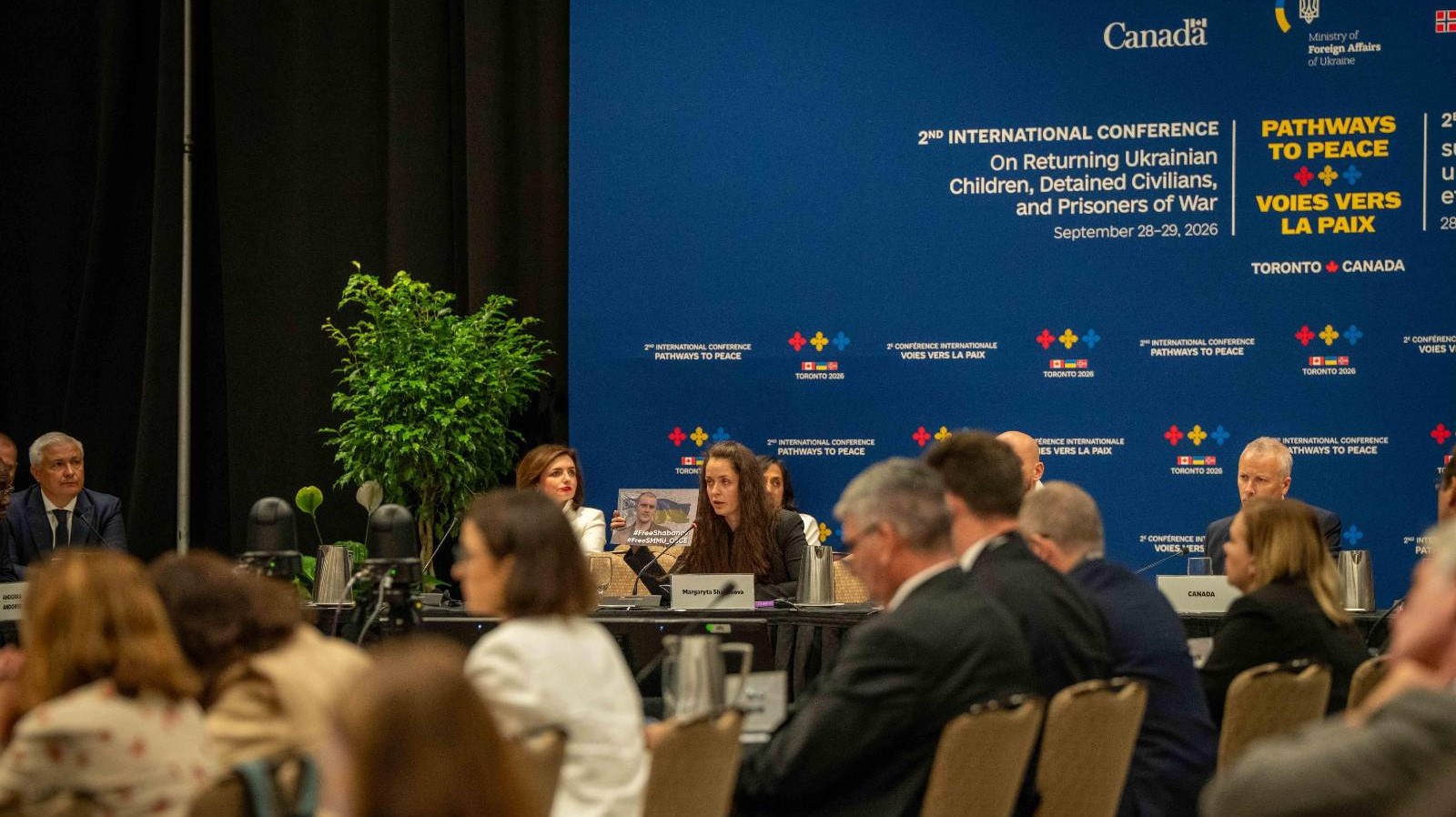
Toronto Conference: Seeking Pathways for the Return of All Ukrainians, Including Detained OSCE Staff
At a high-level conference in Toronto on 28–29 September, the case of three detained OSCE staff members, Dmytro Shabanov, Maksym Petrov and Vadym Golda, was part of the discussion on effective pathways for the return of Ukrainian civilians, prisoners of war and children.
News
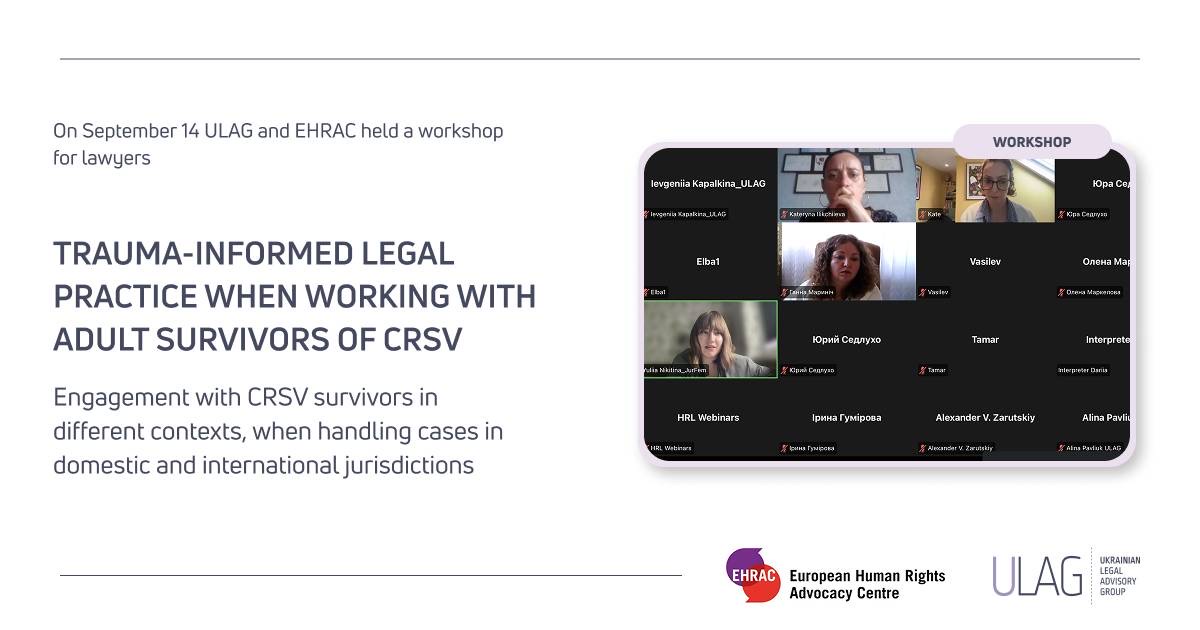
Workshop for lawyers: trauma-informed legal practice when working with adult survivors of CRSV
On September 14, the European Human Rights Advocacy Centre (EHRAC) and ULAG held a joint workshop for lawyers working with adult survivors of conflict-related sexual violence (CRSV).
Articles
The voices of Ukrainians must be heard
The letter was published in May 2026 on the website of our long-time partner ECCHR, in the Living Open Archive section. It is a collection of personal impressions and stories from ECCHR staff and partners about the projects they work on, the injustices and contexts they experience, and the world they envision. They share intimate reflections in letters to their colleagues, allies, and the world.