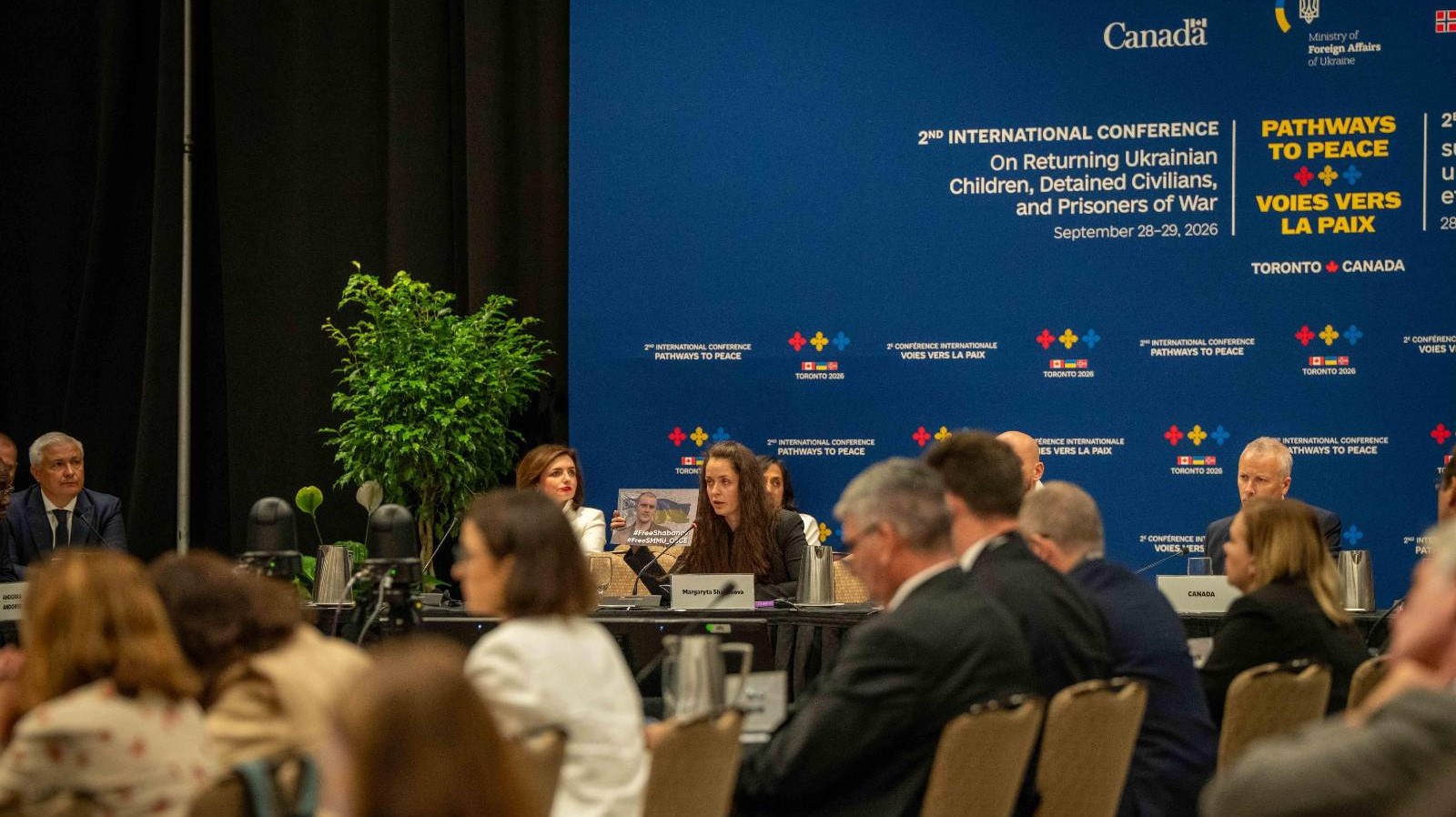
At a high-level conference in Toronto on 28–29 September, the case of three detained OSCE staff members, Dmytro Shabanov, Maksym Petrov and Vadym Golda, was part of the discussion on effective pathways for the return of Ukrainian civilians, prisoners of war and children.
The three are Ukrainian citizens and staff members of the OSCE Special Monitoring Mission (SMM) to Ukraine. They were unlawfully detained in 2022 and later convicted by Russian-controlled so-called “L/DPR”. Their ongoing detention reflects Russia’s systemic policy of arbitrary deprivation of liberty, often accompanied by ill-treatment, torture, sham prosecution and other grave violations of international humanitarian law and international human rights law.
The event, “Pathways to Peace: Second International Conference on Returning Ukrainian Children, Detained Civilians, and Prisoners of War”, was co-organised by Canada, Ukraine and Norway. Foreign ministers and senior officials from states and international organisations came together to discuss practical steps for the return of POWs, civilians and children, and for their support and reintegration.
Margaryta Shabanova, the wife of Dmytro Shabanov, was one of four Ukrainian survivors and affected persons given the floor to share their stories during the plenary session.
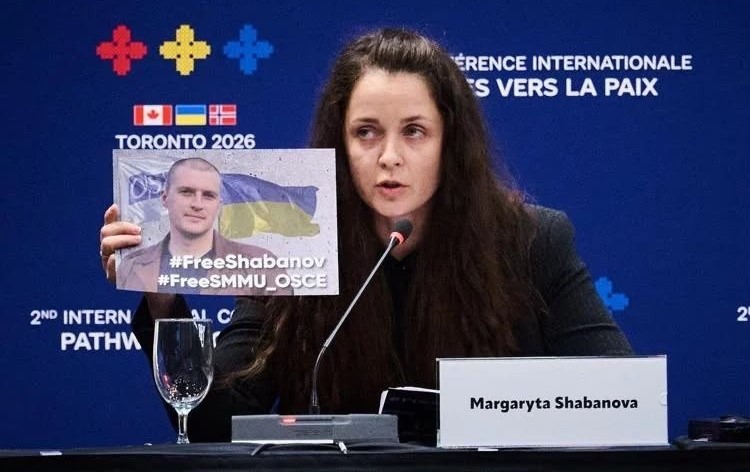
She spoke about what it has been like to live through Dmytro’s captivity, and in particular about the first months after he was detained:
“My Dima was held incommunicado for three months. The first proof I had that he was even still alive was a video circulated by Russian media in July 2022 — my beloved Dima was emaciated, hollow-cheeked, his T-shirt was torn. That is how I, his wife, found out — three months after he was illegally taken — that my husband is alive.”
Among other points, Margaryta also argued that the release of all civilians is a prerequisite for lasting peace in Ukraine, and that the detention of OSCE staff reaches beyond one case:
“Today we are saying my Dima’s name. Tomorrow it could be the name of a staff member serving on any mission, in any country, under any flag or mandate… The staff being unlawfully detained is a threat to the credibility of all monitoring missions; it does not bring confidence to talks about ceasefires or peace deals in Ukraine, and beyond.”
Margaryta ended her speech with the following:
“The aims of this conference are exactly what is needed: better documentation, real humanitarian access, removal of barriers to return, sustained diplomatic engagement, and support for survivors after release. These are not abstract goals. They are the difference between my husband coming home or disappearing further into Siberia. That is my life. That has been my life for over four years and counting today, being present at this Conference it is already 1,627 days of my Dima’s unjust detention. I ask every government, every organization, every expert in this room: let this conference produce not only conclusions, but commitments — practical steps, with owners and timelines, that will not stop until my Dima, and his colleagues are home, and all unlawfully detained civilians are free.”
The OSCE was represented at the conference by, among others, Nancy Faeser of the OSCE Parliamentary Assembly’s Parliamentary Support Team for Ukraine (PSTU) and Kate Fearon, Director of the Conflict Prevention Centre (CPC). In their remarks they also mentioned the detained OSCE staff members and the efforts to achieve their release.
Fearon described the conditions in which the three men are held and the risk those conditions pose to their lives. Dmytro and Maksym were first held in Luhansk. For over a year now they have been held thousands of kilometres from their families, in the east of the Russian Federation, frequently in solitary confinement. Maksym has food allergies and cannot eat much of the food he is given, and the OSCE does not know whether he receives the medicine he needs. Vadym is still held in the Donbas region, and the OSCE fears he too may be moved to the Russian Federation imminently.
The OSCE has worked for the men’s release through diplomatic channels, but Fearon said this has not yet delivered the result the organisation and the families need. She therefore renewed the OSCE’s call for help to the states engaged in negotiation or mediation on prisoner swaps and releases, a sign that the OSCE sees the case as one that needs joint effort:
“Please include our three names – Vadym, Maksym, Dmytro – on any list you are creating, on any initiative you are making. Please do not forget them.”
During her visit, Margaryta Shabanova met Canada’s Minister of Foreign Affairs Anita Anand, Ukraine’s Minister of Social Policy Denys Uliutin, Deputy Minister of Foreign Affairs Mariana Betsa, and Dmytro Ponomarenko, Ukraine’s Ambassador-at-Large for the release of prisoners and civilians. These meetings help keep the efforts of all parties coordinated and open further routes to the detainees’ release.
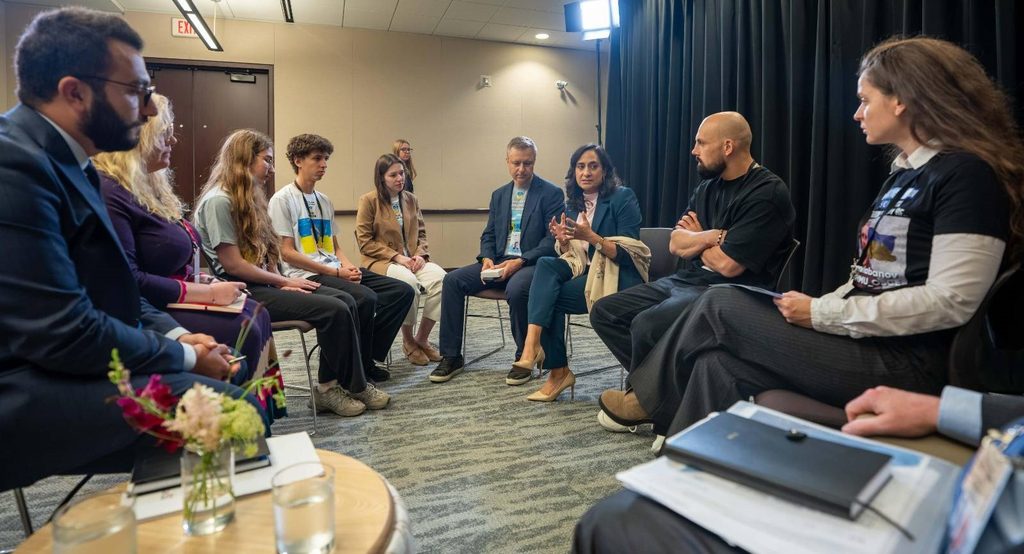
When discussing concrete instruments on advancing the release of civilians, Alona Lunova, Advocacy Director of Human Rights Centre ZMINA, mentioned the idea of grouping people on existing lists and identifying members of the international coalition that could take responsibility for their return. Among the priority groups mentioned were medical workers, older women and OSCE representatives.
The conference ended with the Toronto Pledge, signed by 54 states and organisations. It reaffirms the commitment to act for all those still in detention and captivity.
ULAG represents the families of Dmytro and Maxim and supports efforts to secure the release of all three staff members. We hope the calls made at the conference will translate into concrete steps that bring the detained staff closer to coming home.
Read next
News
Workshop for lawyers: trauma-informed legal practice when working with adult survivors of CRSV
On September 14, the European Human Rights Advocacy Centre (EHRAC) and ULAG held a joint workshop for lawyers working with adult survivors of conflict-related sexual violence (CRSV).
Articles
The voices of Ukrainians must be heard
The letter was published in May 2026 on the website of our long-time partner ECCHR, in the Living Open Archive section. It is a collection of personal impressions and stories from ECCHR staff and partners about the projects they work on, the injustices and contexts they experience, and the world they envision. They share intimate reflections in letters to their colleagues, allies, and the world.
Articles
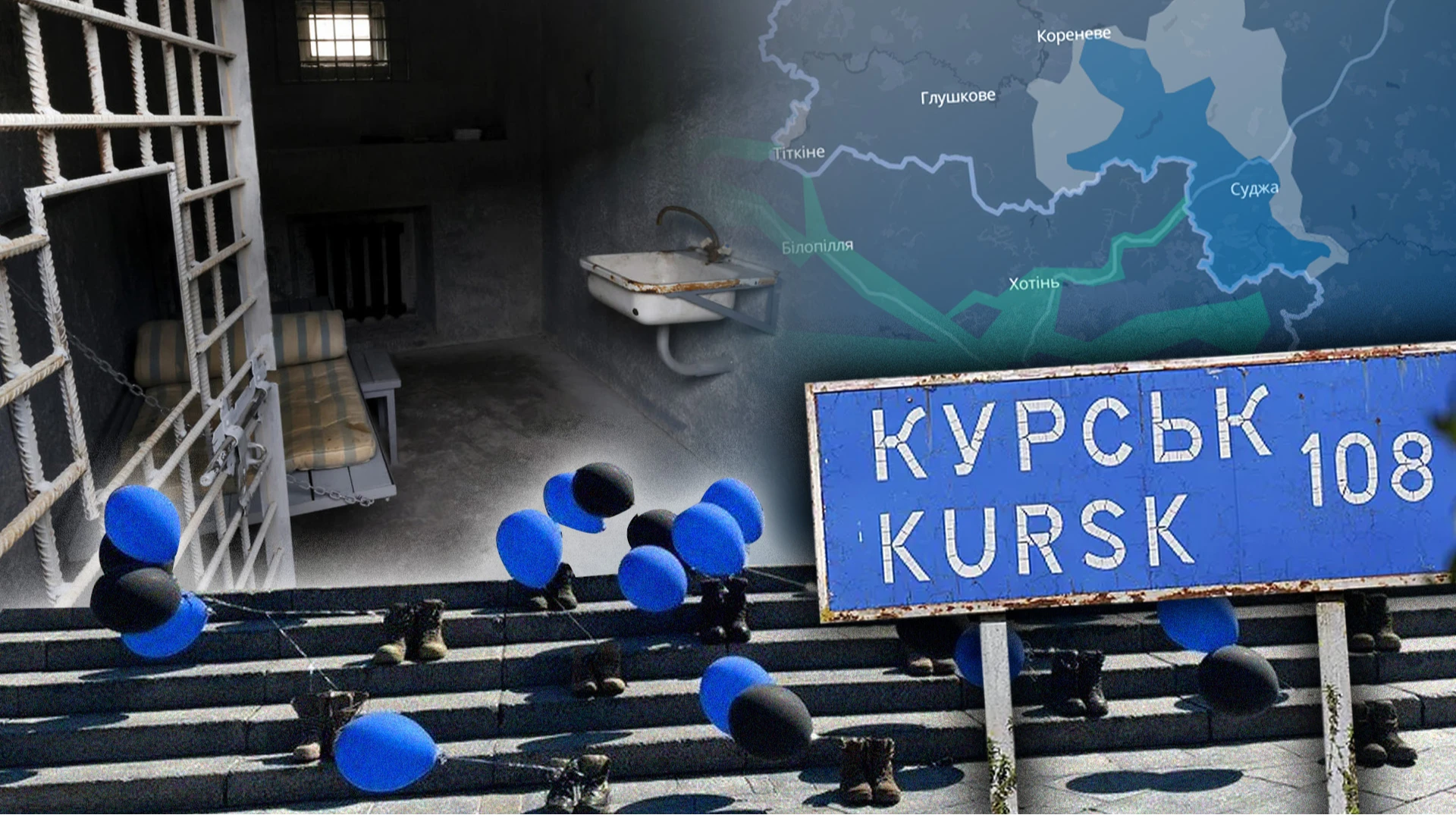
Prisoners of War Tried as Terrorists: What Is Happening to Ukrainian Soldiers Captured in Russia’s Kursk Region
The number of Ukrainians captured by Russian forces in the Kursk region remains hidden by the fog of war and defenders may be considered missing in action for months before suddenly appearing in photographs posted on Telegram channels alongside other prisoners of war. Or, conversely, families may search those same channels every day for any trace of their loved one, only to one day receive the devastating news of their death.