Case prioritisation is essential for the quality investigation and prosecution of grave international crimes committed in the context of Russia’s war against Ukraine.
More than 240,000 proceedings have been registered since the full-scale invasion. Covering such a volume of violations simultaneously is impossible — but ultimately, decisions about which crimes are investigated first must be made in a clear and well-reasoned manner.
Sound prioritisation can improve the effectiveness of investigations and prosecutions (resource allocation, evidence building, and more), as well as affect the expectations of survivors and their motivation to participate in justice processes. The Office of the Prosecutor General’s strategy for international crimes prosecution for 2026–2028 also identifies prioritisation as one of its key tools.
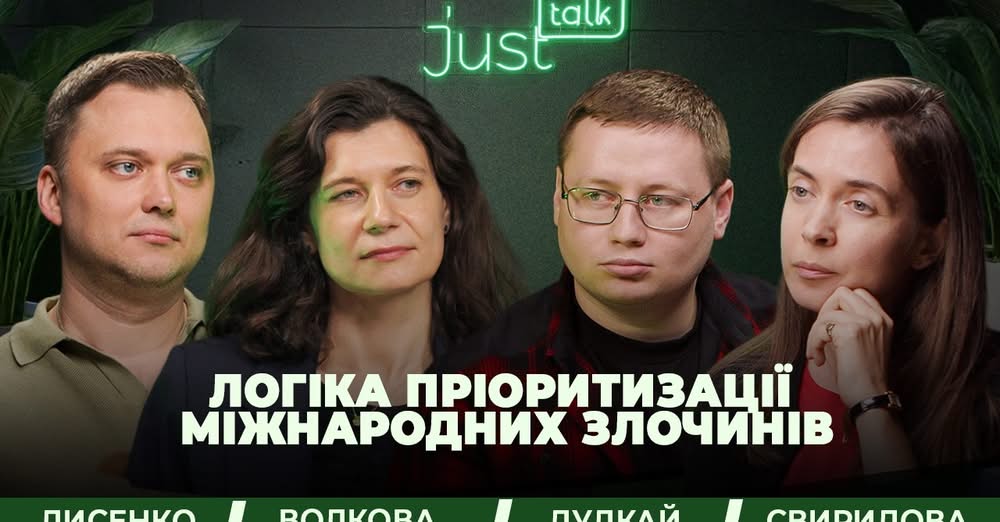
Nadia Volkova, Director of ULAG, along with Denys Lysenko (War Crimes Department, OPG) and Ivan Dulkai (Main Investigation Department, NPU), and Daria Svyrydova, ULAG Board Member, as a moderator, discussed possible approaches and challenges in setting priorities in cases concerning grave international crimes on the JustTalk Context podcast.
What prioritisation looks like
Nadia emphasised that it is important to keep in mind the capabilities and limitations of different mechanisms, including the ICC and cases under the principle of universal jurisdiction. In the practice of individual countries, the approach often involves a combination of factors: available resources, the evidence base, prospects for the arrest of suspects, public interest — which may also be influenced by political considerations. These criteria are not unique and can be applied to different conflicts, partly because the challenges and context in which crimes are committed are often similar.
“The more applied and concrete experience we build now, the more we help others [in other situations] to refine it. And while it has not yet been developed — for example, regarding how to work with such a volume of crimes as we have — we can draw on the experience that exists and improve it,” Nadia said.
Engagement with survivors
It is equally important to communicate case prioritisation meaningfully to survivors themselves. Civil society plays an important role in this process — speaking with survivors and explaining how particular mechanisms work. At the same time, it cannot replace the responsible bodies and the state, those who make the decisions.
“We have the experience of working with the ICC in this area. It can serve as a lesson worth learning from. They basically delegated communication with victims in Ukraine entirely to civil society. And there lies a problem. To the extent that we can communicate and explain the nuances of investigations, of how the ICC works — we do that. Sometimes a person wants their case to be the priority so badly that they refuse to listen to us, because we are an intermediary. What I think matters enormously here is having a direct bridge… with the investigating body, the prosecution. We want people to be proactive, engage with the investigating authorities. To that end maintaining interest and a certain level of engagement with them is very important. This needs to be a matter of state policy — prioritising the interests of survivors, and building and restoring trust through transparent communication.”
An interesting point of reference here may be the ongoing discussions around the status and participation of survivors in the Special Tribunal for the Crime of Aggression against Ukraine, where the answer to this question is yet to be found.
Watch the full episode (in Ukrainian): https://youtu.be/yTkNRwOCccg?si=QUemqwAK_UaeEn0G
Read next
Articles
The voices of Ukrainians must be heard
The letter was published in May 2026 on the website of our long-time partner ECCHR, in the Living Open Archive section. It is a collection of personal impressions and stories from ECCHR staff and partners about the projects they work on, the injustices and contexts they experience, and the world they envision. They share intimate reflections in letters to their colleagues, allies, and the world.
Articles
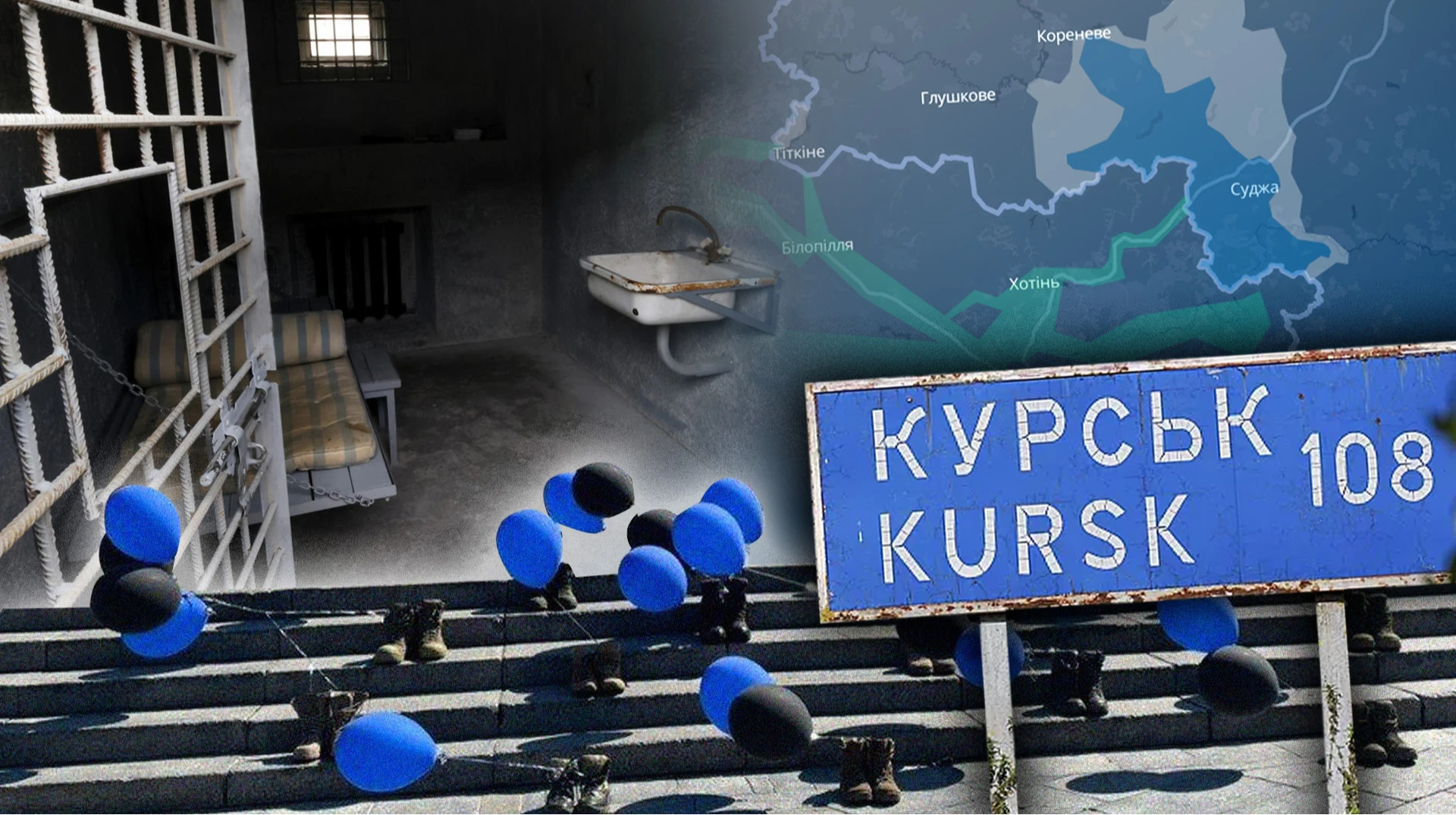
Prisoners of War Tried as Terrorists: What Is Happening to Ukrainian Soldiers Captured in Russia’s Kursk Region
The number of Ukrainians captured by Russian forces in the Kursk region remains hidden by the fog of war and defenders may be considered missing in action for months before suddenly appearing in photographs posted on Telegram channels alongside other prisoners of war. Or, conversely, families may search those same channels every day for any trace of their loved one, only to one day receive the devastating news of their death.
Articles
ECtHR Case Law on the Consequences of the Armed Conflict in Ukraine: The Detention of Ukrainian Troops at the Chornobyl Nuclear Power Plant
At the start of Russia’s full-scale invasion, one of the primary objectives of the Russian armed forces was to seize control of the Chornobyl Nuclear Power Plant (ChNPP). In February 2022, Russian troops occupied the facility and detained everyone there, including both civilian personnel responsible for maintaining the operation of the plant and members of the National Guard of Ukraine (NGU), who were responsible for the facility’s security.