We continued representing victims of grave crimes in strategic litigation cases and amplifying their voices across various jurisdictions and fora, while also engaging with other international mechanisms and conducting case-related advocacy.
Following the European Court of Human Rights’s 2025 inter-state judgment, the Court is now working through thousands of individual cases. ULAG currently has overall 180+ cases before the ECtHR — 16 were communicated in 2025, with significantly more expected this year.
However, last year the worrying trend has grown: while legal representation and strategic litigation evidently matters for survivors of grave crimes, sustaining it is becoming harder as donor interest in this area fades.
Beyond litigation, we worked to ensure survivors could meaningfully participate in justice-related conversations and advocacy processes.
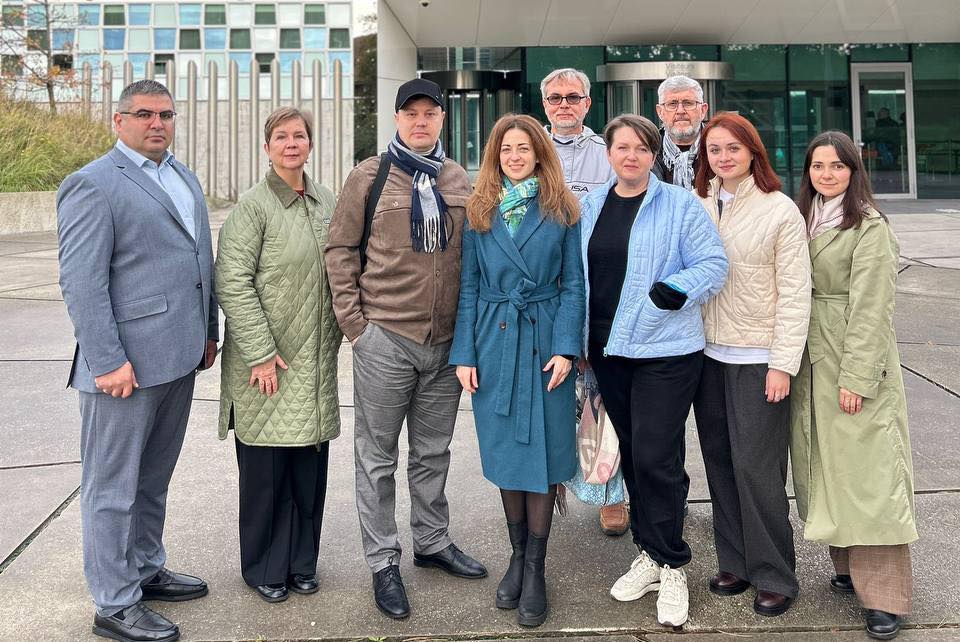
Among the activities that advanced this goal was The Hague Delegation. We partnered with REDRESS to engage a group of survivor organisations’ representatives on international justice advocacy issues through preparatory meetings on justice mechanisms and strategy, culminating in an advocacy trip to The Hague in October. Participants met with ICC units, state delegations, and the Register of Damage for Ukraine, followed by coordination on joint advocacy.
We continued to initiate and contribute to discussions, working groups, reform processes, advocacy and other efforts aimed at strengthening and defending justice mechanisms domestically and internationally.
At the end of 2025 we made progress on several efforts advancing this goal — ones we have shared relatively little about so far.
To advance the understanding and practice on battlefield evidence, we have finalised the Guide “Using Battlefield Evidence in Atrocity Crime Cases”. Produced with LexPat Global Services, this guide addresses how investigators, prosecutors, and the military can better coordinate when working with battlefield evidence. Grounded in the Ukrainian context, it promotes good practices drawn from international law and experience, offering a comprehensive approach to BE in the context of strengthening international justice and improving IHL compliance. The Guide will be publicly presented and distributed among the relevant stakeholders in the first half of 2026.
On November 27–28, we co-organised a two-day workshop with the Coalition for the ICC “In Pursuit of Comprehensive Justice for Ukraine: ICC’s Role in the Overall Justice Architecture”, bringing together civil society, international and Ukrainian experts, ICC representatives, and Ukrainian government officials to examine the justice architecture in depth — from domestic capacity to victim participation, ICC cooperation, and fair trial rights.
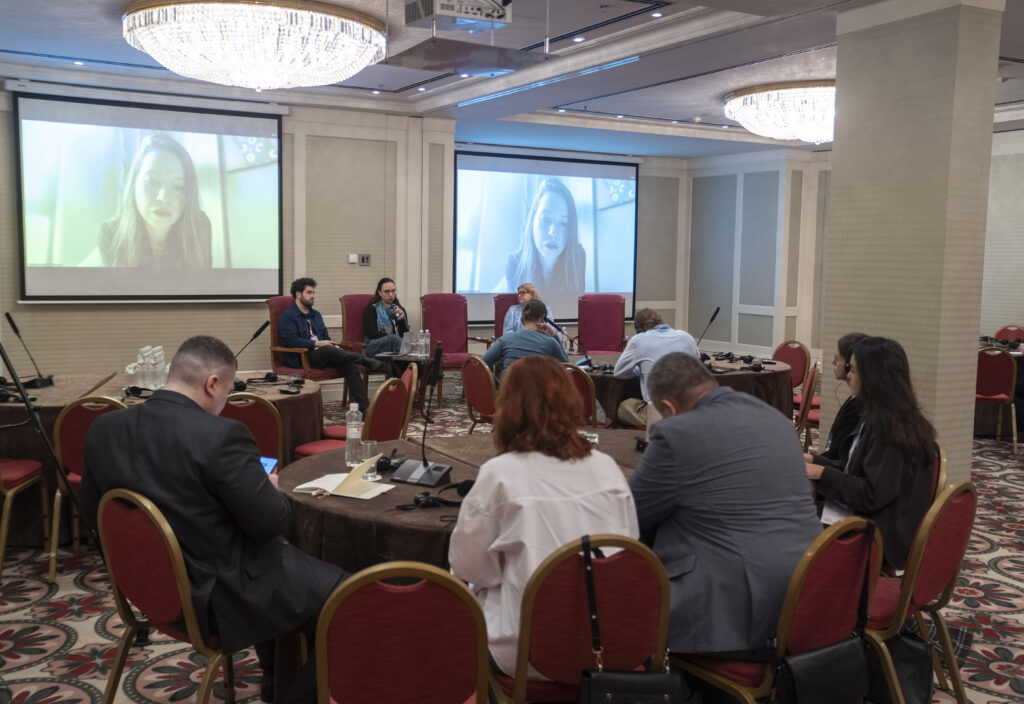
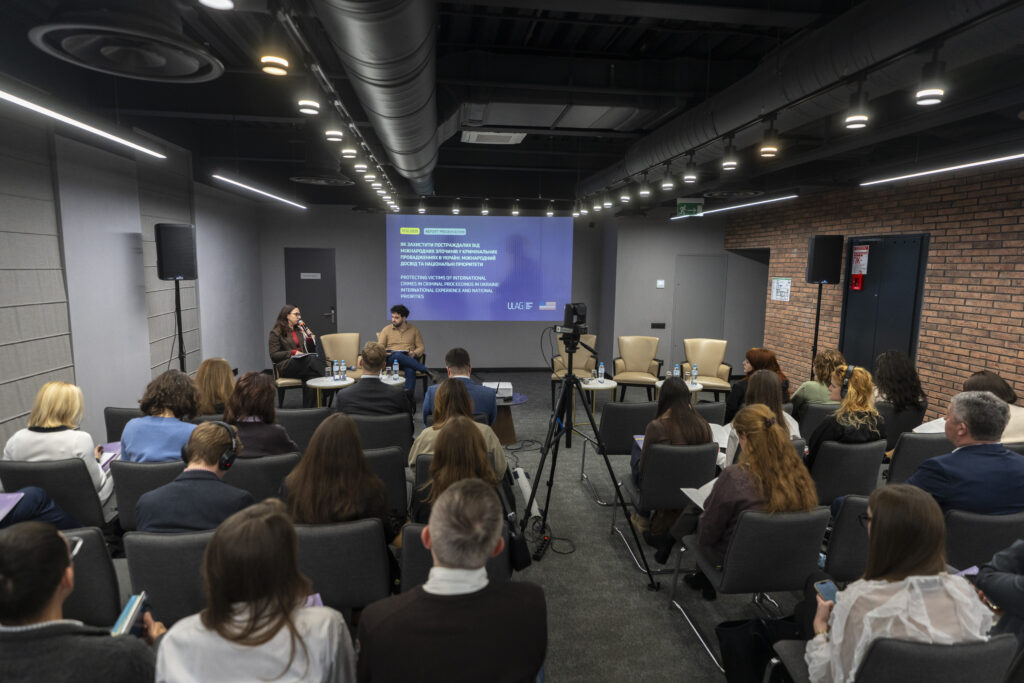
The Report “Protecting victims of international crimes in criminal proceedings in Ukraine: international experience and national priorities” was presented in Kyiv in December to over 120 participants, addressing a gap identified through strategic litigation experience and legal analysis: Ukraine’s current system for protecting victims and witnesses in criminal proceedings was not designed for grave crimes cases. A broader experience of survivors in criminal proceedings, and specifically systematic victim and witness protection, requires improvement through new legislation, amendments to the Criminal Procedure Code, and the introduction of new practices — including risk assessment mechanisms — grounded in EU standards.
Conceptually, we still believe hybrid engagement can meaningfully strengthen Ukraine’s capacity and increase the quality of justice processes. Considering the establishment of the Special Tribunal for the Crime of Aggression against Ukraine, as well as the already existing extensive use of international legal advisors at investigative and prosecutorial level, we are now focused on ensuring the existing hybrid cooperation is properly implemented and responsive to survivors’ needs.
The myriad of improvements needed at the legislative, institutional and policy level requires a comprehensive approach with a steady political will behind it — at the level of state policy on justice for grave crimes, and we have begun laying the groundwork — with partners and stakeholders — to develop a substantive vision by 2026.
We continued to share our experience and analysis through publications, expert events, and participation in international conversations on accountability — contributing not only to the Ukrainian context but to broader debates on international justice.
Beyond our external work, we also invested in ULAG as an organisation: adopting key internal policies and consolidating a governance structure in line with good governance principles, and implemented other steps to ensure we can sustain and grow this work over time.
Looking to 2026
In 2026 we will continue our work across all mentioned workstreams, including strategic litigation, in particular with a heavier ECtHR caseload and targeted case-related advocacy; deeper engagement on state policy, while directly contributing to ongoing reform processes — including through European integration and other international and domestic frameworks; continued efforts to ensure that accountability is not traded away, while also advocating for stronger and more active justice mechanisms. We remain committed to this work, and are grateful to the partners and supporters who make it possible.
Read full ULAG 2025 Annual Report: https://ulag.org.ua/reports-and-materials/ulag-annual-report-2025/
Read next
Articles
The voices of Ukrainians must be heard
The letter was published in May 2026 on the website of our long-time partner ECCHR, in the Living Open Archive section. It is a collection of personal impressions and stories from ECCHR staff and partners about the projects they work on, the injustices and contexts they experience, and the world they envision. They share intimate reflections in letters to their colleagues, allies, and the world.
Articles
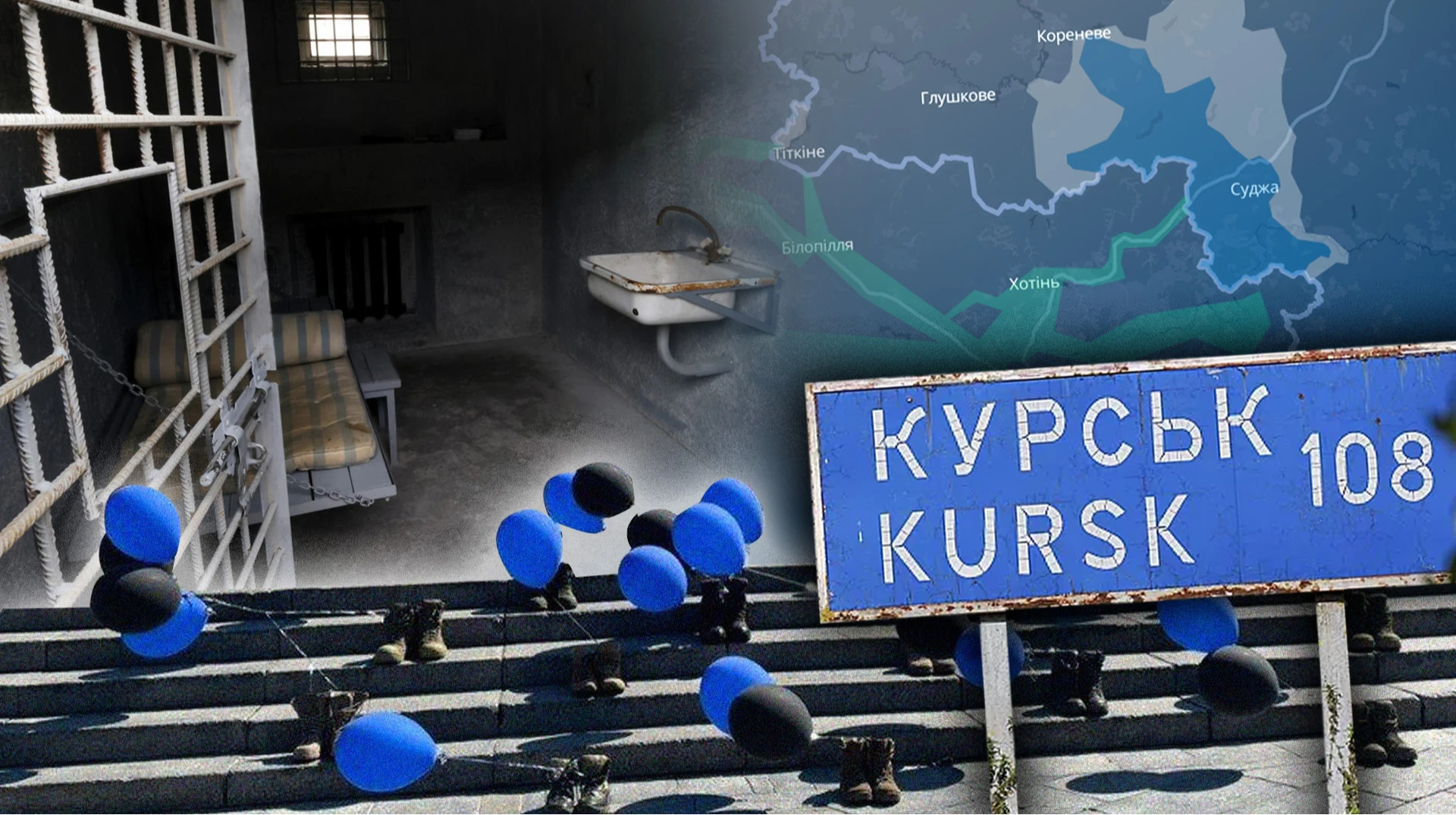
Prisoners of War Tried as Terrorists: What Is Happening to Ukrainian Soldiers Captured in Russia’s Kursk Region
The number of Ukrainians captured by Russian forces in the Kursk region remains hidden by the fog of war and defenders may be considered missing in action for months before suddenly appearing in photographs posted on Telegram channels alongside other prisoners of war. Or, conversely, families may search those same channels every day for any trace of their loved one, only to one day receive the devastating news of their death.
Articles
ECtHR Case Law on the Consequences of the Armed Conflict in Ukraine: The Detention of Ukrainian Troops at the Chornobyl Nuclear Power Plant
At the start of Russia’s full-scale invasion, one of the primary objectives of the Russian armed forces was to seize control of the Chornobyl Nuclear Power Plant (ChNPP). In February 2022, Russian troops occupied the facility and detained everyone there, including both civilian personnel responsible for maintaining the operation of the plant and members of the National Guard of Ukraine (NGU), who were responsible for the facility’s security.