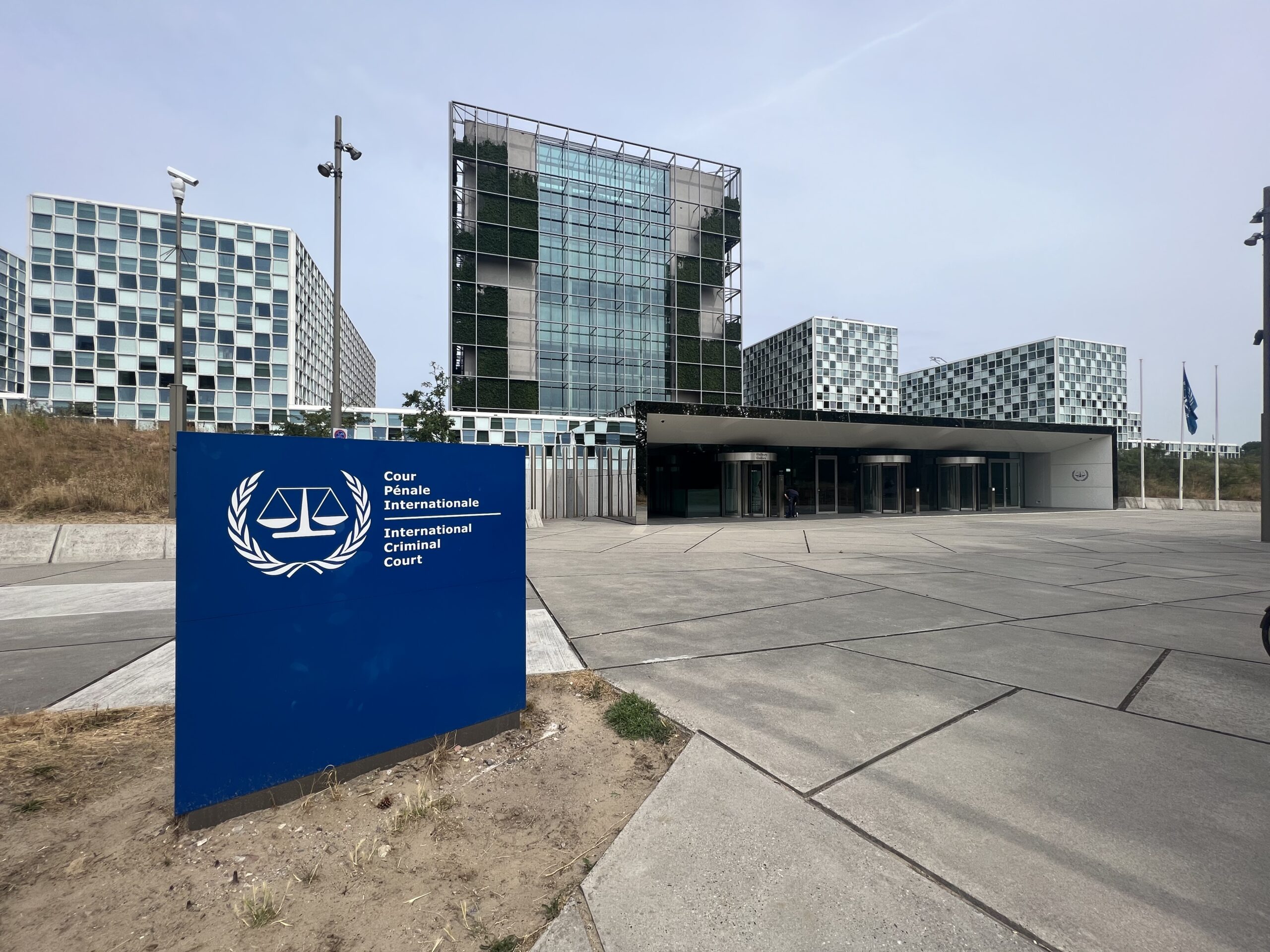
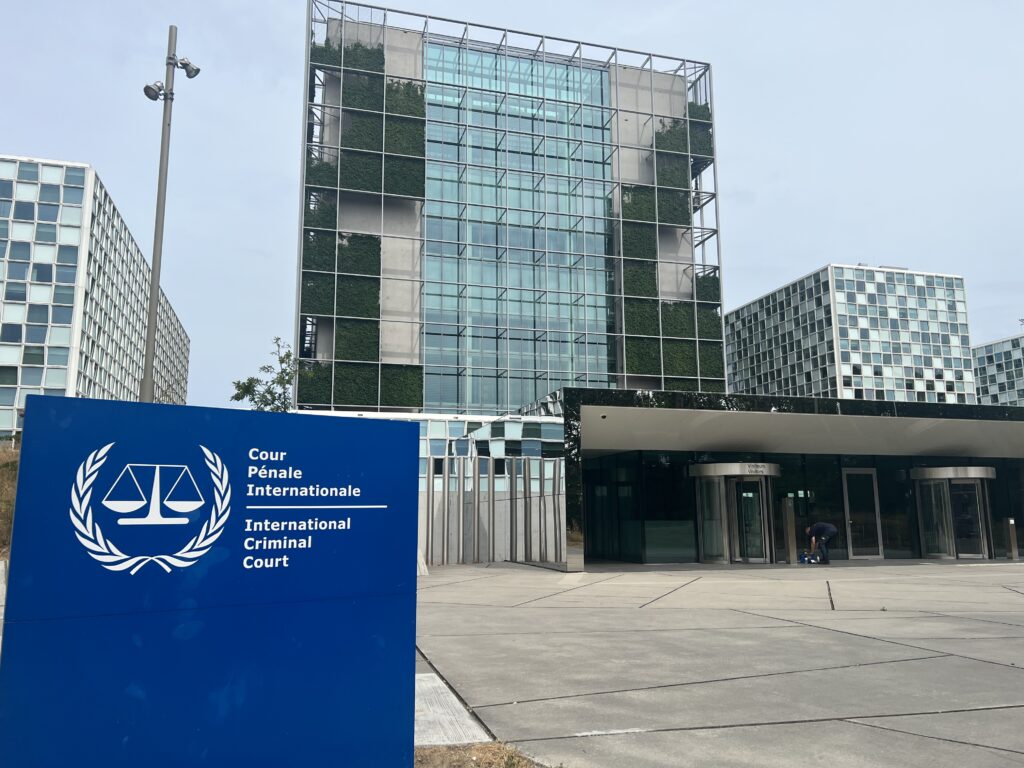
The President of Ukraine signed the law on ratification of the Rome Statute! What steps are left to achieve a meaningful ratification, which will protect victims and strengthen the international justice system for Ukraine and the world?
As per the ratification law, it enters into force simultaneously with the law ‘On Amendments to the Criminal and Criminal Procedure Codes of Ukraine in connection with the ratification of the Rome Statute of the International Criminal Court and amendments thereto’.
We are aware that its provisions are not perfect, but are necessitated by the situation, and therefore call on the authorities to continue the work on further amendments to the legislation in the near future to fully harmonise it with the Rome Statute.
According to the Rome Statute, it shall enter into force the first day of the month after the 60th day following the deposit of the ratification instruments.
If done by the end of September, Ukraine will be able to participate in the Assembly of States Parties to the Rome Statute this year in December. However, the deposition of the instruments can only happen after the implementation law is adopted and entered into force (as mentioned above).
The ratification will actually come into force under this procedure; the mere adoption and signing of the law at the national level is not enough.
As the process will take time, it is important to continue to resist the prejudices and manipulations regarding the ICC’s work in Ukraine.
In particular, one of the main arguments was that the military ate against the ratification. Together with the Rating Group, we surveyed active military personnel about their attitude to the ICC and ratification.
71% support the ratification of the Rome Statute. The majority also believes that the decision to ratify should be based on public opinion. In a national poll we conducted twice at the end of 2022, about 80% support ratification.
We can still do it by not making a declaration on Article 124 when submitting ratification instruments to the UN Secretary-General.
We have previously written covered the risks associated with this article. We also understand that this idea came about because of the fear of resistance from the military, based on false prejudices about the work of the ICC.
However, most importantly, there is no need to in its reserving to it.
If one wants to protect Ukrainian citizens from prosecution by the ICC, Ukraine simply needs to demonstrate that we can do it properly at the domestic level. The Court operates on the principle of complementarity – it complements the efforts of the state where it is unable or unwilling to ensure justice.
Ukraine has changed, we are seeking fair punishment for the most serious crimes, implementing systematic activities to ensure that the military complies with international humanitarian law, and have become more aware that true justice cannot be ‘one-sided’.
The majority of the military support the ratification of the RS, while being aware that the ICC can already prosecute Ukraine’s top military command even without ratification (58% chose this option). The majority also believe that punishment of those responsible for the most serious crimes should be a priority for the government and society. This is also a priority for Ukrainian society, according to the national poll.
The readiness for comprehensive justice is also evidenced by the fact that 87% of the military surveyed are ready to support the investigation of the most serious crimes committed by the Ukrainian military leadership in order to bring the Russian leadership to justice.
So, perhaps Article 124 is a forced compromise, though not in Ukraine of today, but somewhere in the past. Today, on Independence Day, the President signed the ratification law. To make this event truly symbolic, we must abandon the idea of invoking the Article 124, prioritising victims and principles of justice over prejudices and political manipulation.
Read next
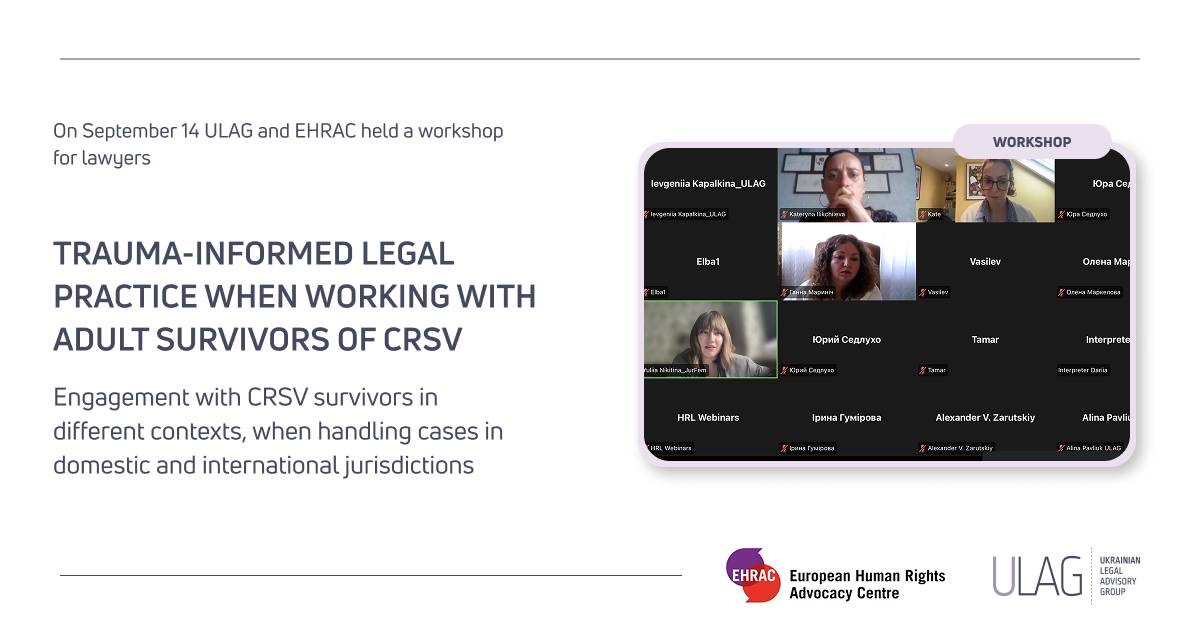
Workshop for lawyers: trauma-informed legal practice when working with adult survivors of CRSV
On September 14, the European Human Rights Advocacy Centre (EHRAC) and ULAG held a joint workshop for lawyers working with adult survivors of conflict-related sexual violence (CRSV).
Articles
The voices of Ukrainians must be heard
The letter was published in May 2026 on the website of our long-time partner ECCHR, in the Living Open Archive section. It is a collection of personal impressions and stories from ECCHR staff and partners about the projects they work on, the injustices and contexts they experience, and the world they envision. They share intimate reflections in letters to their colleagues, allies, and the world.
Articles
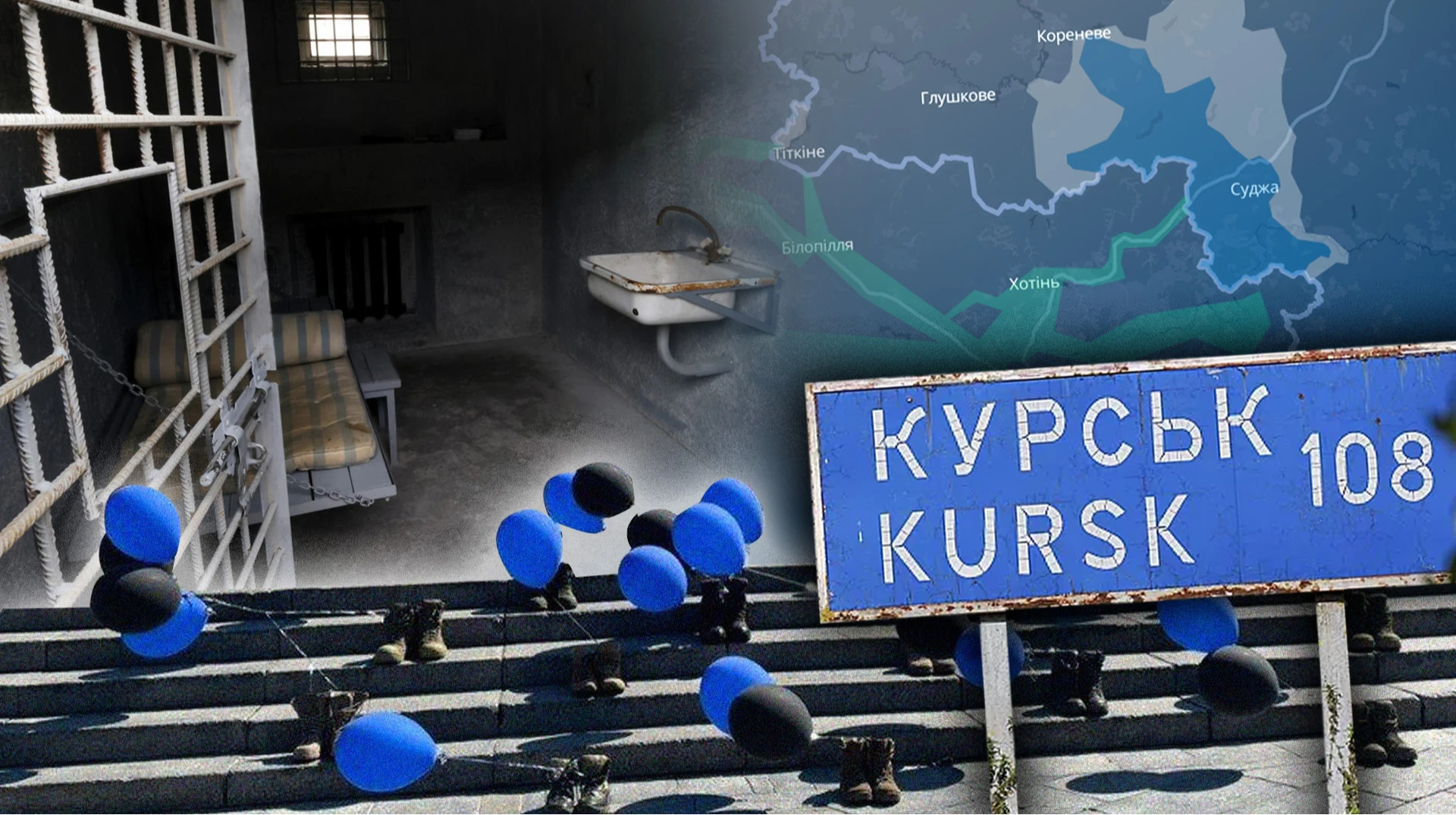
Prisoners of War Tried as Terrorists: What Is Happening to Ukrainian Soldiers Captured in Russia’s Kursk Region
The number of Ukrainians captured by Russian forces in the Kursk region remains hidden by the fog of war and defenders may be considered missing in action for months before suddenly appearing in photographs posted on Telegram channels alongside other prisoners of war. Or, conversely, families may search those same channels every day for any trace of their loved one, only to one day receive the devastating news of their death.