On 7-9 July 2025, a special session of the Assembly of States Parties in New York will consider a proposal by Germany, Costa Rica, Sierra Leone, Slovenia and Vanuatu to amend Article 15 bis of the Rome Statute (RS). These amendments are intended to harmonise the International Criminal Court’s (ICC) jurisdictional regime over the crime of aggression to match the rules applied to war crimes, crimes against humanity and genocide.
Currently, the ICC cannot prosecute crimes of aggression committed on the territory of or by nationals of a state that is not a party to the Rome Statute, even if they are committed on the territory of or concern nationals of a state party or a state that has recognised the jurisdiction of the Court by an ad hoc declaration. In addition, states parties can lodge an opt-out declaration to the Registrar excluding the Court’s jurisdiction over that crime.
Under the proposed amendments, the ICC will be able to prosecute the crime of aggression if they are committed on the territory of or by nationals of a state party to the Rome Statute. The Court will also be able to consider crimes committed by a state not party to the Rome Statute if they were committed on the territory of a state party or a state that has accepted the jurisdiction of the ICC by an ad hoc declaration. The same way as with other grave crimes.
More details about the status quo and the proposed amendments can be found here.
Ukraine, now a full state party to the Rome Statute, will also vote. The current ICC jurisdiction over the crime of aggression is the result of a political compromise that has not provided a real possibility to ensure accountability for this crime. At this historic moment, Ukraine, as a state that has directly suffered the consequences of this accountability gap, must support a decision that will help remove existing jurisdictional restrictions.
Why is it important for Ukraine to support the amendments?
We call on the President of Ukraine, the Verkhovna Rada of Ukraine, and the Ministry of Foreign Affairs to:
Such a decision is in the interests of the people of Ukraine, who seek justice for themselves and for people around the world that have already suffered or may become victims of aggression in the future.
Signatories:
Blue Bird NGO
Crimea Process NGO
Kharkiv Anticorruption Center
Human Rights Platform
Crimean Human Rights Group
Media Initiative for Human Rights
Association of Relatives of Political Prisoners of the Kremlin NGO
Educational Human Rights House Chernihiv
Regional Center for Human Rights
Center for Civil Liberties
Human Rights Center ZMINA
Ukrainian Legal Advisory Group
Read next
Articles
The voices of Ukrainians must be heard
The letter was published in May 2026 on the website of our long-time partner ECCHR, in the Living Open Archive section. It is a collection of personal impressions and stories from ECCHR staff and partners about the projects they work on, the injustices and contexts they experience, and the world they envision. They share intimate reflections in letters to their colleagues, allies, and the world.
Articles
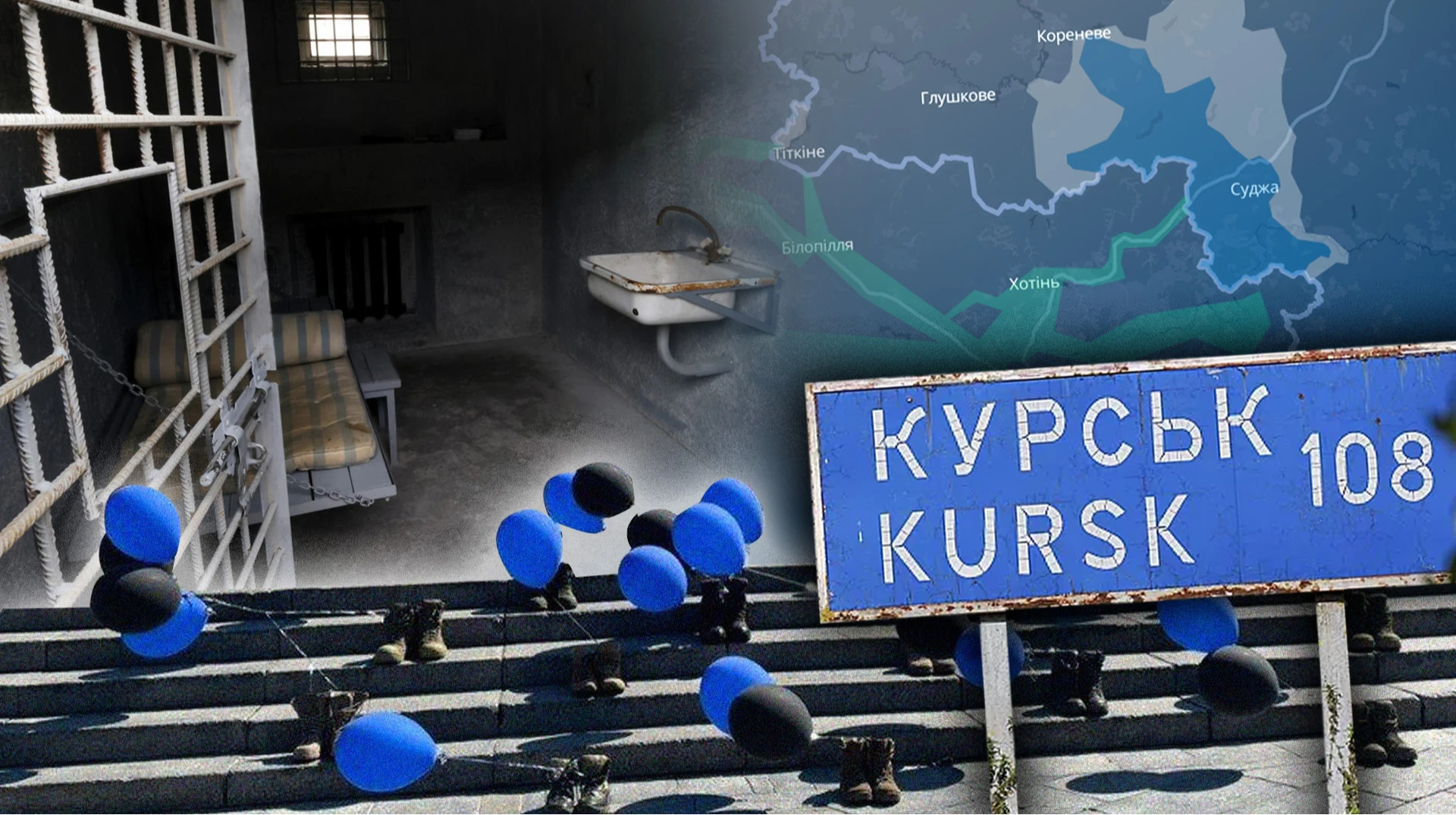
Prisoners of War Tried as Terrorists: What Is Happening to Ukrainian Soldiers Captured in Russia’s Kursk Region
The number of Ukrainians captured by Russian forces in the Kursk region remains hidden by the fog of war and defenders may be considered missing in action for months before suddenly appearing in photographs posted on Telegram channels alongside other prisoners of war. Or, conversely, families may search those same channels every day for any trace of their loved one, only to one day receive the devastating news of their death.
Articles
ECtHR Case Law on the Consequences of the Armed Conflict in Ukraine: The Detention of Ukrainian Troops at the Chornobyl Nuclear Power Plant
At the start of Russia’s full-scale invasion, one of the primary objectives of the Russian armed forces was to seize control of the Chornobyl Nuclear Power Plant (ChNPP). In February 2022, Russian troops occupied the facility and detained everyone there, including both civilian personnel responsible for maintaining the operation of the plant and members of the National Guard of Ukraine (NGU), who were responsible for the facility’s security.