8–12 June 2026, The Hague, The Netherlands
From 8 to 12 June 2026, ULAG travelled to The Hague to take part in the annual ICC–NGO Roundtables, the week-long series of closed-door exchanges that brings together senior officials of the International Criminal Court (ICC) and representatives of civil society organisations from around the world. Organised jointly by the Court and the Coalition for the International Criminal Court (CICC), the Roundtables are one of the few structured opportunities each year for NGOs to engage directly and candidly with the Presidency, the Office of the Prosecutor (OTP), the Registry and the Trust Fund for Victims (TFV) on the Court’s priorities, challenges and areas for improvement.
This year’s meeting took place against an unusually difficult backdrop for the Court, and the discussions reflected it. ULAG had the opportunity not only to take part in the full programme of thematic sessions and country-situation briefings, but also to co-moderate the session dedicated to the situation in Ukraine — a role we were glad to take on given the scale and significance of that investigation.
The Roundtables opened on Monday 8 June with remarks from ICC President Judge Tomoko Akane, Deputy Prosecutor Mame Mandiaye Niang, Registrar Osvaldo Zavala Giler and CICC Director Alison Smith, followed by an interactive session with the Presidency and the Registry, an exchange with the Deputy Prosecutors, and a dedicated session with the Trust Fund for Victims.
The tone throughout was candid about the scale of the pressure the Court is under. Officials spoke of the compounding effect of escalating unilateral sanctions and of foreign criminal proceedings targeting Court personnel, alongside a second major cyber-attack on the Court’s systems and the continued erosion of state cooperation, including recent and pending withdrawals from the Rome Statute. At the same time, officials pointed to signs of institutional resilience — including recent confirmations of charges and ongoing reparations proceedings — and stressed that dialogue with civil society has become more, not less, essential in this environment.
Sanctions dominated much of the week’s discussion, as they have dominated the Court’s public statements for well over a year now. Since early 2025, the United States has used an executive order to impose asset freezes, entry bans and other sanctions on a growing list of ICC officials, judges and deputy prosecutors, a UN special rapporteur, and Palestinian civil society organisations, in response to the Court’s investigations related to Israel and Palestine. Most recently, sanctions were extended to two judges of the Appeals Chamber, on top of nine other elected officials already designated. Separately, Russian authorities have opened criminal proceedings and issued arrest warrants against senior ICC officials in connection with the Ukraine investigation.
Several NGOs used the Roundtables to press ICC leadership on why the Court has not more forcefully or publicly condemned the sanctions targeting civil society partners, and to ask what more can be done — including initiating tools like the European Union’s blocking statute — to shield both the Court and the organisations that support its work. The Registry and OTP acknowledged the financial and operational toll of the sanctions (from changes in software and vendor relationships to constraints on travel and banking), while noting that responses need to be consistent and coordinated with states, rather than piecemeal. Civil society representatives were clear that solidarity — from states, from the UN system, and among NGOs themselves — will be indispensable if the Court and its partners are to weather this period.
A recurring and pointed question throughout the week concerned the venue for the Assembly of States Parties (ASP). Under the Rome Statute, the ASP can meet either at the Court’s seat in The Hague or at UN Headquarters in New York. Many NGOs present argued that, given the sanctions environment and the practical and symbolic difficulties of convening in the United States, this year’s 25th session — currently scheduled for 7 to 17 December 2026 at UN Headquarters in New York — should instead be held in The Hague.
The idea of holding the full session in New York is associated with practical difficulties, including reports of ICC officials being denied the visas needed to brief UN bodies in person, and broader US entry restrictions affecting nationals of several ICC situation countries. Civil society participation is also expected to be undermined due to limited access and risks of people being denied entry, sent back, blacklisted or persecuted in other ways — essentially excluding many CSOs from attending the session.
The question is complicated by a further, more concrete layer: the 25th session is also when States Parties are due to elect six new ICC judges, who will serve nine-year terms from 2027. Judicial elections are widely regarded as one of the Assembly’s most consequential governance functions, shaping the composition and independence of the bench for close to a decade, and civil society has traditionally played an active role in the process — including through public candidate roundtables, due diligence input, and monitoring of the nomination process. Restricting or complicating civil society’s ability to observe and engage with this year’s elections was a particular concern raised during the Roundtables.
Given this context, one proposal discussed was to split the session: holding the judicial elections in New York, where every state party already maintains a UN presence, while convening the remainder of the Assembly’s substantive deliberations — including the general debate, budget negotiations and thematic resolutions — in The Hague. This split-session model, alongside full relocation to The Hague, has also been formally proposed by the Coalition for the International Criminal Court as a way of safeguarding meaningful and safe civil society participation at ASP25.
Adding a further dimension to this year’s elections, Ukraine — which became the ICC’s 125th States Party on 1 January 2025 — has put forward a candidate for judicial office for the first time in its history: Supreme Court judge Lev Kyshakevych, with international criminal law expert Oksana Senatorova named as reserve candidate. For a state party whose territory has been under active ICC investigation since 2022 and for which the Court has issued high-profile arrest warrants, the nomination adds particular significance and visibility to the question of where and how this year’s elections are conducted and whether civil society and affected communities will be able to follow the process on equal terms.
Separately from the ASP venue debate, an unprecedented development shaped much of the week: on 8 June 2026, the Bureau of the Assembly decided to suspend Prosecutor Karim Khan pending disciplinary proceedings arising from a lengthy investigation into allegations of sexual misconduct, and to convene a special session of the full 125-member Assembly to make a final determination. That special session took place on 24 July 2026 in New York, and resulted in Karim Khan’s dismissal by a majority’s decision.
The allegations against Prosecutor Khan, and the process surrounding them, were a recurring undercurrent throughout the week, discussed with particular candour during Thursday’s exchange with the Secretariat of the Assembly of States Parties (SASP). Participants heard that the SASP — chronically under-resourced and, by its own account, under strain — has had to manage a disciplinary process of a kind the Rome Statute system has never previously faced. Officials underlined that the process itself should have remained confidential by design, that Mr Khan is entitled to due process, and that it should not be prejudged before the Assembly has voted. However the fact that part of it was leaked into the media caused a high degree of politicisation which in turn may inadvertently affect the outcome of the vote in New York.
Budget negotiations remain one of the most consequential — if least visible — battlegrounds for the Court’s ability to deliver justice. Officials from the Presidency, OTP, Registry and TFV all stressed that this year’s request has been kept deliberately conservative, shaped as much by the realities facing states parties as by the Court’s own needs, and increasingly consumed by costs directly tied to the sanctions environment: cybersecurity, business continuity, and safeguarding the Court’s operational independence.
Several states parties have continued to push for a “zero nominal growth” approach to the Court’s budget — a long-running tension between the Court’s expanding docket (now stretching across more than a dozen active situations, from Ukraine and Palestine to Sudan, Venezuela and the Philippines) and states’ reluctance to expand its resources. NGOs at the Roundtables, as they have in previous years, warned that flat or shrinking budgets in real terms risk undermining victims’ rights, judicial activity and defence equality of arms, even as the Court is asked to do more with less.Now that Ukraine and Armenia have joined the ICC, they have a voice they can use to promote positive change for the Court in this regard.
A large part of the week was devoted to situation-specific briefings, each following the same format: a presentation by the OTP, Registry and, where relevant, the TFV on the status of operations and key challenges, followed by interventions from identified civil society representatives and an open exchange with all participants. Over the course of the week, the Roundtables covered the situations in the Philippines, the Democratic Republic of the Congo, Venezuela, Afghanistan, the Central African Republic, the State of Palestine, Ukraine, Bangladesh/Myanmar, Darfur (Sudan) and Libya, alongside dedicated sessions on victims’ issues, cooperation and non-cooperation, defence issues, and threats against the Court.
ULAG co-moderated the session on Ukraine, where the OTP and the TFV set out the state of ongoing investigations and assistance programs and civil society representatives raised questions about the pace of accountability efforts, victim outreach in active conflict conditions, and the interplay between the ICC’s work and the newly-established Special Tribunal for the Crime of Aggression against Ukraine. It was a valuable reminder of how much coordination — between the Court, states, and civil society — is required to keep momentum on accountability efforts alive even as attention is pulled toward other crises.
The week closed on Friday 12 June with a feedback session in which NGOs offered candid input on the format and substance of the Roundtables themselves, before the meeting formally closed. For ULAG, the key developments to follow into the second half of 2026 are the sanctions campaign against the Court which shows no sign of abating; and the aftermath of the disciplinary proceedings and the dismissal of Prosecutor Khan; as well as the decisions States Parties take later this year on the ASP’s venue, format and budget will say a great deal about their commitment to the Court’s independence and to meaningful civil society and victim participation, at a moment when both are being tested more seriously than at any point in the Court’s history.
The International Criminal Court is confronting one of the most difficult periods in its history, buffeted simultaneously by external pressure — sanctions, foreign criminal proceedings against its officials, cyberattacks, and non-cooperation — and by internal strain, from an unprecedented disciplinary process at the highest level of the Office of the Prosecutor to chronic underfunding of core functions. These challenges are compounding one another at a moment when the Court’s docket, and the expectations placed on it by victims and affected communities, have never been larger.
It is worth recalling that civil society organisations were instrumental in bringing the Rome Statute into being, and have remained indispensable to the Court’s functioning in the more than two decades since — from supporting victims’ access to justice, to monitoring cooperation and non-cooperation, to safeguarding the integrity of judicial and prosecutorial elections. If the Court is to weather this period and continue to deliver on its mandate, that role is more necessary now than ever. It is therefore of paramount importance for civil society organisations, National Coalitions, and all partners within the Coalition for the International Criminal Court to remain engaged, to speak out in defence of the Court’s independence and of the victims it serves, and to continue holding both the Court and its States Parties to the highest standards of accountability, transparency and support. The Court’s survival, and its ability to deliver justice depends on it.
ULAG will continue to follow these developments closely and to use our voice, alongside partners across the Coalition for the International Criminal Court, to press for a Court that remains independent, adequately resourced, and accountable to the victims it exists to serve.
Read next
News
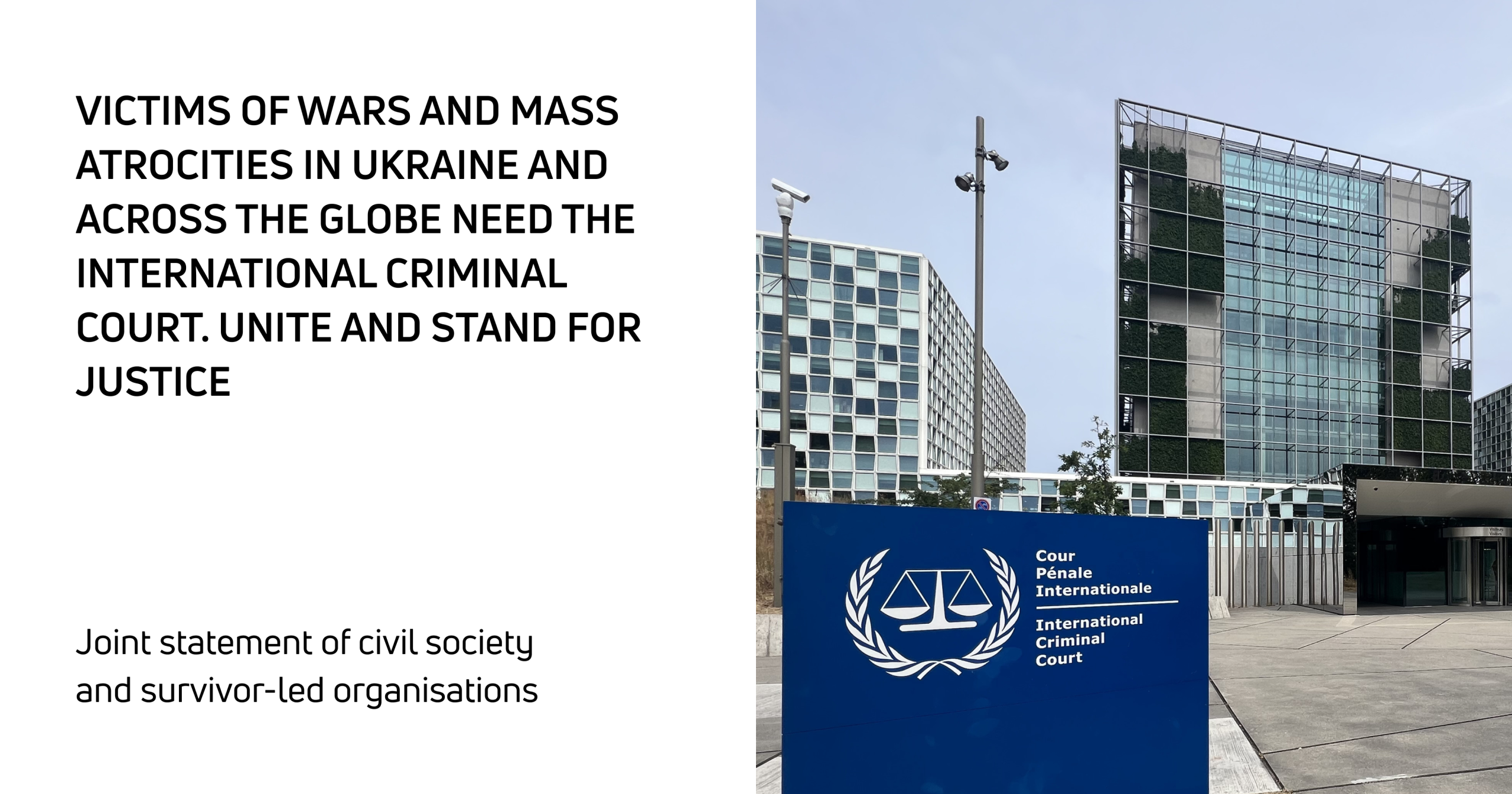
Joint Statement: Victims of wars and mass atrocities in Ukraine and across the globe need the International Criminal Court. Unite and stand for justice
We, civil society organisations, experts, associations of victims and survivors, working on justice and accountability for crimes committed in the course of Russia's war against Ukraine since 2014, urge all states parties to the Rome Statute to stand up in defence of the International Criminal Court (ICC) against pressure and sanctions.
Articles
Justice and judicial reform in the context of Russia’s war on Ukraine
How does the role of a lawyer change during wartime? Is it possible to advocate for domestic reform in a country suffering mass casualties, the destruction of key infrastructure and the forced displacement of millions of people?
News
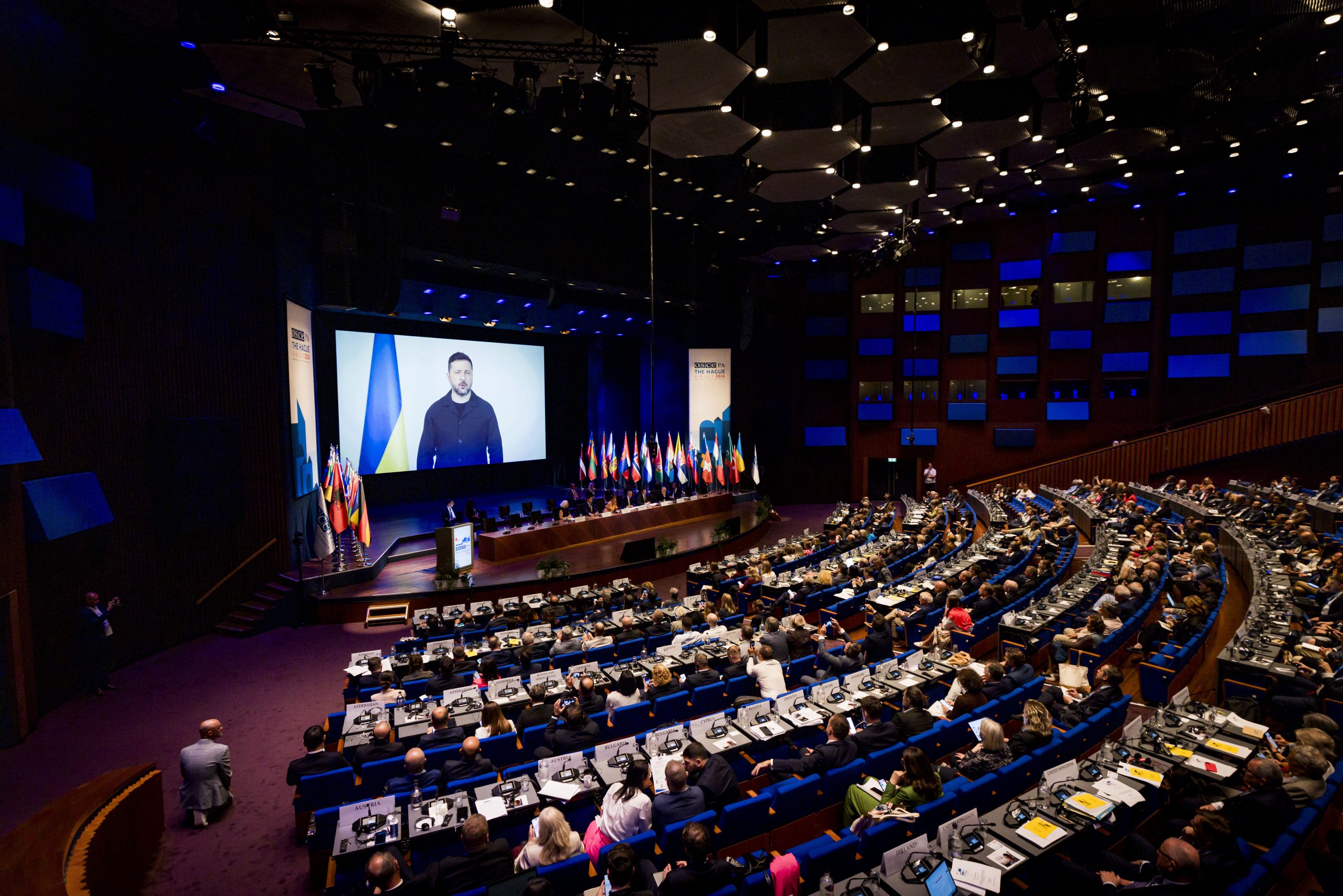
On July 8, 2026, the OSCE Parliamentary Assembly adopted a Declaration calling for the release of three Ukrainian staff members of the Special Monitoring Mission from unlawful Russian detention
In the Declaration and Resolutions of its 33rd Annual Session in The Hague, the OSCE Parliamentary Assembly once again condemned the ongoing unlawful detention and unlawful prosecution by the Russian Federation of three Ukrainian staff members of the OSCE Special Monitoring Mission to Ukraine—Dmytro Shabanov, Maksym Petrov, and Vadym Golda — and called for their immediate release.