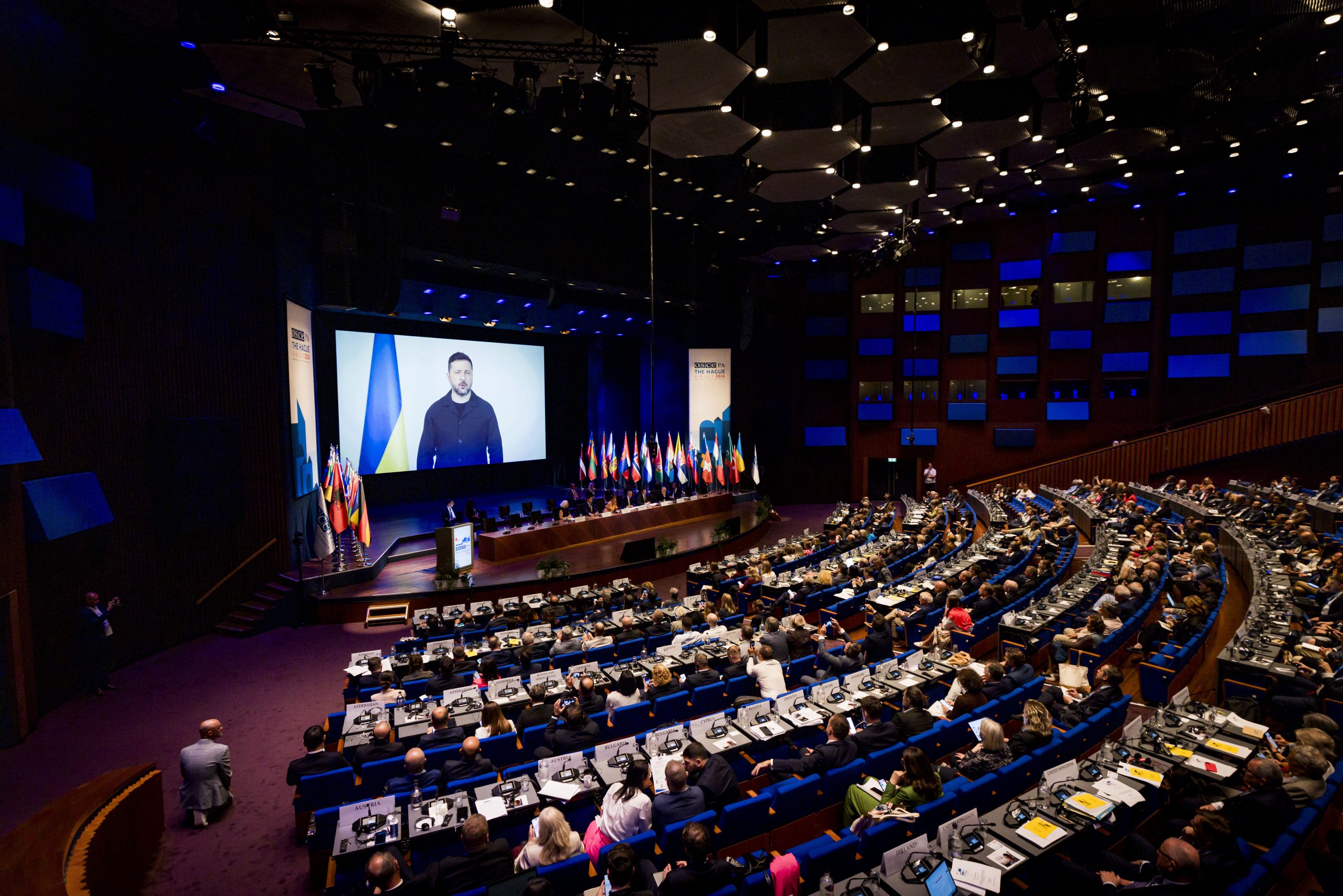
In the Declaration and Resolutions of its 33rd Annual Session in The Hague, the OSCE Parliamentary Assembly once again condemned the ongoing unlawful detention and unlawful prosecution by the Russian Federation of three Ukrainian staff members of the OSCE Special Monitoring Mission to Ukraine—Dmytro Shabanov, Maksym Petrov, and Vadym Golda — and called for their immediate release.They were unlawfully detained in 2022 and later unlawfully sentenced to 13–14 years in prison on fabricated charges, including so-called “state treason” and “espionage.”
This time, the issue of the detained OSCE staff members is addressed across several Chapters of the Declaration as well as in some of the adopted Resolutions.
In particular, Chapter 1 contains a direct demand for the immediate release of the detained OSCE staff members — Vadym Golda, Maksym Petrov, and Dmytro Shabanov — and to refrain from any further threats or use of force against Ukraine or any other OSCE participating State, as well as a call on participating States and the Secretary General to exert pressure on Russia to resolve this matter.
In Chapter 3, the OSCE Parliamentary Assembly calls upon the Russian Federation, pending the release of the relevant OSCE staff members, to guarantee them access to legal counsel, proper medical care, regular and meaningful contact with their families, and unhindered access for independent monitoring bodies, specifically the International Committee of the Red Cross and OSCE representatives.
The Declaration also emphasised that the harassment, prosecution and detention of international observers performing their duties in accordance with their mandate undermine the security and operational viability of international monitoring missions and raises grave concerns regarding the credibility and feasibility of future international monitoring agreements.
These points align with the joint statement regarding the release of Shabanov, Petrov, and Golda: this is, in fact, a prerequisite and a test of the real possibility of agreeing upon and implementing any ceasefire monitoring, as well as the Russian Federation’s willingness to respect such a regime. This is also a moral obligation for the countries on whom the lives and safety of OSCE SMM staff and potential future monitors now depend.
All these provisions were reflected in the Declaration thanks to the efforts of the Ukrainian Parliamentary Delegation in the OSCE, which submitted these proposals for consideration, as well as the support of Dmytro Ponomarenko, Ambassador-at-Large of the Department of International Law and International Legal Counteraction at the Ministry of Foreign Affairs of Ukraine, and OSCE PA Special Rapporteur Boris Dittrich.
ULAG, together with Margaryta Shabanova, the wife of Dmytro Shabanov, advocated for expanding the Declaration’s provisons and made suggestions for its draft text.
On July 7, Margaryta Shabanova addressed the plenary sessions of the PA, emphasising:
The participating States and delegations of this Assembly have the opportunity to actively seek and facilitate solutions to secure the release of my Dima (Dmytro Shabanov), Maksym (Petrov), and Vadym (Golda). They are OSCE SMM staff members, and this should prompt more decisive action rather than serve as a reason to leave this to others. Today, we are talking about my Dima. Tomorrow, it could be the name of a staff member working in any mission, in any country, under the flag of this Organization.
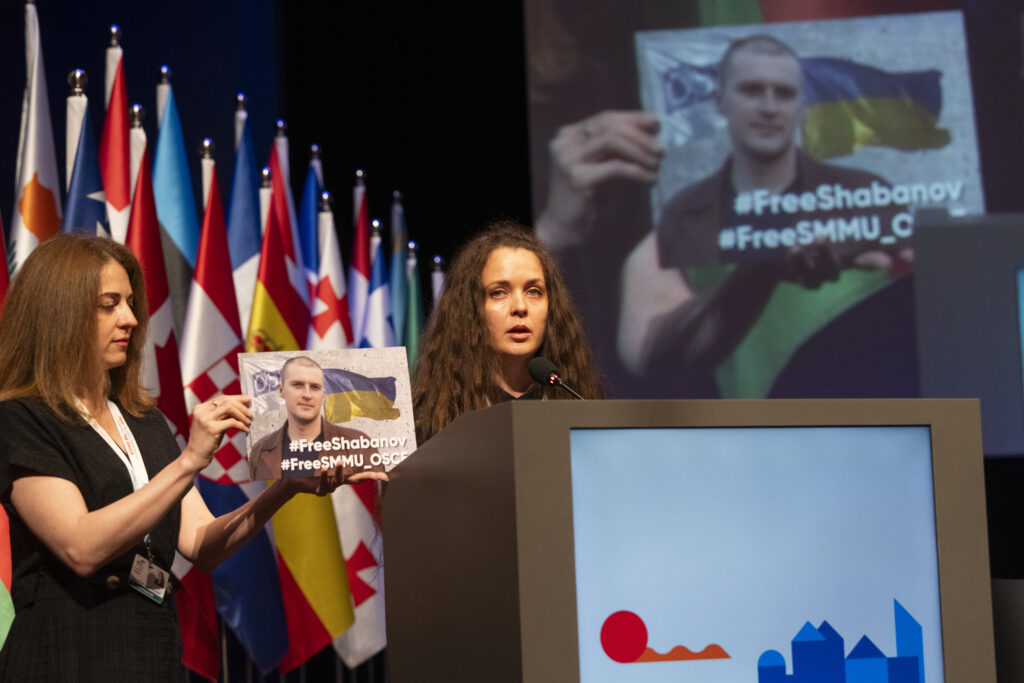
On July 8, the final day of the Assembly’s session, the amendments proposed by the Ukrainian delegation were adopted at the OSCE PA session without objection from any country, entering the final text of the Declaration without any changes.
It is crucial that parliamentary delegations and their countries, as well as the OSCE’s governing bodies, continue to act in accordance with the aspirations and commitments enshrined in this Declaration and secure the release of Dmytro Shabanov, Maksym Petrov, and Vadym Golda from Russian captivity.
Read next
Articles
The voices of Ukrainians must be heard
The letter was published in May 2026 on the website of our long-time partner ECCHR, in the Living Open Archive section. It is a collection of personal impressions and stories from ECCHR staff and partners about the projects they work on, the injustices and contexts they experience, and the world they envision. They share intimate reflections in letters to their colleagues, allies, and the world.
Articles
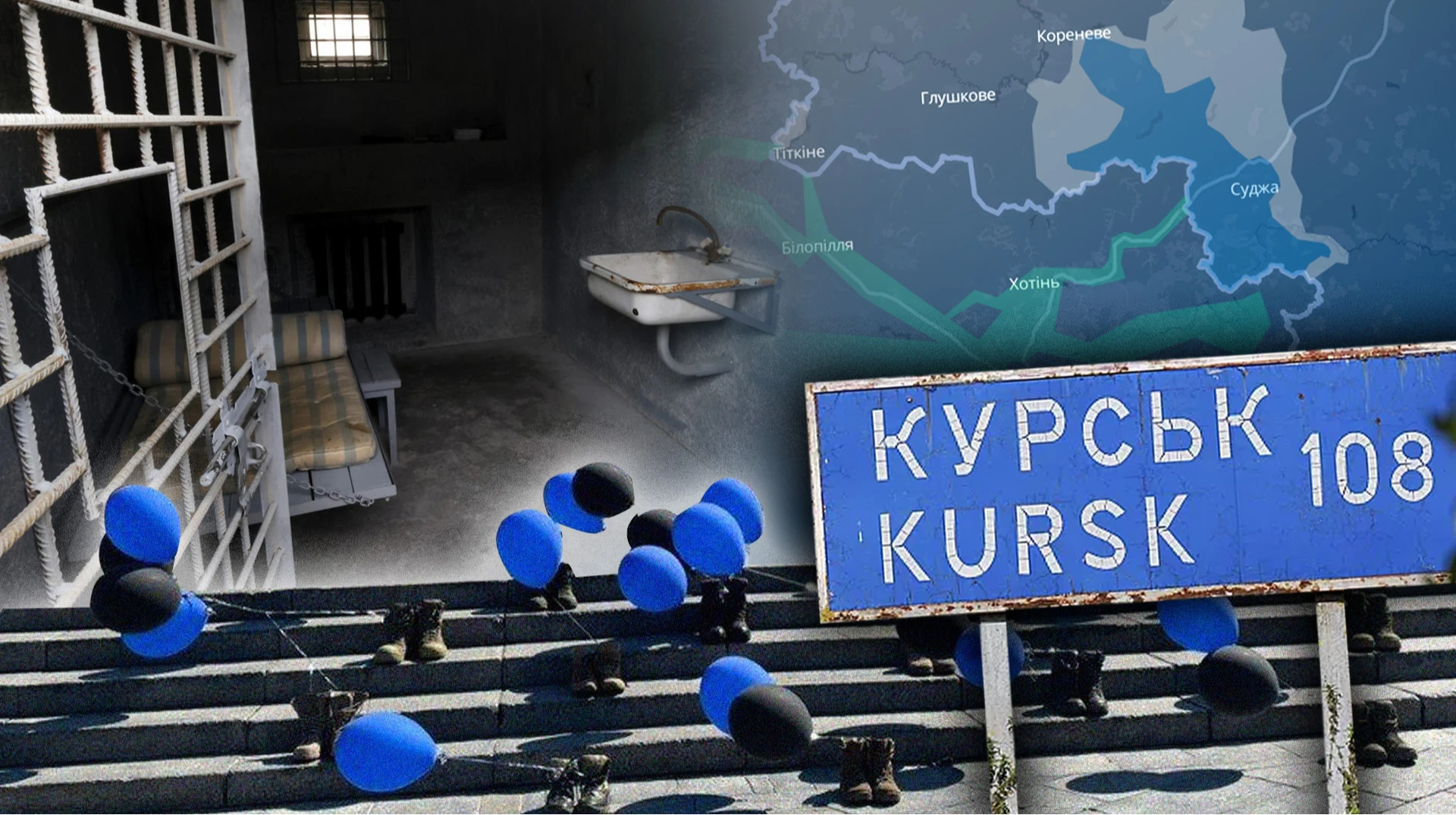
Prisoners of War Tried as Terrorists: What Is Happening to Ukrainian Soldiers Captured in Russia’s Kursk Region
The number of Ukrainians captured by Russian forces in the Kursk region remains hidden by the fog of war and defenders may be considered missing in action for months before suddenly appearing in photographs posted on Telegram channels alongside other prisoners of war. Or, conversely, families may search those same channels every day for any trace of their loved one, only to one day receive the devastating news of their death.
Articles
ECtHR Case Law on the Consequences of the Armed Conflict in Ukraine: The Detention of Ukrainian Troops at the Chornobyl Nuclear Power Plant
At the start of Russia’s full-scale invasion, one of the primary objectives of the Russian armed forces was to seize control of the Chornobyl Nuclear Power Plant (ChNPP). In February 2022, Russian troops occupied the facility and detained everyone there, including both civilian personnel responsible for maintaining the operation of the plant and members of the National Guard of Ukraine (NGU), who were responsible for the facility’s security.