Earlier this month, the international justice community gathered in The Hague for the 24th session of the Assembly of States Parties (ASP) to the Rome Statute. This year’s Assembly took place against a backdrop of unprecedented challenges – from individual sanctions and other forms of attacks followed by threats to impose institutional sanctions against the Court, to an undermined state cooperation and universality of the ICC.
Our Legal Coordinator and Analyst, Alina Pavliuk, represented ULAG at the ASP across a series of critical side events and plenary sessions, advocating for a justice architecture that is resilient, inclusive, and capable of delivering meaningful accountability.
As many have flagged, the solidarity around the idea of backing the Court and ensuring its resilience was more visible this year.
Yet, some of the critical threats have not only remained, but also intensified, even within the weeks since the ASP took place. For example the US has threatened the Court with more sanctions unless the ICC pledges it will not prosecute the US leadership, and has later sanctioned 2 more ICC judges.
The discussions and events we took part in at the ASP echoed some of the key areas of concern for the Court – issues to which ULAG has been actively contributing throughout the year.
On December 1, ULAG co-hosted the side event “Through Ukraine’s Lens: Defending the ICC Now for All Victims of Atrocity Crimes,” alongside the Human Rights Centre ZMINA and the Media Initiative for Human Rights and Slovenia.
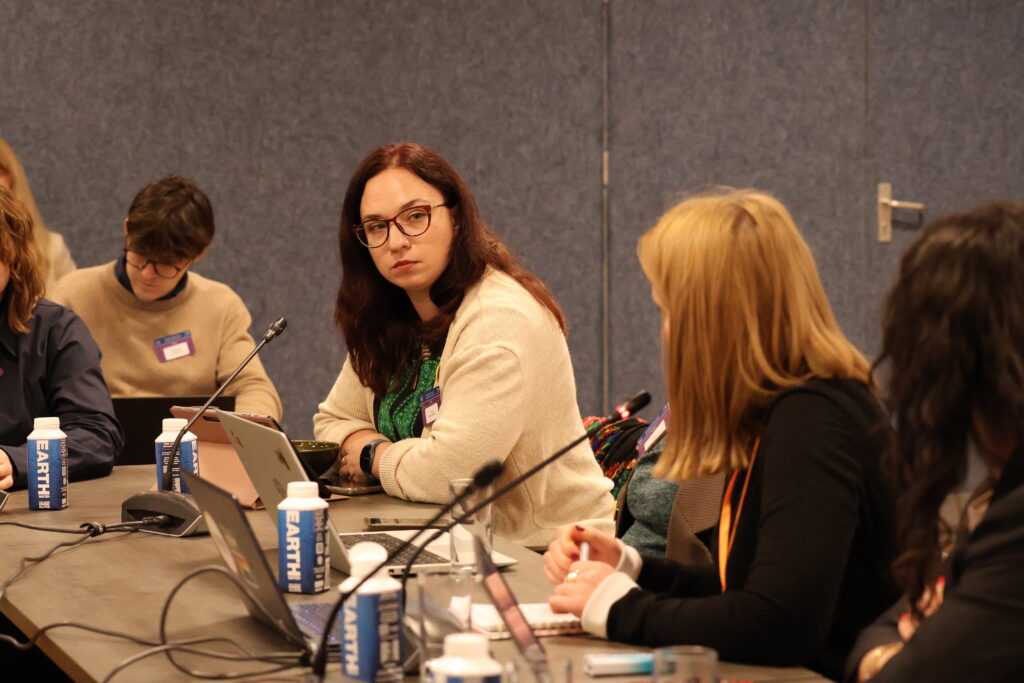
The ICC has a special role in ensuring justice for grave international crime committed in the course of the Russian war against Ukraine. While other jurisdictions should be further supported and strengthened, they remain inherently limited in their ability to address the crimes that fall within the ICC’s unique mandate.
However, the challenges it has been facing cause growing fears that the Court will not be able to keep up the pace it took after the opening of the investigation in 2022.

Alina reflected on the significant support states provided to the ICC for its work in Ukraine. While commendable, it also shows how political decisions can directly impact the trajectory of justice, both at the domestic level, and vis-a-vis the ICC.
“We, as representatives of civil society, have witnessed over the years how political decisions and positions can either strengthen accountability efforts or leave victims of core crimes hopeless in the face of international justice.”
Speakers have mentioned that while the ICC officials are promoting the “business as usual” approach, it is important to recognise the impact of the current situation on the Court and those working with it. Effective investigations, including in Ukraine, can also become a good illustration of why supporting the ICC is still very much so relevant.
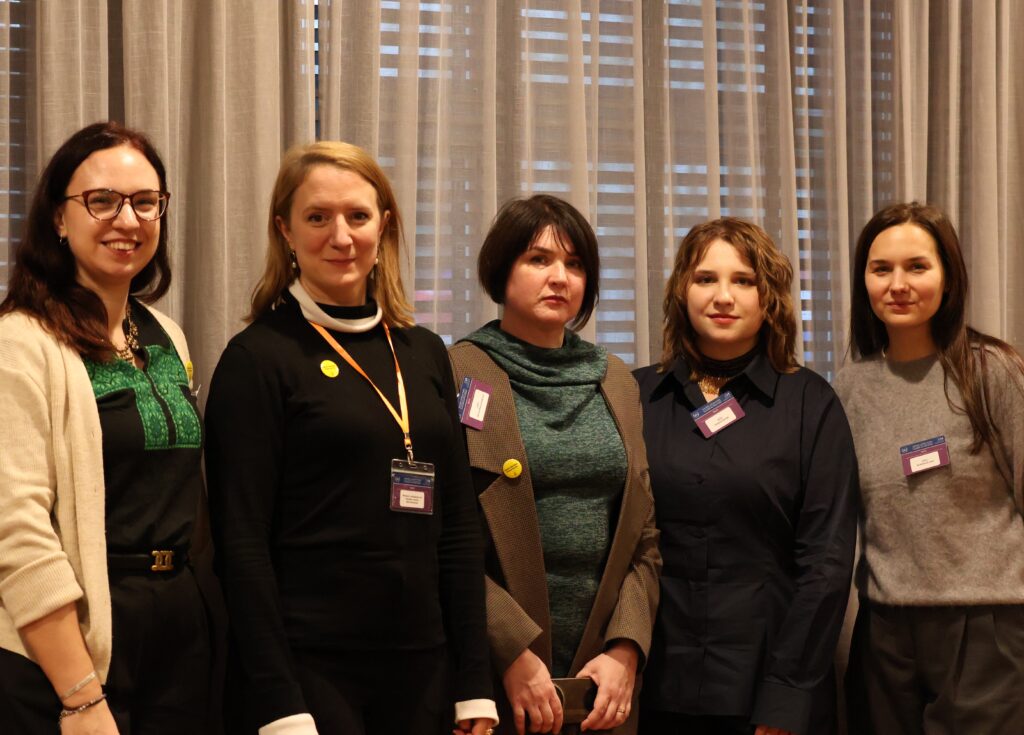
While analysed through Ukraine’s context, the need for a stronger ICC is global. Achieving this goal requires principled, comprehensive and consistent – not reactive or selective – support, primarily from its States Parties.
Addressing the jurisdictional gap regarding the crime of aggression (CoA) has been among the key topics of the ASP. Following the Special Session earlier this year, it is important to not lose sight of the issue and make sure all reservations are eventually discussed and addressed. Otherwise effective accountability for aggression will largely remain out of reach due to current limitations in the Rome Statute.
Together with other civil society organisations, ULAG co-hosted the side event “The Crime of Aggression After the Special Session: No Justice without Jurisdiction”.
Ukraine has been actively exploring avenues to prosecute the crime of aggression, both at the domestic level and through the establishment of the Special Tribunal for the Crime of Aggression against Ukraine – primarily because the ICC could not serve this purpose in the present situation. However, both tracks demonstrate how challenging it is to ensure meaningful justice for the crime of aggression in a manner consistent with international law. These challenges range from defining the crime and its elements in domestic legislation to addressing questions of immunities and victim participation, among others.
Alina Pavliuk spoke at the side event and noted that as Ukraine has become a “space for testing” different justice options, lessons learned domestically must feed back into the international system. This case only shows the need to strengthen the ICC’s CoA jurisdiction.
“Lessons and insights from the process of establishing the Special Tribunal must be used to strengthen jurisdiction of the ICC for the crime of aggression and become a practical expression of its complementarity to the Court,” Alina stated.
The first-ever dedicated plenary session on non-cooperation at the ASP underscored the urgency of a challenge facing the Court: a growing number of instances in which states receive individuals subject to ICC arrest warrants, in violation of their obligations under the Rome Statute.
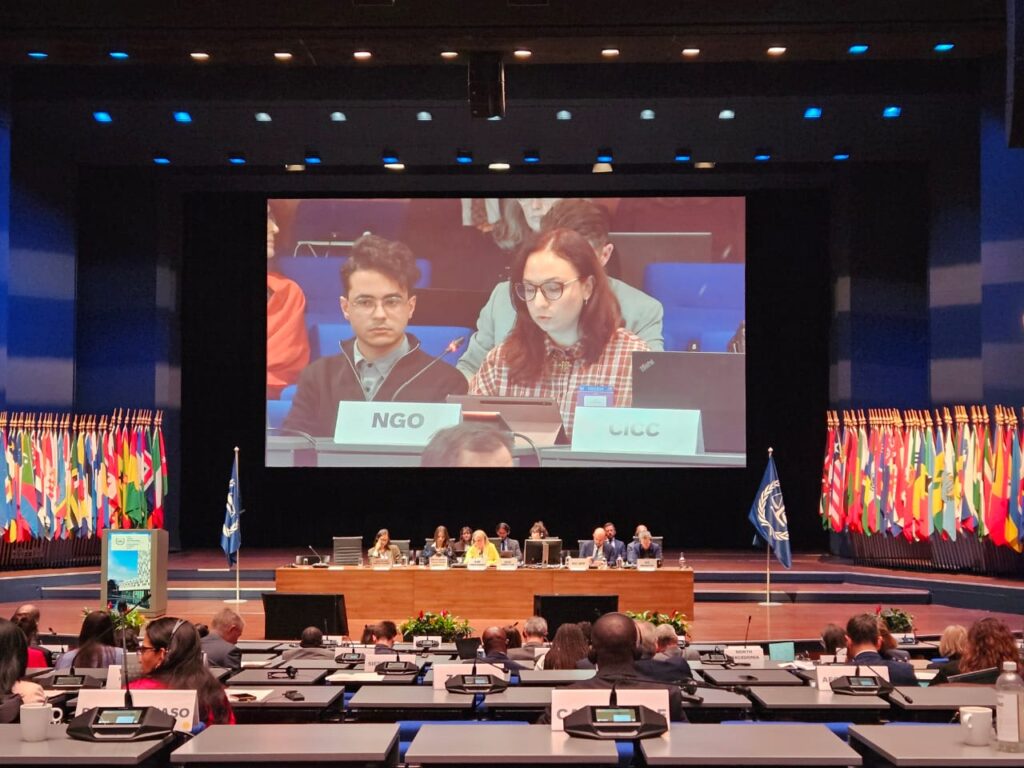
In her address during the session, Alina emphasised that behind every arrest warrant issued by the Court are hundreds of thousands of victims who have suffered – and continue to suffer – from grave atrocities. Through acts of non-cooperation, states betray victims’ hopes for justice and enable suspected war criminals to enjoy impunity.
These messages echo a statement by the Coalition for the ICC, which includes a comment by Nadia Volkova, director of ULAG, on the decision by Tajikistan, a state party to the Rome Statute, to welcome Putin on a visit.
During her visit to the Hague, Alina Pavliuk along with other Ukrainian CSOs met with representatives from the Trust Fund for Victims (TFV) and the Victims Participation and Reparations Section (VPRS).
We explored avenues for cooperation to facilitate assessment for assistance programs and improve the understanding of the specific rights and facilitate engagement of Ukrainian victims and their representatives within the ICC system.
The 24th Assembly of States Parties highlighted that while the demand for justice in Ukraine is higher than ever, the international mechanisms designed to deliver it are under strain.
As members of the Ukrainian civil society, we must continue to strengthen the ICC and ensure that the institution receives the support it needs to function – not just for Ukraine, but for all victims of atrocity crimes globally.
We joined the General Debate Statement that was made by Hanna Rassamakhina from MIHR on behalf of Ukrainian civil society organisations, and urged the states parties and other stakeholders:
Read next
Articles
The voices of Ukrainians must be heard
The letter was published in May 2026 on the website of our long-time partner ECCHR, in the Living Open Archive section. It is a collection of personal impressions and stories from ECCHR staff and partners about the projects they work on, the injustices and contexts they experience, and the world they envision. They share intimate reflections in letters to their colleagues, allies, and the world.
Articles
Prisoners of War Tried as Terrorists: What Is Happening to Ukrainian Soldiers Captured in Russia’s Kursk Region
The number of Ukrainians captured by Russian forces in the Kursk region remains hidden by the fog of war and defenders may be considered missing in action for months before suddenly appearing in photographs posted on Telegram channels alongside other prisoners of war. Or, conversely, families may search those same channels every day for any trace of their loved one, only to one day receive the devastating news of their death.
Articles
ECtHR Case Law on the Consequences of the Armed Conflict in Ukraine: The Detention of Ukrainian Troops at the Chornobyl Nuclear Power Plant
At the start of Russia’s full-scale invasion, one of the primary objectives of the Russian armed forces was to seize control of the Chornobyl Nuclear Power Plant (ChNPP). In February 2022, Russian troops occupied the facility and detained everyone there, including both civilian personnel responsible for maintaining the operation of the plant and members of the National Guard of Ukraine (NGU), who were responsible for the facility’s security.