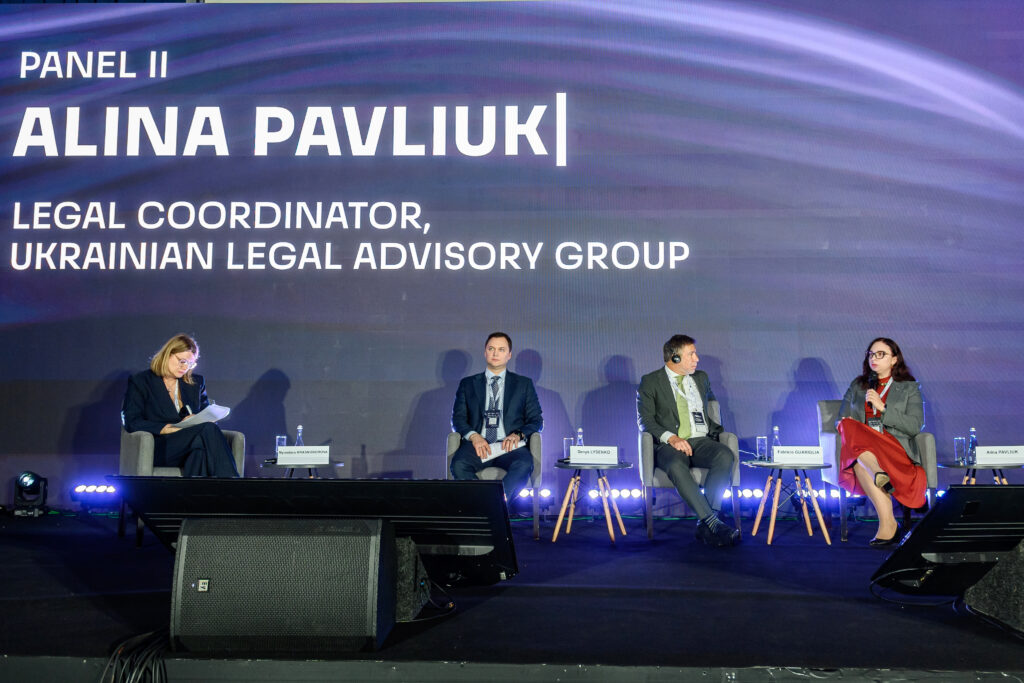
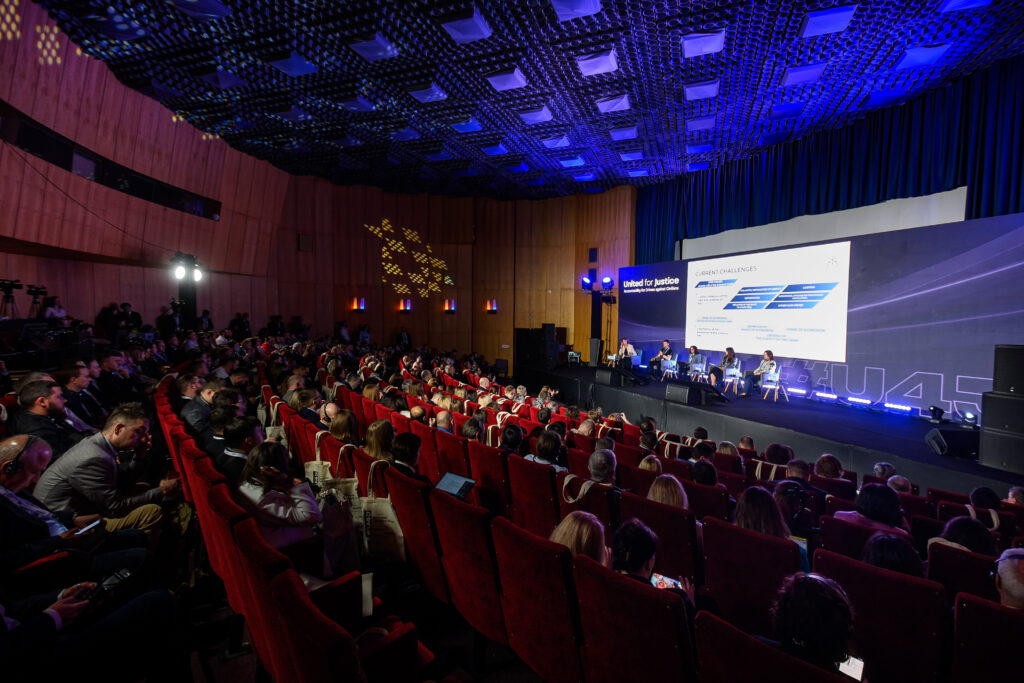
The Ministerial Meeting focused on two thematic priorities: the harmonisation of domestic legislation with international standards, and the strategy for investigating and prosecuting international crimes. As a co-chair of Workstream 4 (Civil Society) of the Dialogue Group, ULAG contributed to the substantive preparation of the Meeting — including the joint Dialogue Group Recommendations agreed under the themes of the panels of the meeting.
During the second panel, Alina Pavliuk, ULAG’s Legal Coordinator and Analyst, delivered remarks making the case for a coherent, state-level policy on justice and accountability for grave crimes.
The armed conflict, ongoing since 2014, has generated a staggering volume of documented violations. Ukraine must come up with an approach that would consolidate the efforts into a comprehensive system, rather than a set of fragmented processes. It should aim to comprehensively address the violations, including the widespread patterns and systemic violations, while preventing the system from being paralysed as a result of chasing each and every incident.
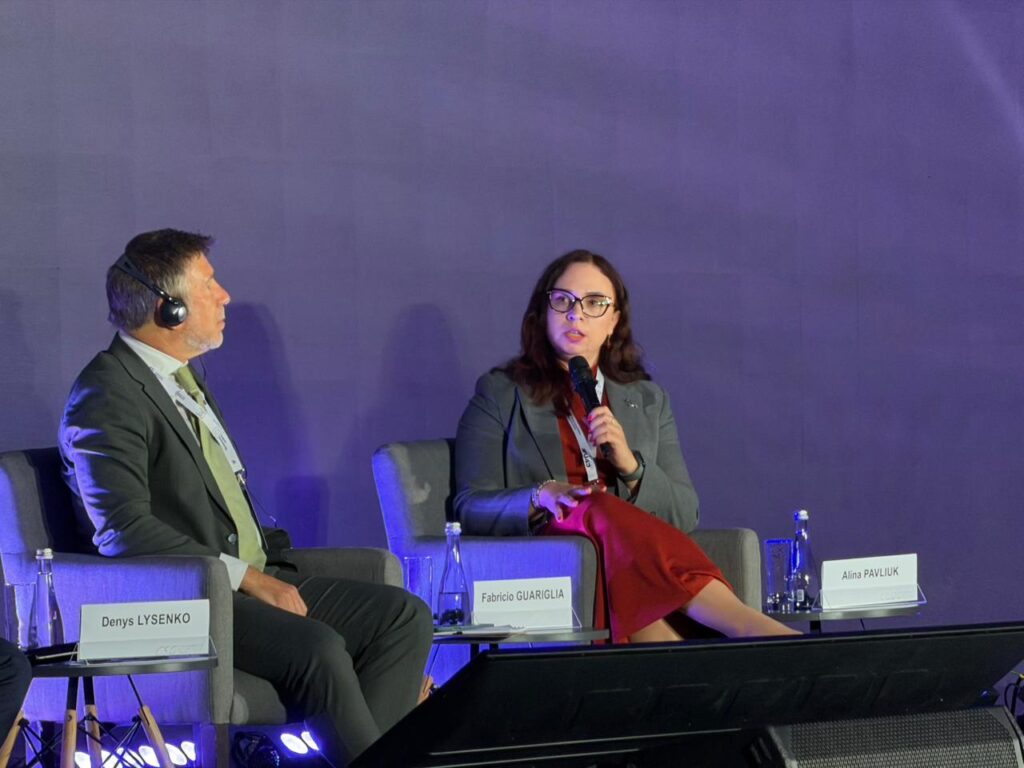
Alina stressed that victims should be in the centre of the system, and their courage to pursue justice for crimes they have been subjected to must be duly acknowledged. Meaningful engagement with survivors that provides real space for their voices is imperative to ensure effective justice, but also one that would be responsive to victims’ needs. The shallower such engagement, the less likely they will continue showing up and participate, as practice since 2014 shows.
Domestic authorities develop their own strategic vision, but institutional vision within each body is not enough. Sustained engagement from all stakeholders, not just the most motivated ones —, coherent communication across agencies, coordinated investigative strategies, shared priorities across all actors, as well as ensuring the necessary institutional and legislative framework to allow their work — all this requires a state-level commitment.
“Beyond the focus of individual institutions on which facts, crimes, and investigations matter most, we remain in a situation where the state itself must prioritise justice for the gravest international crimes.” — Alina Pavliuk.
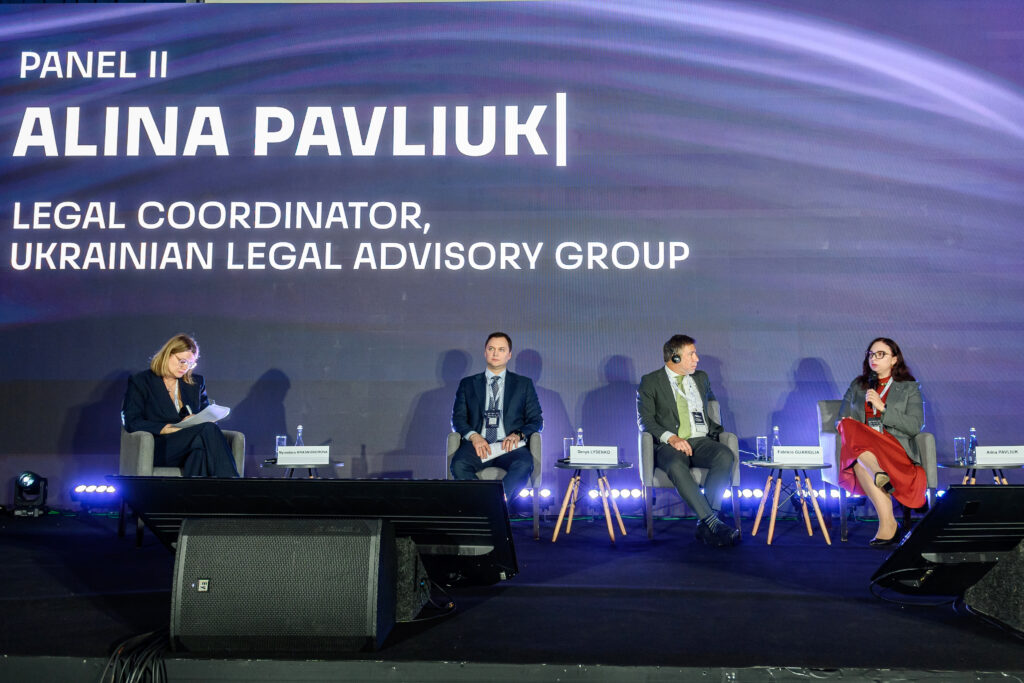
The need for a state policy was also brought up during the first panel on harmonization of Ukrainian legislation. Onysiia Syniuk from ZMINA Human Rights Centre stressed that issues related to crimes against humanity, support for victims, the prioritisation of proceedings and legislative reform cannot be addressed in isolation from one another. It needs a coordinated system and a clear understanding of a common goal.
Developing and adopting state policy on conflict-related international crimes would require significant work and even more importantly — strong political will. This makes it all the more significant that the idea was raised at a high-level event. Together with partners ULAG is working to develop a substantive vision that would hopefully help make this discussion more tangible.
Read next
Articles
The voices of Ukrainians must be heard
The letter was published in May 2026 on the website of our long-time partner ECCHR, in the Living Open Archive section. It is a collection of personal impressions and stories from ECCHR staff and partners about the projects they work on, the injustices and contexts they experience, and the world they envision. They share intimate reflections in letters to their colleagues, allies, and the world.
Articles
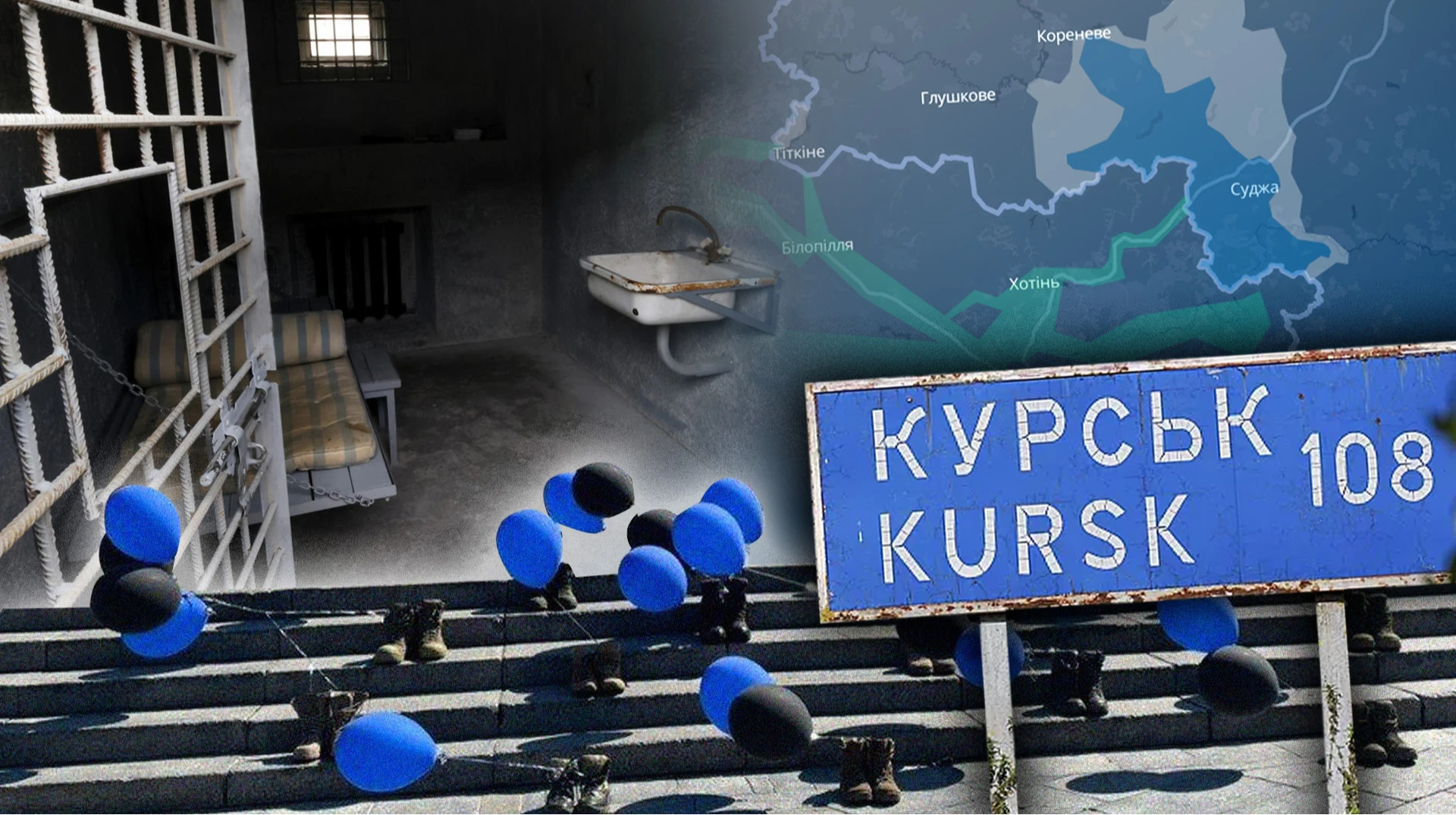
Prisoners of War Tried as Terrorists: What Is Happening to Ukrainian Soldiers Captured in Russia’s Kursk Region
The number of Ukrainians captured by Russian forces in the Kursk region remains hidden by the fog of war and defenders may be considered missing in action for months before suddenly appearing in photographs posted on Telegram channels alongside other prisoners of war. Or, conversely, families may search those same channels every day for any trace of their loved one, only to one day receive the devastating news of their death.
Articles
ECtHR Case Law on the Consequences of the Armed Conflict in Ukraine: The Detention of Ukrainian Troops at the Chornobyl Nuclear Power Plant
At the start of Russia’s full-scale invasion, one of the primary objectives of the Russian armed forces was to seize control of the Chornobyl Nuclear Power Plant (ChNPP). In February 2022, Russian troops occupied the facility and detained everyone there, including both civilian personnel responsible for maintaining the operation of the plant and members of the National Guard of Ukraine (NGU), who were responsible for the facility’s security.