At least 19 people, including 9 children, died as a result of a Russian shelling of Kryvyi Rih on April 4th – another deadly strike in the latest series of mass attacks. Unfortunately, we still cannot say with certainty that there is an effective recourse available to the victims of these crimes.
In this context the reaffirmed commitment to justice recently voiced by the European External Action Service and the EU High Representative is as important as ever.
In her address to members of the European Parliament in commemoration of the liberation of Bucha anniversary, Kaja Kallas said: “..The European Union must be unwavering in its commitment for accountability for all violations of international law committed in connection with Russia’s war of aggression against Ukraine.”
But to fulfill this pledge, more needs to be done, as justice pathways for victims of grave crimes are under attack or in a drastic need of support.
The International Criminal Court is a major justice pathway for Ukraine. In particular, the Court issued 4 arrest warrants in relation to attacks on civilian objects. To date the focus of this case has been attacks on critical infrastructure in the end of 2022 – beginning of 2023. However, it is hard to expect the scope of the investigation to expand, when the Court is facing existential threats.
The EU must adopt a Blocking Statute to protect the ICC from US sanctions, and react decisively to growing instances of EU member states questioning or directly undermining the ICC legitimacy through acts of non-cooperation.
The Ukrainian domestic justice system is in need of sustainable assistance, particularly in light of US aid cuts. Support for state institutions, as well as civil society should be strategic, long-term oriented and based on the real needs of the system.
Addressing glaring accountability gaps is as relevant as ever. Existing mechanisms require constant and continuous reinforcement. This can mean reimagining current, as well as supporting new initiatives and approaches.
We urge the European Union and its members to embrace its leading role in justice and accountability efforts and stand by their commitment to protect victims of grave crimes.
Read next
News
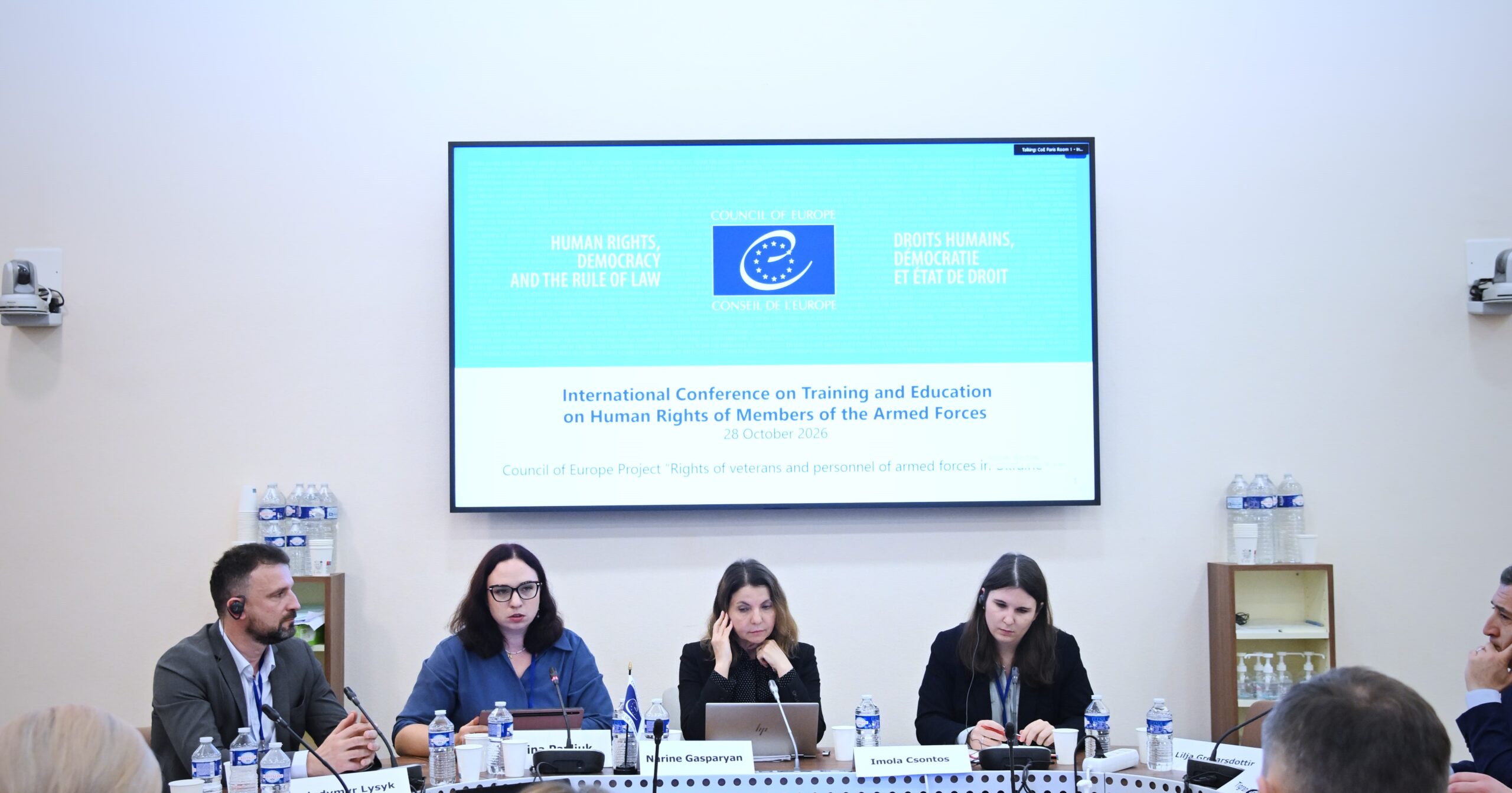
Protecting the Rights of Prisoners of War and Monitoring Human Rights in the Armed Forces: ULAG at a Council of Europe Conference
Alina Pavliuk, ULAG Analyst and Legal Coordinator, spoke at the International Conference on Training and Education on Human Rights of Members of the Armed Conflict. The event was organised by the Council of Europe in Paris on 28 of October.
News
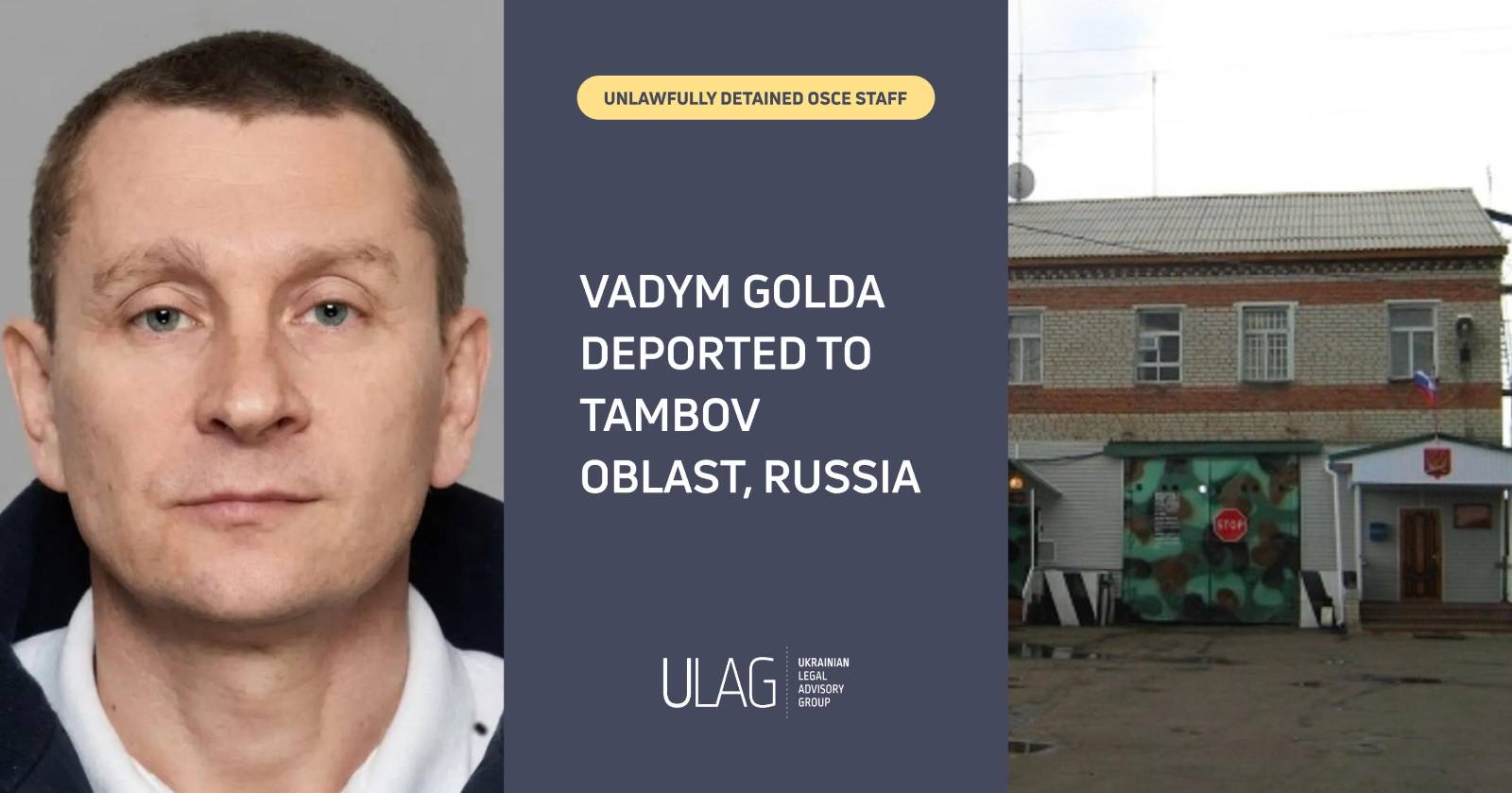
OSCE SMM staff member Vadym Golda deported to Russia
Vadym Golda’s family has reported that he was transferred from temporarily occupied Donetsk region to Medical Correctional Institution No. 7 of the Russian Federal Penitentiary Service in Tambov Oblast. Reports of his likely transfer had emerged earlier: before the transfer, Vadym was last in contact on 15 October 2026 and expected to be moved on […]
News
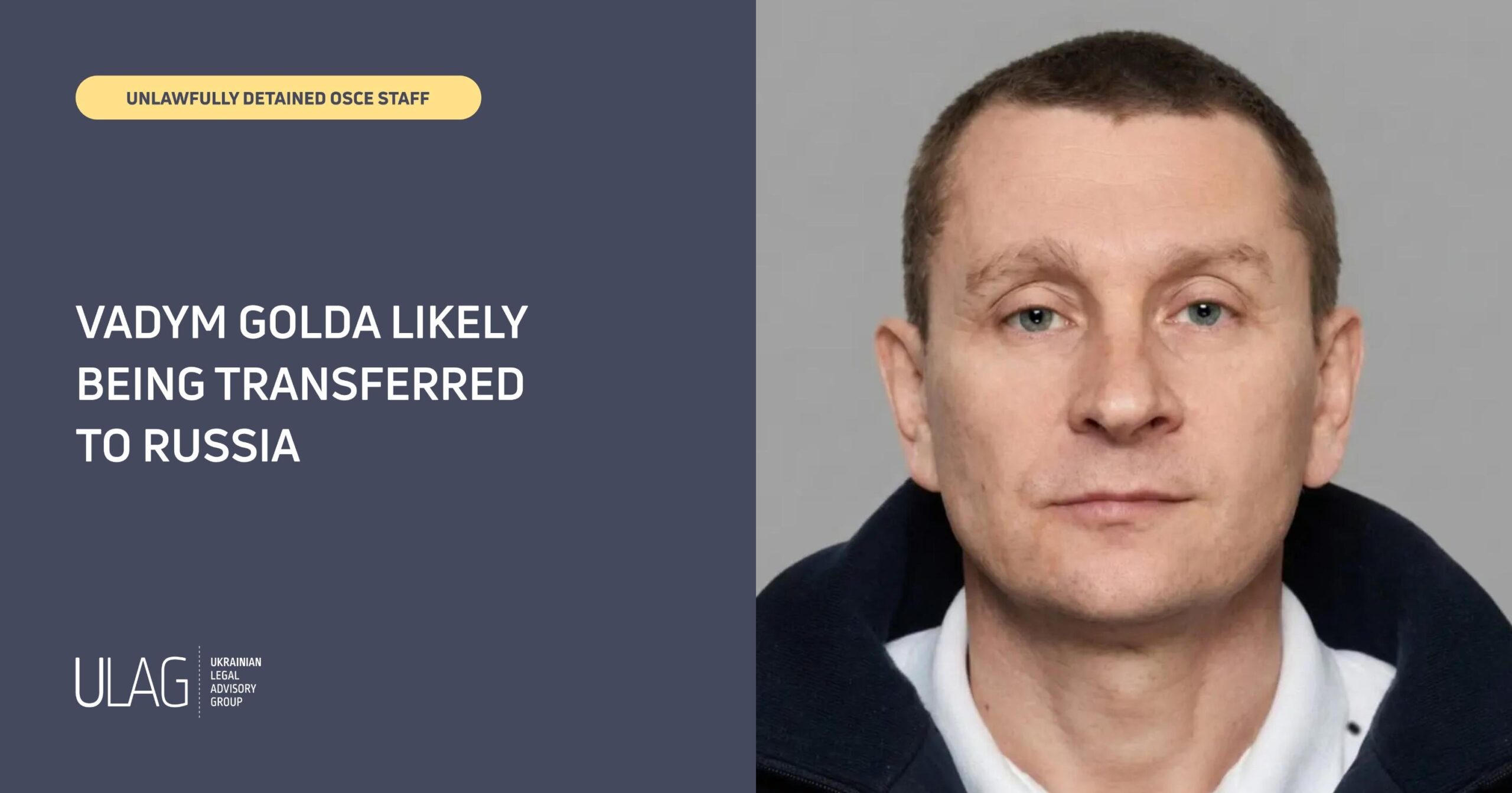
Vadym Golda, OSCE SMM staff member, likely being transferred from temporarily occupied Donetsk Oblast to Russia
According to his family, Vadym, who had been held in temporarily occupied Donetsk region, was last in touch with them on 15 October 2026. He had previously told them that for several months there had been rumours of an “evacuation” of convicted prisoners to Siberia, and that since August 2026 people had been regularly taken […]