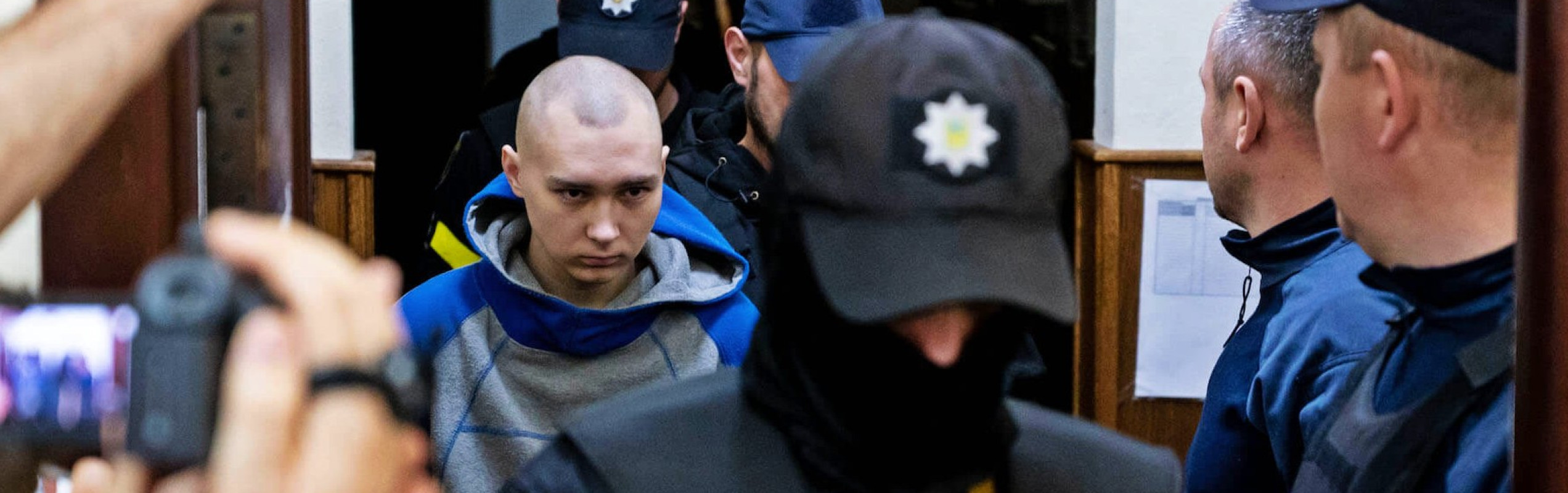
The Office of the Prosecutor General (OPG) is constantly updating the statistics of documented violations, as well as bringing charges to the Russian military and government authorities in absentia. However, it is the cases of detained prisoners of war (POW) that have the best prospects in the context of bringing the perpetrators to justice at the domesting level.
On May 23, 2022, Vadim Shishimarin, a Russian commander of the 4th Kantemirov Division of the Moscow Oblast, was sentenced to life imprisonment. He was found guilty of violating the laws and customs of war, combined with premeditated murder under p. 2 of article 438 of the Criminal Code of Ukraine.
Contrary to popular narrative, this is not the first trial of the Russian military for crimes committed in Ukraine. Since 2014, Ukrainian courts have already sentenced Russian servicemen for waging an aggressive war on the territory of Ukraine under article 437 of the Criminal Code of Ukraine. Domestic courts also tried alleged war crime perpetrators in absentia and one sentence was passed on the detained person. The uniqueness of this case is that for the first time the court investigates the fact of a war crime committed after February 24, 2022.
The accused has the status of a prisoner of war, which protects against prosecution in Ukraine, in accordance with the Geneva Convention relative to the Treatment of Prisoners of War. However, such protection does not apply to those accused of a commission of war crimes. That is why this trial became possible.
At first glance, this news is a triumph of justice. However, true justice is manifested not only in the sentence itself, but also in its lawfulness and compliance with the rule of law.
War crimes shall be dealt with in accordance with international humanitarian and criminal law (IHL and ICL). Article 438 of the Criminal Code refers to them in its core. Unfortunately, this trial has called into question the competence and capacity of the parties to the process to properly address violations of the laws and customs of war. There are several issues leading to such conclusion:
The number of cases against prisoners of war detained during this phase of the conflict will only increase over time. This is evidenced by indictments that are actively published on the official website of the Office of the Prosecutor General. However, the demand for rapid justice or other motives should not be met at the expense of the quality. Otherwise, we risk creating the illusion of justice, which will not result in restoring victims rights or bringing perpetrators to account.
Read the original article on ZMINA.info
Read next
Articles
The voices of Ukrainians must be heard
The letter was published in May 2026 on the website of our long-time partner ECCHR, in the Living Open Archive section. It is a collection of personal impressions and stories from ECCHR staff and partners about the projects they work on, the injustices and contexts they experience, and the world they envision. They share intimate reflections in letters to their colleagues, allies, and the world.
Articles
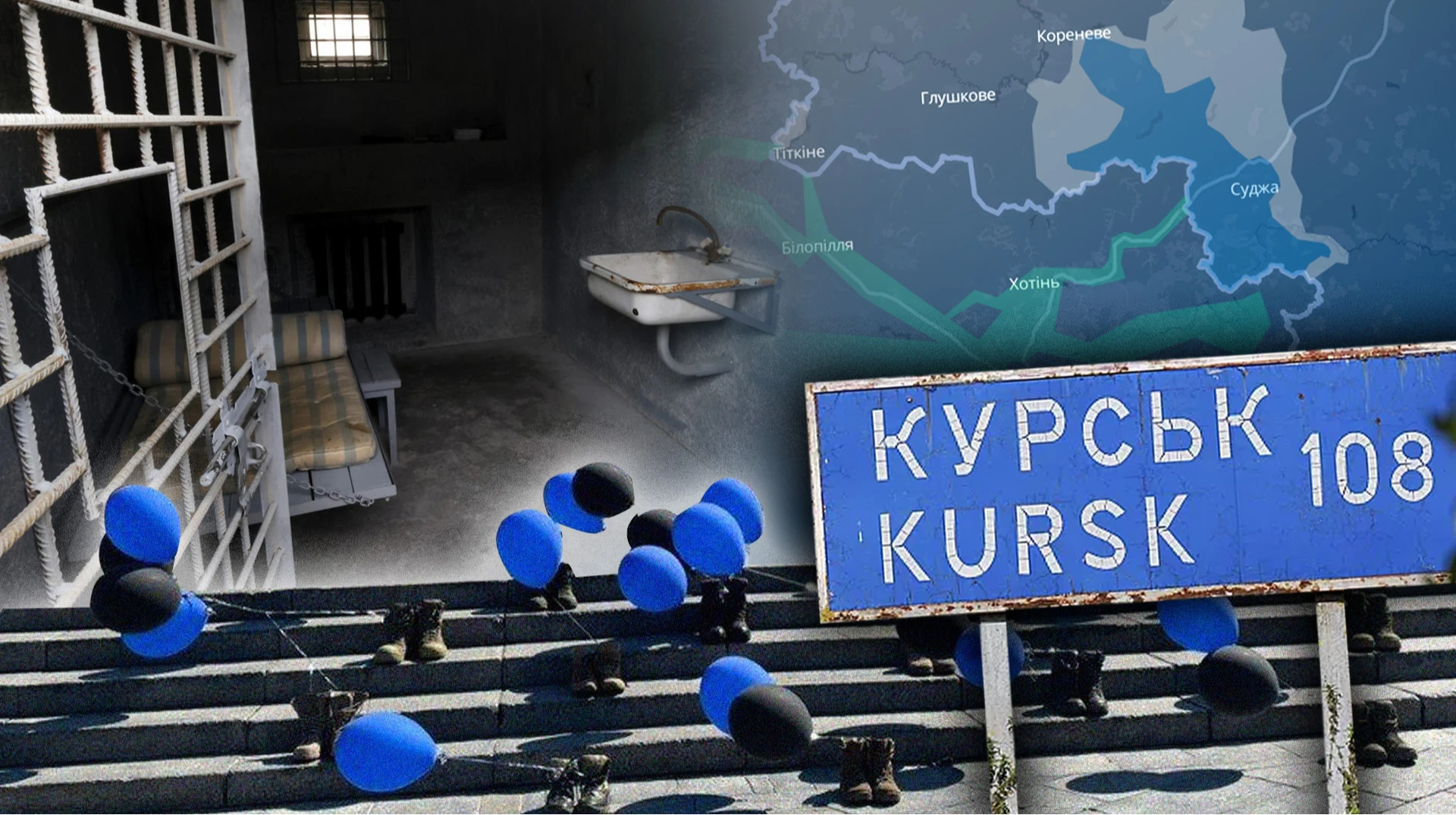
Prisoners of War Tried as Terrorists: What Is Happening to Ukrainian Soldiers Captured in Russia’s Kursk Region
The number of Ukrainians captured by Russian forces in the Kursk region remains hidden by the fog of war and defenders may be considered missing in action for months before suddenly appearing in photographs posted on Telegram channels alongside other prisoners of war. Or, conversely, families may search those same channels every day for any trace of their loved one, only to one day receive the devastating news of their death.
Articles
ECtHR Case Law on the Consequences of the Armed Conflict in Ukraine: The Detention of Ukrainian Troops at the Chornobyl Nuclear Power Plant
At the start of Russia’s full-scale invasion, one of the primary objectives of the Russian armed forces was to seize control of the Chornobyl Nuclear Power Plant (ChNPP). In February 2022, Russian troops occupied the facility and detained everyone there, including both civilian personnel responsible for maintaining the operation of the plant and members of the National Guard of Ukraine (NGU), who were responsible for the facility’s security.