In September this year, ULAG, together with the Dnipropetrovsk Regional Prosecutor’s Office, began working together to strengthen the investigation into the Russian Federation’s armed forces use of FPV drones against civilian population of Ukraine.
As part of the project, we will work with investigators and prosecutors in the Dnipropetrovsk region in criminal proceedings related to documented facts of attacks by FPV drones. In particular, we will support their work in gathering and analysing information (including OSINT) and, with the assistance of international experts, provide recommendations on crime classification, developing investigation strategies, and application of best international practices in these proceedings. Efforts will be also aimed at ensuring meaningful participation of victims and witnesses in proceedings, as well as other aspects of the process. To achieve that, ULAG’s lawyers will represent victims in proceedings and coordinate experts’ and analysts’ work.
We aim to develop a methodology and approaches for investigating attacks by FPV drones on civilians as international crimes. We hope these findings will support the efforts of prosecutors and investigators in various regions and help to establish a common practice for dealing with this type of violations.
The number of such crimes is increasing year by year as the use of drones as a means of warfare becomes more widespread. According to information from the Office of the Prosecutor General, only 187 incidents of FPV drone attacks against civilians were recorded in 2022–2023, whereas in 2025 numbers had risen to 7,787. In the first seven months of 2026, there were 2,614 such incidents.
The residents of Nikopol and its suburbs in the Dnipropetrovsk region are subjected to regular attacks from Russian military positions on the left bank of the Dnipro. In 2026, law enforcement agencies are recording several dozen FPV drone strikes against civilians per day. The work of emergency services personnel at the sites of the strikes is hampered by the threat of ‘double-tap’ attacks. Due to difficult access and security risks, law enforcement agencies also have limited ability to collect evidence.
“Ukraine is probably the only country investigating crimes involving use of drones during active hostilities. We are developing methodology in collaboration with the Dnipropetrovsk Regional Prosecutor’s Office, the National Police, and international experts that could form the basis for investigations in other armed conflicts.
It is equally important to us that the victims’ voices are heard – in particular through the representation of their interests in legal proceedings – and that they have the opportunity to restore their rights.
We appreciate the openness to cooperation shown by the prosecution authorities and the National Police. We are thankful for the support of the Embassy of the Netherlands in Ukraine and our partners at Justice Rapid Response in this project,” emphasises ULAG Director Nadia Volkova.
The project will run until August 2028. Read more about its stages >>
Read next
News
Advocating for the Release of Unlawfully Detained OSCE SMM Staff in Washington
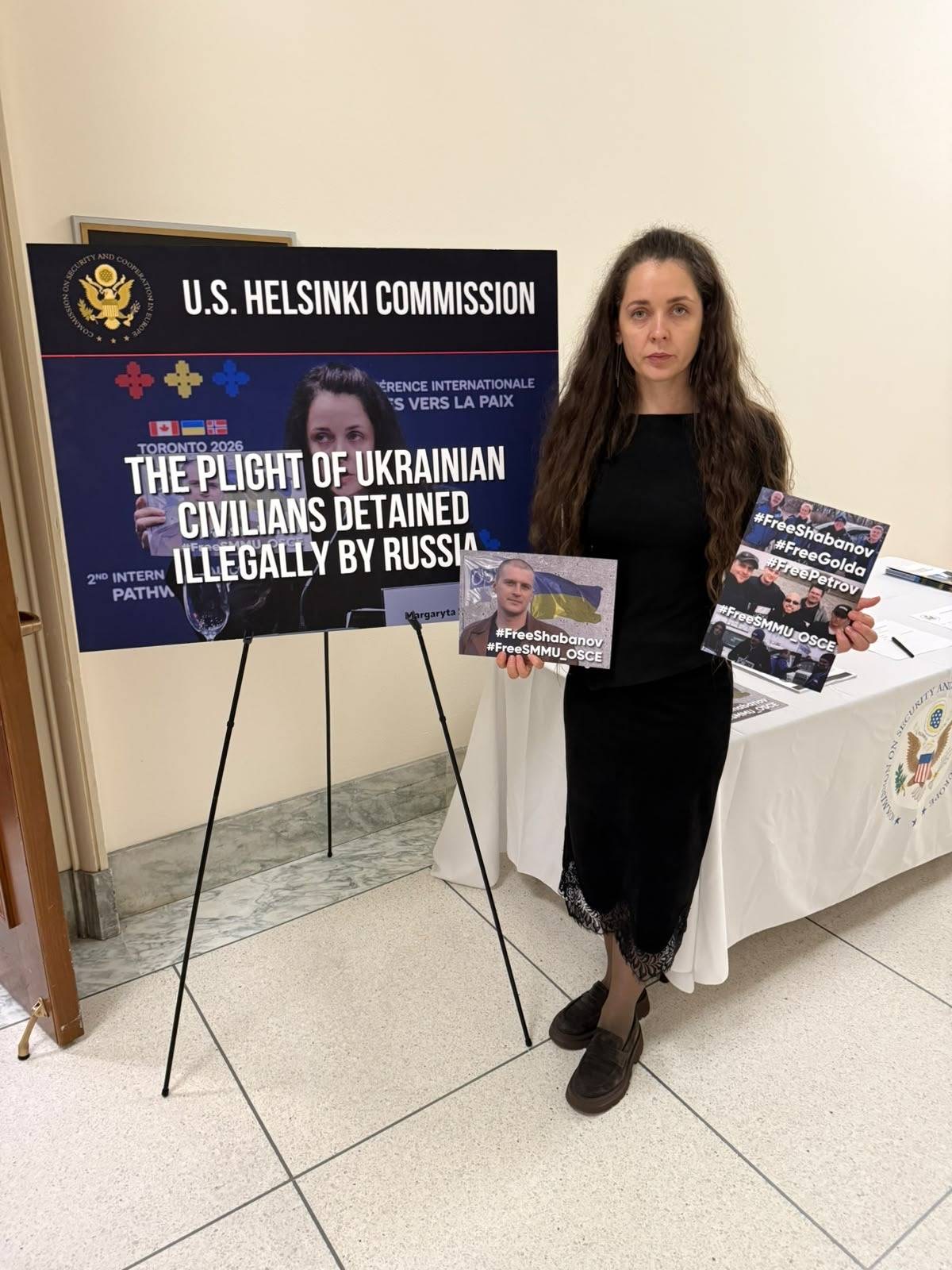
In October, Margaryta Shabanova, the wife of Dmytro Shabanov, an OSCE SMM staff member unlawfully detained by Russia, visited Washington, where she met with congressional offices, US government officials, and civil society representatives. She called for intensified international efforts to secure the release of her husband and his colleagues, Maksym Petrov and Vadym Holda, as […]
News
Protecting the Rights of Prisoners of War and Monitoring Human Rights in the Armed Forces: ULAG at a Council of Europe Conference
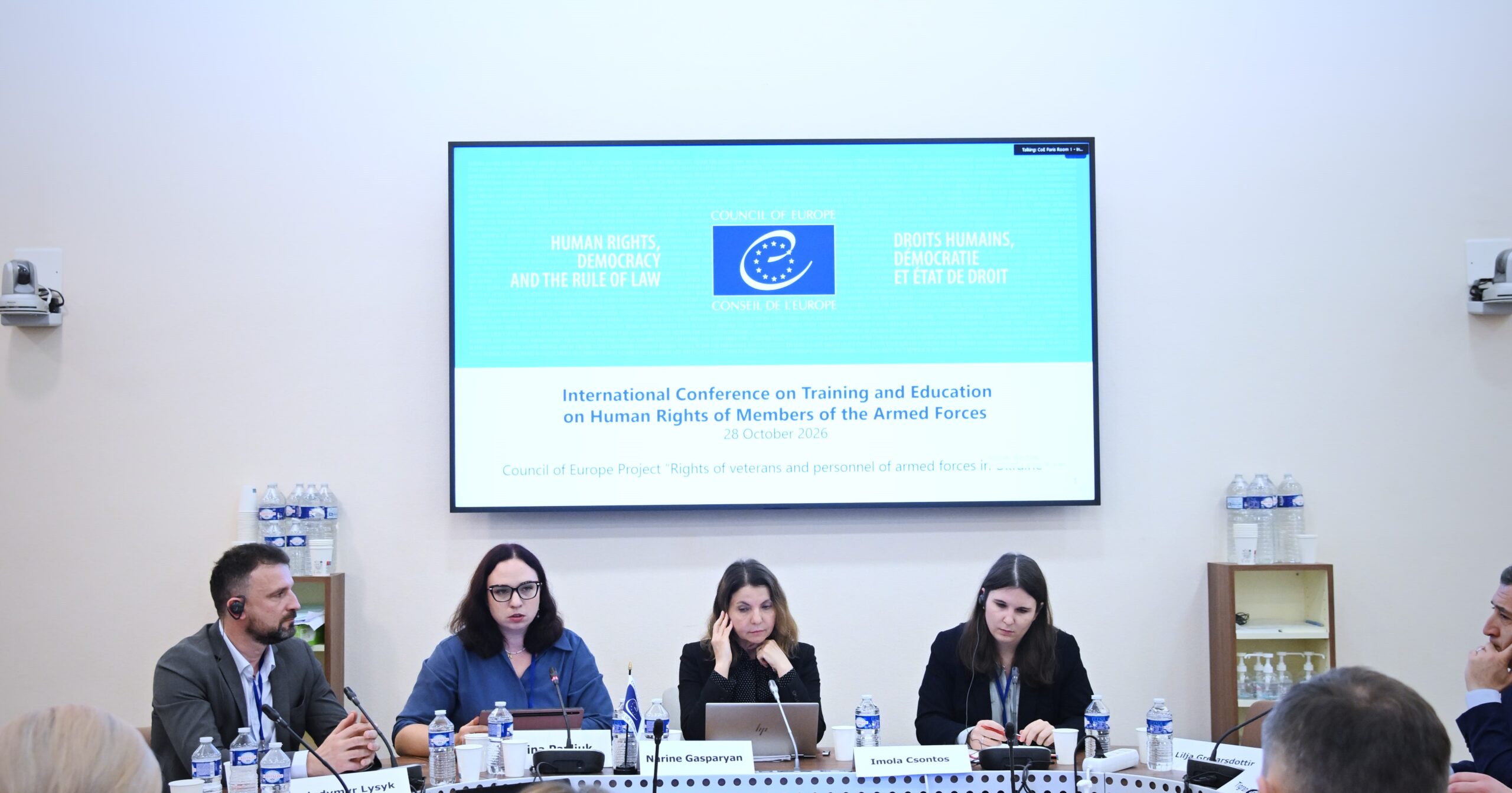
Alina Pavliuk, ULAG Analyst and Legal Coordinator, spoke at the International Conference on Training and Education on Human Rights of Members of the Armed Conflict. The event was organised by the Council of Europe in Paris on 28 of October.
News
OSCE SMM staff member Vadym Golda deported to Russia
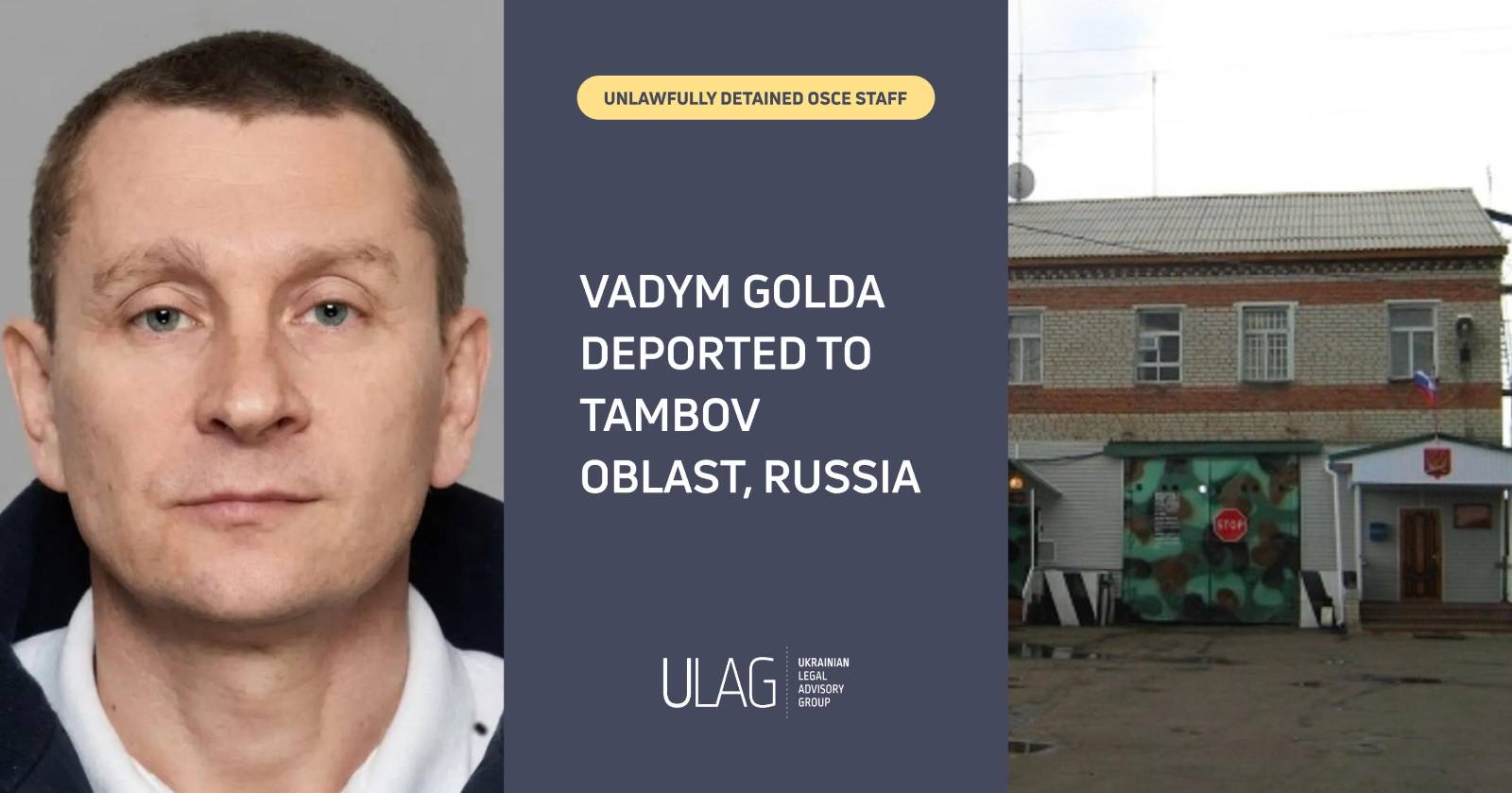
Vadym Golda’s family has reported that he was transferred from temporarily occupied Donetsk region to Medical Correctional Institution No. 7 of the Russian Federal Penitentiary Service in Tambov Oblast. Reports of his likely transfer had emerged earlier: before the transfer, Vadym was last in contact on 15 October 2026 and expected to be moved on […]