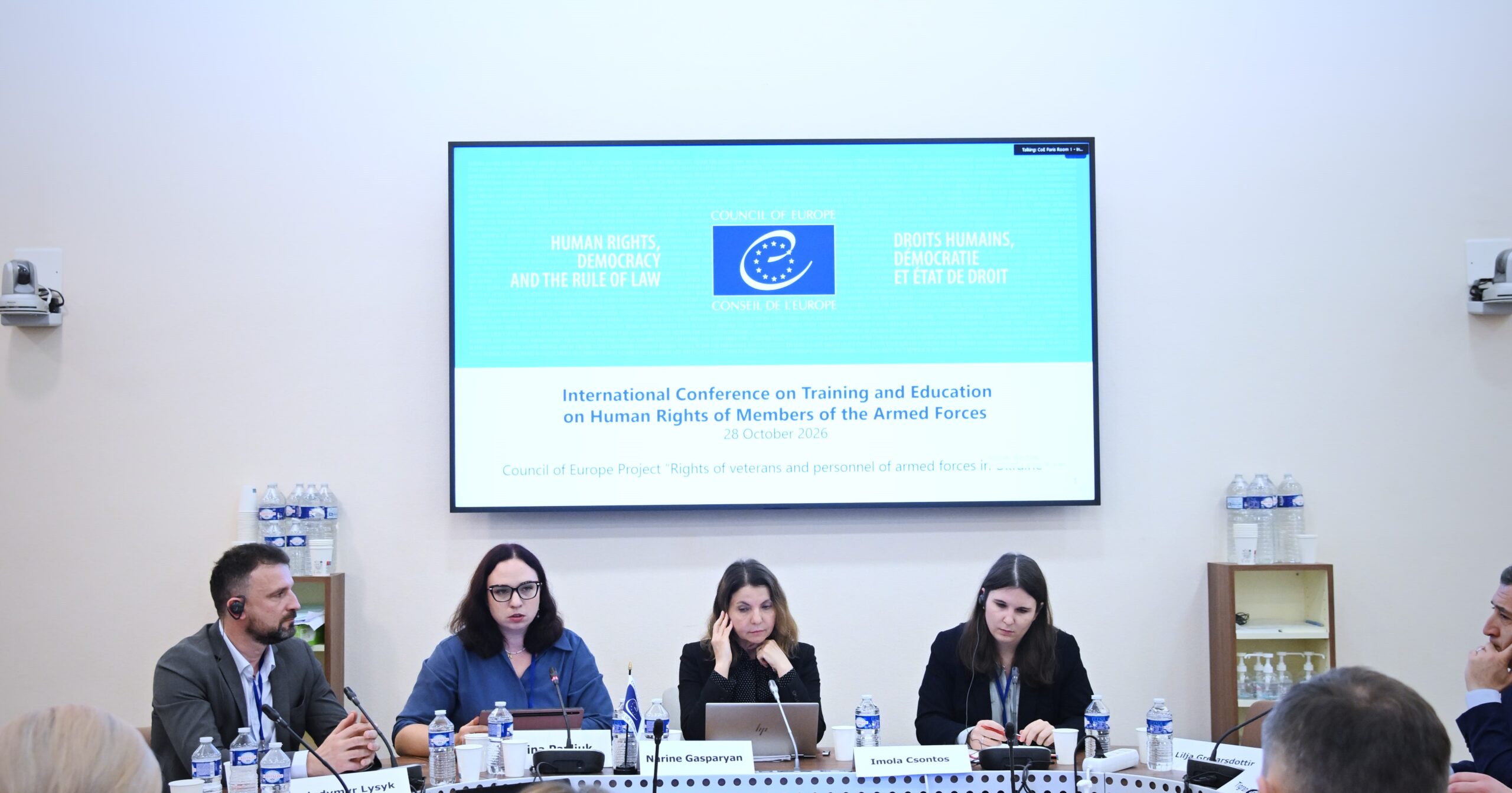
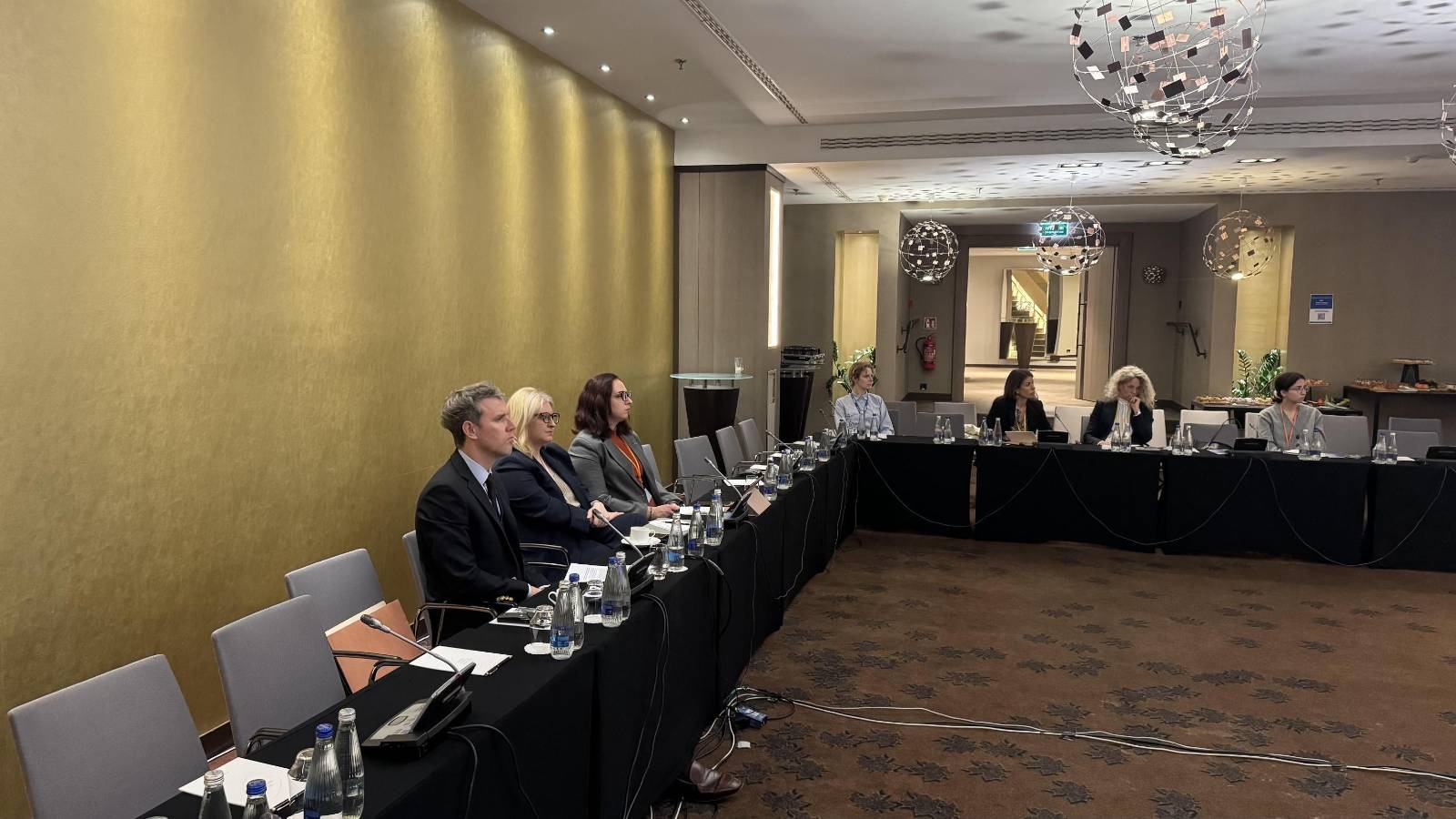
Alina Pavliuk, ULAG Analyst and Legal Coordinator, spoke at the International Conference on Training and Education on Human Rights of Members of the Armed Conflict. The event was organised by the Council of Europe in Paris on 28 of October.
The conference brought together representatives of Ukrainian government authorities, military educational institutions, NGOs, international organisations, and 20 Council of Europe member states to exchange experiences and best practices.
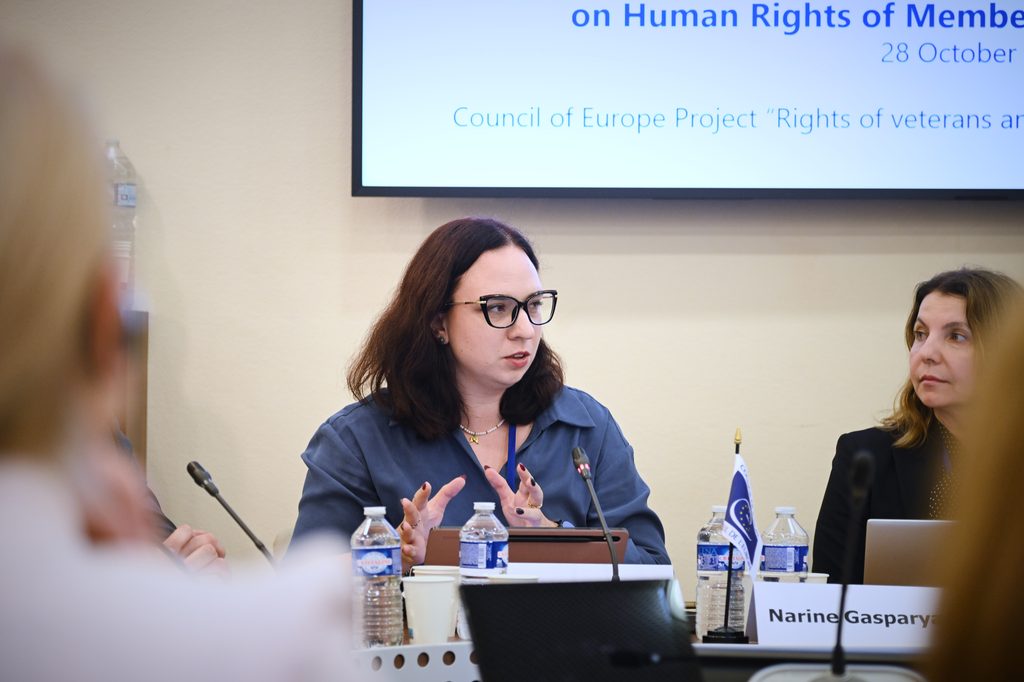
Alina Pavliuk spoke during a session dedicated to raising awareness of human rights among military personnel. In particular, she shared ULAG’s experience in protecting the rights of former prisoners of war and highlighted Ukraine’s efforts to develop domestic practices for protecting human rights within the armed forces.
“The practices of European countries in protecting the rights of military personnel can serve as examples for Ukraine, demonstrating what has worked and what challenges have emerged during their development and implementation. But even with access to established international best practices, we still have to develop our own model in this area,” she noted during her speech and outlined the key elements of this process.
First, this requires the effective implementation of human rights standards into national legislation, not only at the constitutional level but also in other regulatory and legal acts. Second, a thorough examination of practices in other countries to identify approaches that could be effectively applied in the Ukrainian context. Third, the ongoing armed conflict must be taken into account when making decisions, developing reforms, and establishing human rights protection mechanisms.
Alina also noted that the scale of the armed conflict’s consequences, the need to implement transitional justice instruments, and the importance of supporting veteran communities are significant factors in developing respective national strategies and policies.
Servicemembers who have been held captive are a clear example of the specific challenges arising from this context. This category emerged in Ukraine in 2014, and it was impossible to simply adopt another country’s existing practices. These servicemembers have been subjected to grave international crimes, including torture, inhuman conditions of detention, judicial persecution, extrajudicial executions, and deportation — therefore requiring significantly greater protection.
Over the past 12 years, three main areas of vulnerability among former prisoners of war have emerged.
The first is secondary victimisation. Upon returning from captivity, servicemembers are viewed primarily as a source of information for military command, intelligence, and law enforcement agencies. This harms their psychological well-being and undermines their overall trust in the justice system.
The second is the legal status of former prisoners of war. Official recognition of this status provides additional guarantees of financial and medical support, but it also creates formal requirements that complicate the exercise of their rights. Proper documentation of their military service affects the recognition of their status, while unclear tasks create a risk of criminal prosecution (e.g. for unauthorised absence from their unit or desertion).
The third area is long-term support from the state. For example, access to medical care for active-duty military personnel does not attract systemic criticism. However, once they are discharged from service, a “grey area” emerges in the provision of such care, requiring further attention.
Another important issue highlighted by Alina Pavliuk is the need to develop effective mechanisms for independent monitoring of human rights compliance within the military.
Several major challenges stand in the way of this. First, access to combat positions and deployment sites is restricted due to the security situation. Second, the status of monitoring bodies, whether civilian or military, must enable them to respond promptly to reports of violations and ensure unrestricted access to relevant information. Alina noted that during wartime, the independence of these bodies from military structures and the lack of clear coordination with them may undermine the effective operation of monitoring systems.
“The establishment of the Military Ombudsman’s Office is an example of an important and necessary initiative. It is currently developing as a new mechanism, but this does not eliminate the need for an effective mechanism for investigating and prosecuting crimes committed within military units,” noted Alina Pavliuk.
Read next
News
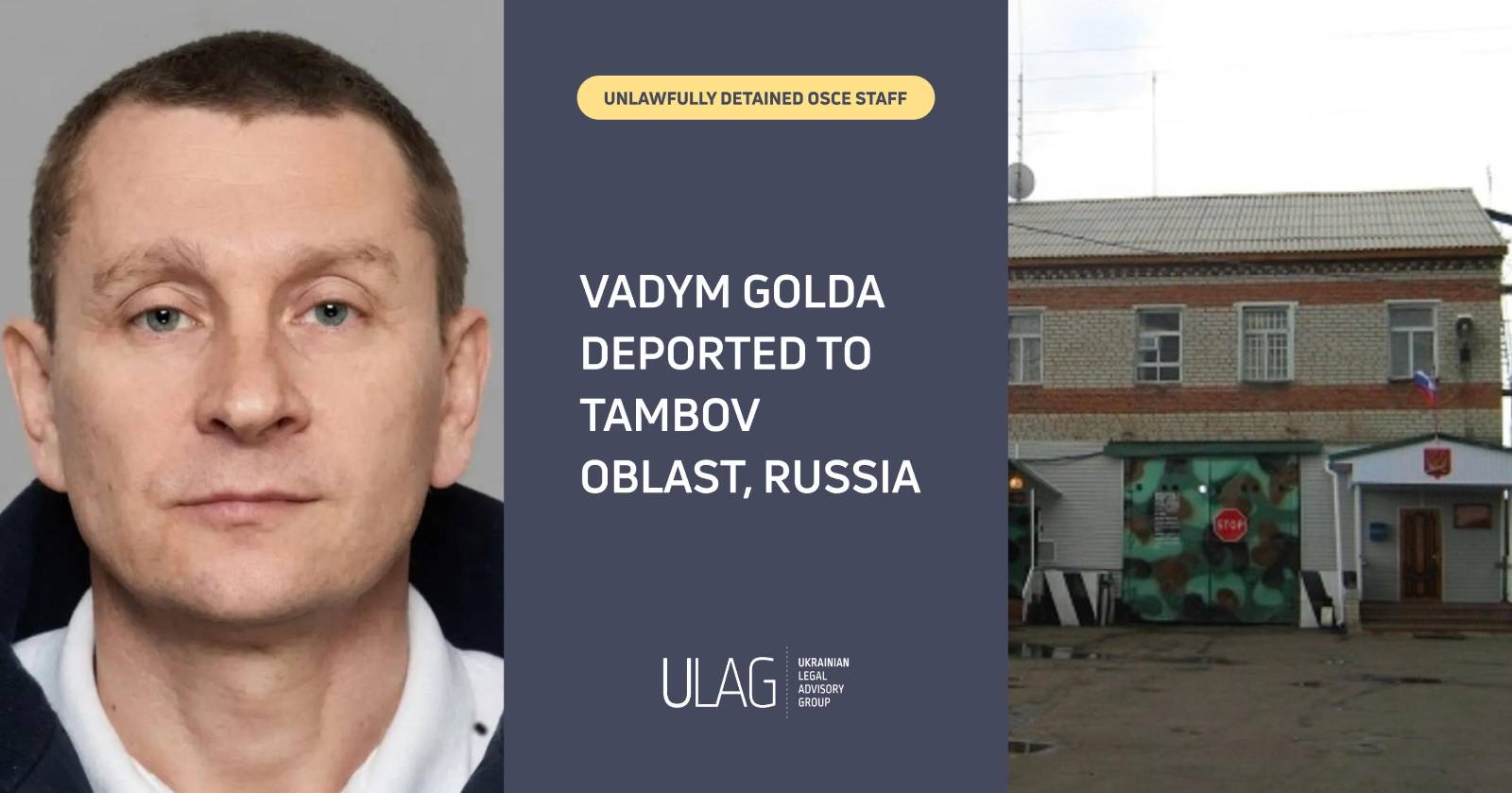
OSCE SMM staff member Vadym Golda deported to Russia
Vadym Golda’s family has reported that he was transferred from temporarily occupied Donetsk region to Medical Correctional Institution No. 7 of the Russian Federal Penitentiary Service in Tambov Oblast. Reports of his likely transfer had emerged earlier: before the transfer, Vadym was last in contact on 15 October 2026 and expected to be moved on […]
News
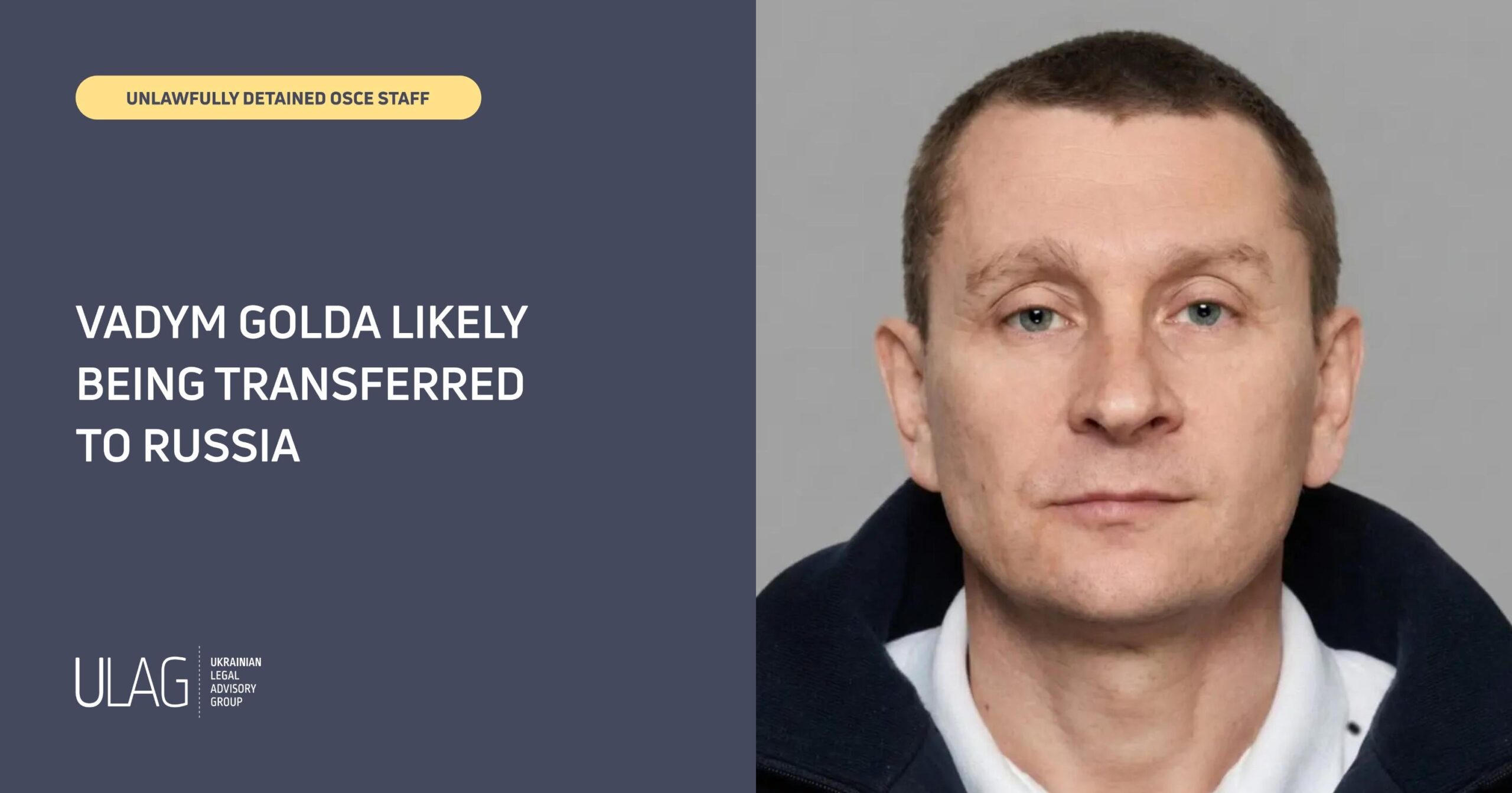
Vadym Golda, OSCE SMM staff member, likely being transferred from temporarily occupied Donetsk Oblast to Russia
According to his family, Vadym, who had been held in temporarily occupied Donetsk region, was last in touch with them on 15 October 2026. He had previously told them that for several months there had been rumours of an “evacuation” of convicted prisoners to Siberia, and that since August 2026 people had been regularly taken […]
News
Why Ukraine Needs a State Policy on Justice for Grave Crimes — a Warsaw Human Dimension Conference 2026 Side Event
What would a comprehensive state policy on justice for grave international crimes look like, and why does Ukraine need one now? These questions were discussed on 8 October at a side event of the Warsaw Human Dimension Conference 2026 (WHDC), co-organised by ULAG and Civil Rights Defenders. The panellists were Alina Pavliuk (ULAG), Onysiia Syniuk […]