The European Court of Human Rights’ judgment of 9 July 2025 in the inter-State case Ukraine and the Netherlands v. Russia marked a turning point for the examination of individual applications concerning the consequences of Russia’s armed conflict against Ukraine. Its conclusions are relevant both to violations arising from the events in eastern Ukraine since 2014 and to those committed following Russia’s full-scale invasion.
The judgment addresses a wide range of human rights violations committed during the armed conflict. Nevertheless, a number of important legal issues remain unresolved and can only be addressed through the examination of individual applications before the Court.
One such case is currently being litigated by ULAG lawyers.
At the start of Russia’s full-scale invasion, one of the primary objectives of the Russian armed forces was to seize control of the Chornobyl Nuclear Power Plant (ChNPP). In February 2022, Russian troops occupied the facility and detained everyone there, including both civilian personnel responsible for maintaining the operation of the plant and members of the National Guard of Ukraine (NGU), who were responsible for the facility’s security.
Until the end of March 2022, all detainees remained at the plant. Later, the NGU troops were transferred to the territory of Belarus and then to various penal colonies in the Russian Federation, where they were held as prisoners of war.
ULAG began working with the families of the captured NGU troops in July 2022. In August of that year, the legal team submitted applications to the ECtHR under Rule 39 of the Rules of Court (requesting interim measures aimed at preventing ongoing violations of the applicants’ rights) which were granted immediately. Following the applicants’ release from captivity, full individual applications alleging violations of Articles 3, 5, and 13 of the European Convention on Human Rights were lodged between 2022 and 2025. In February and April 2026, ULAG lawyers submitted observations in response to the Court’s questions concerning, in particular, alleged violations of Articles 3 and 5 of the Convention in these cases.
Among the issues submitted to the ECtHR by the detained servicemen is the alleged violation of Article 5 of the European Convention on Human Rights, which guarantees the right to liberty and security. The safeguards protecting the lawfulness of detention must apply not only in peacetime but also during armed conflict.
The primary presumption arising from the facts of the case is that, where members of the armed forces are concerned, they are automatically regarded as prisoners of war. Such an assumption effectively precludes any claim that their detention by the opposing party was unlawful. However, the realities of armed conflict frequently give rise to situations that cast doubt on this presumed status and require closer examination of the circumstances and protection of detainees under international human rights law.
A crucial consideration is that the detained NGU troops had been assigned to protect a high-risk facility from potential threats. They were equipped only with light weapons intended for response measures, which was not enough for taking part in hostilities during an armed conflict. The seizure of the Chornobyl Nuclear Power Plant was part of a planned military operation conducted by the Russian armed forces, while the attack on the facility itself created serious security risks not only for personnel stationed there but also for the civilian population throughout the region.
Article 4 of the Convention Relative to the Treatment of Prisoners of War of 12 August 1949 set out criteria for the protection of the legal status of combatants during armed conflict. However, this legal framework does not fully address the fact that armed units must take an active part in hostilities against the opposing party in order to fall within the scope of this status and to benefit from the guarantees attached to it.
One of the more obvious factors relevant to assessing whether the NGU troops were capable of taking part in hostilities is the nature of the weapons they carried. Light weapons can be used by combatants during armed conflict, as well as by law enforcement units while performing policing functions in peacetime, and, in certain circumstances, used by civilians. But during armed conflict combatant status is determined not only by carrying of arms openly and subordination to a responsible command, but also by the assigned duties to the individual.
The nature of a person’s weaponry is neither an independent nor a decisive criterion for determining combatant status under international humanitarian law. The decisive considerations are the functional purpose of the unit, its integration into the structure of the armed forces, and its actual or intended participation in hostilities.
Light weapons may indicate that a unit is assigned for limited defensive functions and lacks the capacity to conduct full-scale combat operations, rather than confirming or excluding combatant status as such. Meanwhile, when a unit equipped solely with firearms and close-range weapons, performs security functions at a protected facility and is not considered to be direct participation in hostilities against the enemy, the automatic application of prisoner-of-war status upon capture becomes open to question. Accordingly, the legal status of such personnel should be assessed comprehensively — taking into account both the nature of their assigned duties and the context in which those duties were performed.
The events giving rise to the present case, together with the fact that the NGU units continued to perform their security duties at the Chornobyl Nuclear Power Plant even after the launch of Russia’s full-scale invasion, demonstrate that the question of their legal status is closely linked to their overall role in Ukraine’s defence against armed aggression.
If the detained NGU troops possessed combatant status under international humanitarian law, they were entitled to the protections afforded to prisoners of war, and their capture cannot constitute a violation of Article 5 of the European Convention on Human Rights. As the ECtHR confirmed in Ukraine and the Netherlands v. Russia, only the manner in which prisoners of war are treated may fall within the scope of the Convention’s guarantees, particularly with regard to the protection of the right to life and the prohibition of torture and inhuman or degrading treatment (see, for example, paras. 1042 and 1075–1079 of the judgment; see also Hassan v. the United Kingdom, no. 29750/09).
If we assume that these NGU troops are found not to have qualified as combatants within the meaning of international humanitarian law, their detention may constitute a violation of the Convention due to the absence of a lawful legal basis, detention in facilities not established by law, and the unlawful manner in which they were deprived of their liberty. Such an approach would broaden the scope of legal protection afforded to detainees by requiring scrutiny of the legal grounds for detention, compliance with procedural safeguards prescribed by law, determination of the detainees’ legal status, and clarification of the interaction between international human rights law and international humanitarian law.
The general framework of international humanitarian law applicable during armed conflict provides clear guarantees for prisoners of war, including humane conditions of detention, respect for dignity, and the prohibition of torture and cruel treatment. Nevertheless, an important practical challenge remains — whether individuals protected by international humanitarian law are in fact able to fully benefit from the safeguards attached to that legal status.
Human rights guarantees continue to apply during armed conflict and provide an additional layer of protection for individuals deprived of their liberty. In this case, interpreting human rights obligations in light of international humanitarian law requires practical judicial guidance based on concrete cases.
The ECtHR’s landmark judgment in Ukraine and the Netherlands v. Russia has significantly expanded the practical interaction between international humanitarian law and international human rights law. The legal principles established by the Court represent, in many respects, a departure from its previous case law and provide a more comprehensive approach to the protection of prisoners of war, particularly through the lens of Article 3 of the European Convention on Human Rights, which prohibits torture and inhuman or degrading treatment. But an important practical question remains unresolved — how the guarantees under Article 5 of the Convention should apply to the detention of individuals in different factual circumstances or their transfer to third States or to the Russian Federation.
Therefore, the question for the ECHR remains open: will the Court continue its trend of thoroughly assessing the interaction between international humanitarian law and human rights, not only at the level of inter-state submissions but also in individual cases?
The ECtHR’s judgment in this case will help to establish key principles regarding the protection of prisoners of war. The Court’s case law, particularly in the context of the armed conflict in Ukraine, sets out principles on the connection between specific human rights guarantees and international humanitarian law, which may subsequently influence accountability processes on violations, specifically regarding the legal classification of the grave international crimes against the victims.
Read next
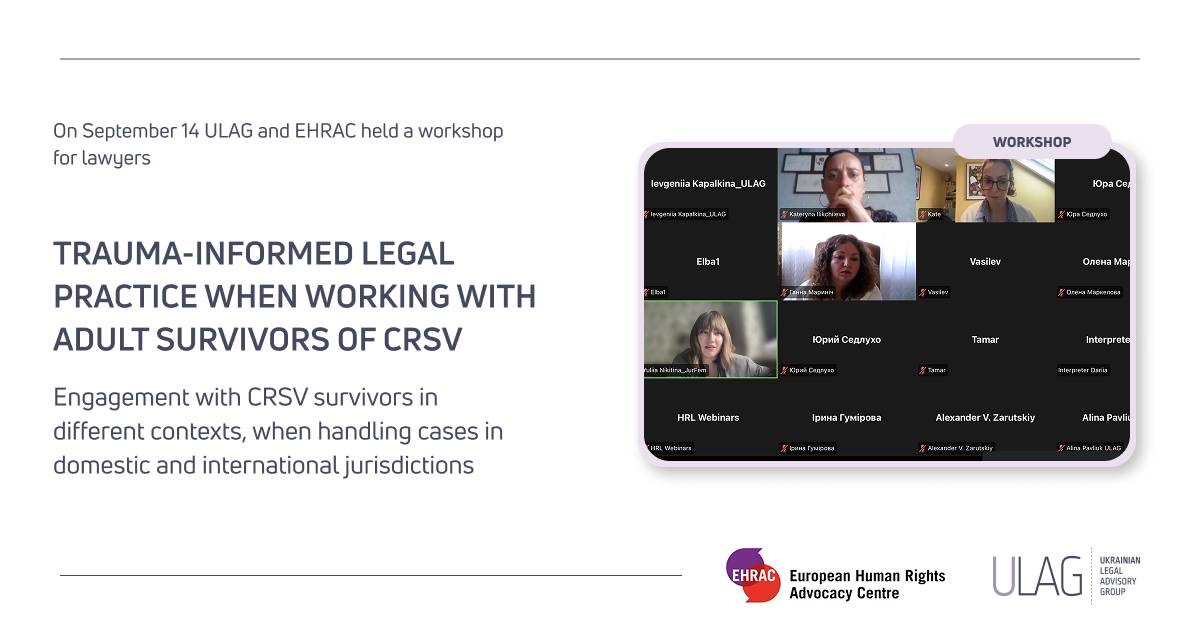
Workshop for lawyers: trauma-informed legal practice when working with adult survivors of CRSV
On September 14, the European Human Rights Advocacy Centre (EHRAC) and ULAG held a joint workshop for lawyers working with adult survivors of conflict-related sexual violence (CRSV).
Articles
The voices of Ukrainians must be heard
The letter was published in May 2026 on the website of our long-time partner ECCHR, in the Living Open Archive section. It is a collection of personal impressions and stories from ECCHR staff and partners about the projects they work on, the injustices and contexts they experience, and the world they envision. They share intimate reflections in letters to their colleagues, allies, and the world.
Articles
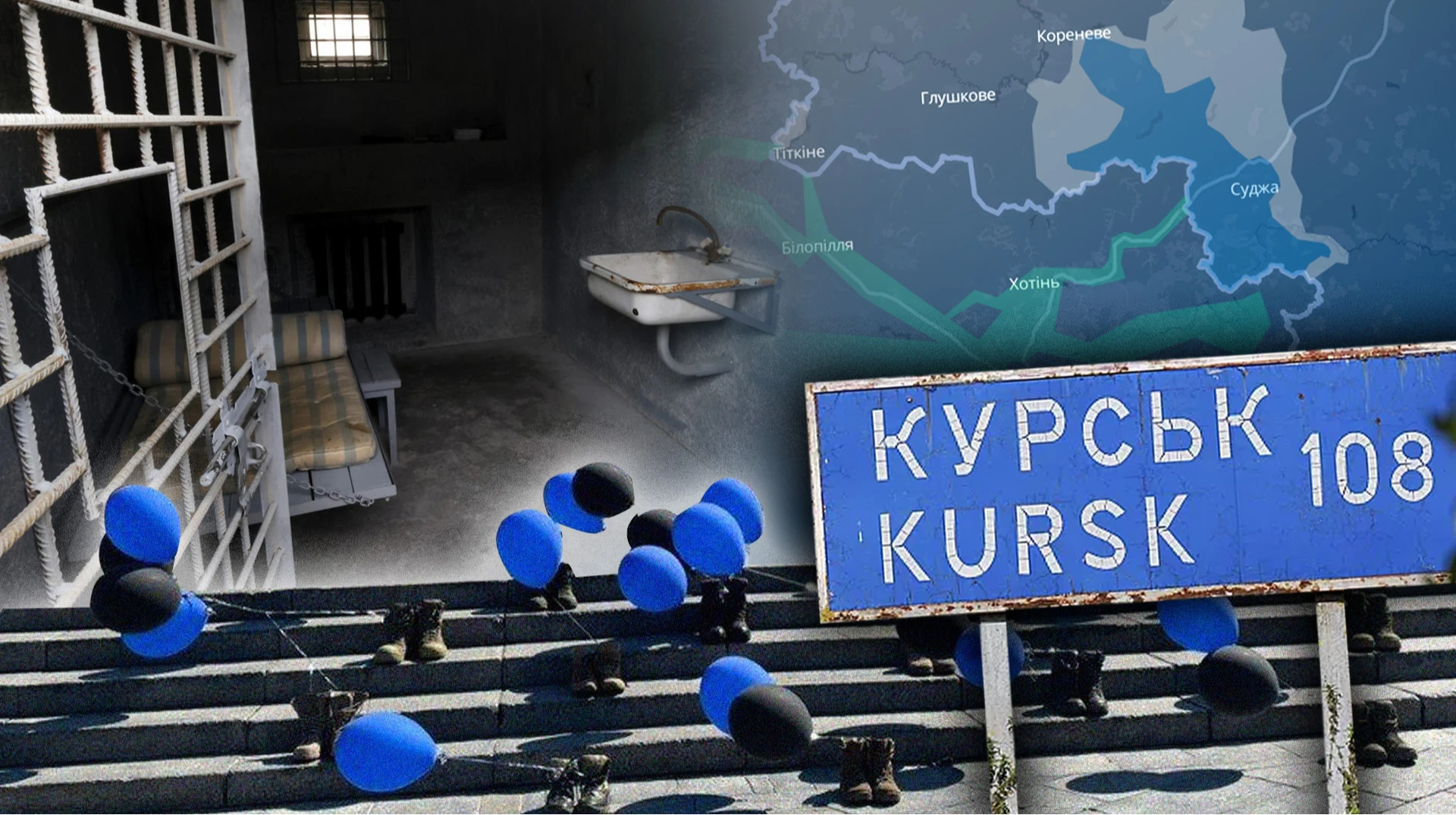
Prisoners of War Tried as Terrorists: What Is Happening to Ukrainian Soldiers Captured in Russia’s Kursk Region
The number of Ukrainians captured by Russian forces in the Kursk region remains hidden by the fog of war and defenders may be considered missing in action for months before suddenly appearing in photographs posted on Telegram channels alongside other prisoners of war. Or, conversely, families may search those same channels every day for any trace of their loved one, only to one day receive the devastating news of their death.