
Anniversary of the ECtHR Judgement in the Case of “Ukraine and the Netherlands v. Russia”: ULAG at an Expert Discussion
Anniversary of the ECtHR Judgement in the Case of “Ukraine and the Netherlands v. Russia”: ULAG at an Expert Discussion
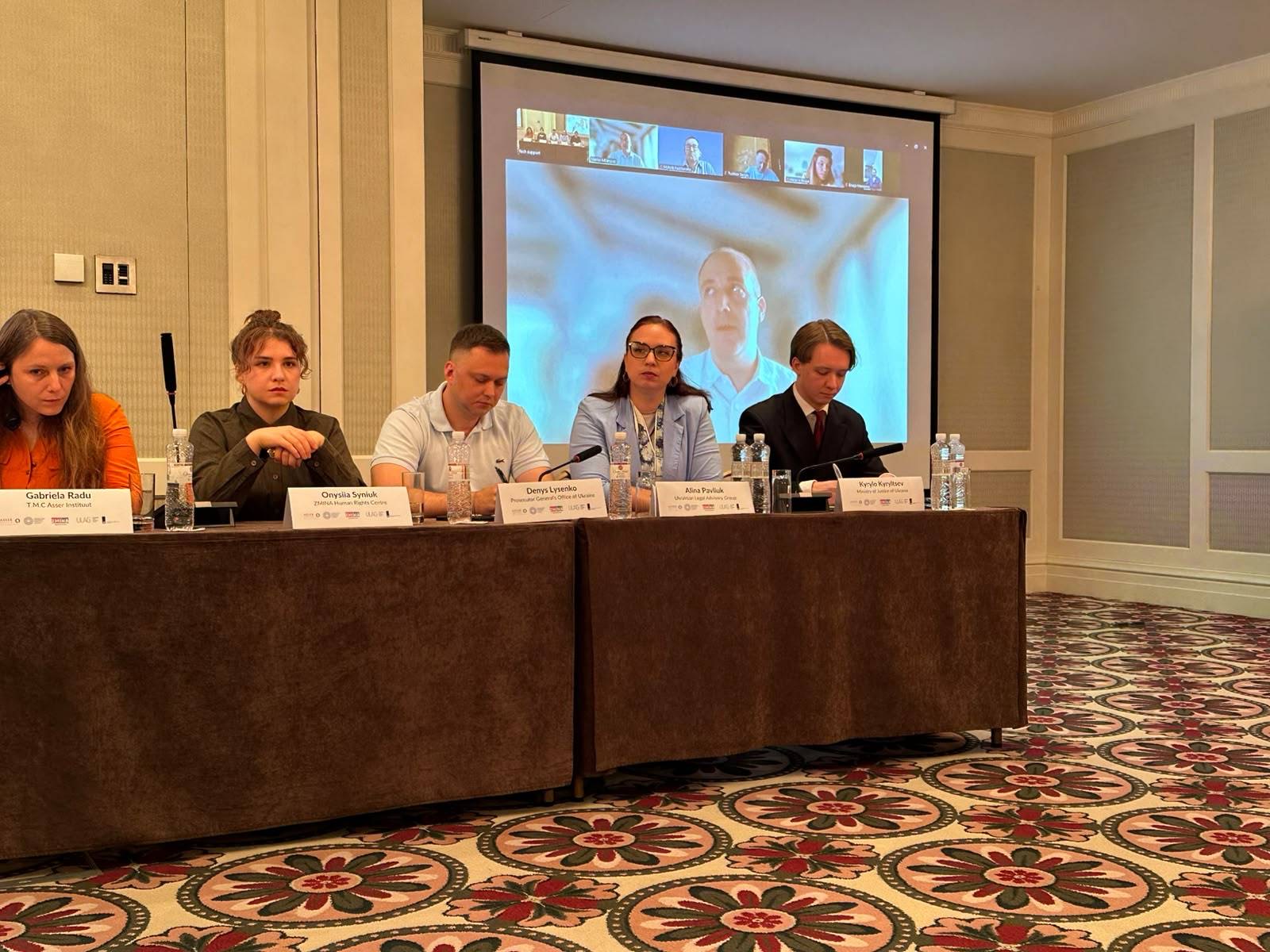
On July 11, 2026, an expert discussion was held in Kyiv focused on practical steps toward holding Russia accountable for serious and systematic human rights violations and the significance of the ECtHR ruling for ensuring justice for crimes committed during the armed conflict.
The event was organized by the T.M.C. Asser Institute, the International Nuremberg Principles Academy, the Human Rights Center ZMINA, and ULAG.
A year ago, the Grand Chamber of the European Court of Human Rights delivered its judgment in the interstate case “Ukraine and the Netherlands v. Russia.”
Alina Pavliuk, legal coordinator and analyst at ULAG, along with other Ukrainian and international experts, discussed how the findings of this judgement can be effectively applied in justice processes at both national and international levels.
For many victims of the armed conflict in Ukraine, the ECtHR remains an institution in which they place their high hopes.
“While the state itself was developing response mechanisms to violations and advancing institutional and practical approaches to the administration of criminal justice, the ECtHR came to be seen as a mechanism within which holding the Russian Federation accountable felt more achievable,” noted Alina Pavliuk.
Following the decision in the interstate case, there has been an intensification of individual applications to the ECtHR, which were previously paused awaiting the Court’s decision on the Russian Federation’s jurisdiction. Such progress demonstrates to victims that their applications are visible and the final decision has become significantly closer.
However, applicants are concerned about whether they will have a chance to receive reparations from the aggressor state.
“The greatest hope among applicants still rests on the prospect of reparations from the Russian Federation, which, although rather elusive, was opened up ECtHR. As the compensation mechanism for Ukraine continues to develop, covering the consequences of the Russia’s full scale invasion since 2022, victims affected by the conflict since 2014 are left with their own expectations regarding the ECtHR’s findings and the possibility of enforcing these decisions,” emphasized Alina Pavliuk.
For Ukraine, this decision lays the groundwork for the classification of crimes, which can also influence the approach in classifying violations at the domestic level. However, the question remains how exactly will this decision help ensure justice for the victims, and whether its findings can be integrated into the state’s general policy on overcoming the consequences of the armed conflict?