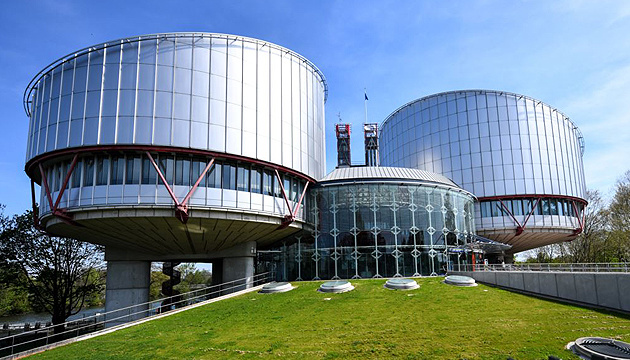
On 9 July 2025, the European Court of Human Rights (ECtHR) delivered its judgment in the case of Ukraine and the Netherlands v. Russia (applications nos. 8019/16, 43800/14, 28525/20 and 11055/22). This was a landmark moment in legal terms, not only for assessing the consequences of the armed conflict on Ukrainian territory, but also for the development of the Court’s broader jurisprudence. The entire process lasted 11 years. Over this time, additional applications by Ukraine — including those concerning the full-scale Russian invasion of 2022 — were joined to the original 2014 application about systemic violations in Donbas. The application by the Netherlands concerned the downing of flight MH17 over Donbas in July 2014.
The judgment was long awaited, not only because of the lengthy consideration of the inter-State application and the evaluation of Russia’s responsibility for the events in Donbas since 2014. The ECtHR had previously suspended all individual complaints relating to violations committed in the context of eastern Ukraine after 2014, pending this ruling. Thus, this judgment is expected to unlock progress in many pending cases and re-activate the Court’s consideration of submitted claims.
The text of the judgment addresses and analyses a wide range of violations spanning the entire period of armed conflict in Ukraine from 2014 until Russia’s exclusion from the Council of Europe and the end of the ECtHR’s jurisdiction over it on 16 September 2022.
The question of Russia’s extraterritorial jurisdiction over Ukrainian territory has long been central to assessing the events in eastern Ukraine since 2014. Given differing approaches in the ECtHR’s case law, 26 member States and two NGOs provided third-party interventions in this case to help evaluate the post-2022 situation in Ukraine.
The ECtHR assessed Russian jurisdiction in three key aspects: over the territories under the control of the self-proclaimed “L/DPR” following its jurisdiction decision; over violations committed on Russian territory itself (filtration of civilians, deportation, and adoption of children); and over military attacks. The first point was largely undisputed, as Russia had only tightened its grip over the self-proclaimed “L/DPR” during 2022 (para. 331). The second point clearly falls within Russia’s jurisdiction, as the violations were mostly committed on its own territory (para. 332). The third aspect, however, left room for debate.
In Georgia v. Russia (II), the Court had previously ruled that extraterritorial control is difficult to establish during active hostilities (para. 341). Applying this reasoning to the post-2022 Russian invasion could have undermined Russia’s responsibility for harm to civilians and civilian infrastructure resulting from systematic attacks across Ukraine. However, the ECtHR noted that Russia had, since 2014, carried out military operations to maintain and expand its control, deprive the Ukrainian government of authority, and that preparations for the full-scale invasion confirmed Russia’s intent to destroy Ukraine as an independent sovereign state through annexation and subjugation of the rest of its territory (paras. 358–360). As a result, the Court concluded that the consequences of Russia’s military operations in Ukraine after 2022 also fall under its jurisdiction de facto and de jure with respect to those affected (para. 361).
With regard to the MH17 disaster, the ruling logically followed the findings of the Joint Investigation Team and judgments of The Hague District Court. The ECtHR relied on evidence from criminal proceedings, evaluating it in terms of human rights protections—namely the right to life of the victims, the effectiveness of Russia’s investigation (Article 2), its cooperation with other proceedings (Article 13), and the suffering of the victims’ relatives (Article 3). Russia was found responsible for all alleged violations.
A key point of contention in various forums had been the legal classification of the attack on the aircraft and its relation to international humanitarian law. In assessing the right to life, the ECtHR examined the downing of MH17 within the context of an armed conflict and IHL. First, the Buk missile system was considered a weapon of “exceptionally destructive power,” leaving no chance of survival, thus indicating intent to destroy the target entirely (para. 455). Second, the obligation to identify the target and verify whether it constituted a legitimate military objective under IHL was not met (para. 459). The planning of the attack should have included steps to verify whether MH17 was a military aircraft (para. 460). Consequently, the attack on MH17 was deemed indiscriminate and intentionally aimed at taking the lives of those on board (paras. 461–462).
Several violations alleged by Ukraine were classified by the ECtHR as an administrative practice—systemic violations that occurred repeatedly from 2014 in territories under Russian jurisdiction. These included extrajudicial executions, unlawful detention, torture and ill-treatment of civilians in occupied areas, deportation and forced displacement of civilians (including children), persecution of religious groups, restrictions on free expression, widespread destruction of homes and infrastructure, bans on education in Ukrainian, and indoctrination.
Aside from a few individual episodes, the Court found evidence of systemic violations by Russia. The importance of these findings lies not only in the list of violations but in the Court’s reasoning.
The Court’s reasoning provides a basis for potentially qualifying these violations as crimes against humanity in both national and international proceedings. The ECtHR also evaluated the evidence in light of eight years of armed conflict and a vast body of documentation, not only from the Ukrainian government but also from international and national organisations, commissions, and mechanisms. The judgment stands as recognition of the years-long documentation efforts by the UN Monitoring Mission and civil society.
This long-awaited judgment is significant both for the pending cases that depended on it and for the broader legal recognition of the situation in Ukraine. It consolidates the results of various justice mechanisms and political processes and contributes new elements to the ECtHR’s precedent-setting case law.
Since the Hassan v. United Kingdom judgment, the ECtHR has been drawn into interpreting international humanitarian law in conflict contexts. Although the Court had previously incorporated elements of the law of war into Convention interpretation, it had not engaged directly with IHL provisions or practice to shape its conclusions.
In this case, the ECtHR assessed each alleged violation by explicitly applying relevant IHL rules. It not only confirmed the international nature of the conflict in Ukraine but also framed the facts as serious violations of the laws and customs of war (e.g., paras. 764, 1077). This strengthens the interaction between human rights law and IHL in armed conflict and paves the way for future developments in the Court’s jurisprudence.
High expectations surrounded the ECtHR’s judgment because the cases concerning eastern Ukraine from 2014 were joined with those concerning the 2022 full-scale invasion. Over the past three years, the Council of Europe has taken a strong stance in condemning the conflict’s consequences in Ukraine. PACE resolutions, support for a compensation mechanism for Ukraine, and backing for a special tribunal on aggression reflected the organisation’s commitment, which is echoed in the ECtHR’s reasoning.
The Court took into account Council of Europe positions and international reactions to the invasion—from the UN, ICC, OSCE, EU, and individual States. The ECtHR referenced the Reykjavik Summit, the legal groundwork for the special tribunal on aggression, and PACE resolutions on violations committed during the conflict. These processes form the context of the Court’s judgment.
Importantly, the Court emphasised that the events in Crimea and eastern Ukraine since 2014 led to the mass-scale consequences seen after 2022 (para. 168). Amid current global debates, this serves as a crucial reminder of the protracted nature of the conflict and the need to refocus on those affected since 2014.
The judgment reflects the Court’s intention to return to the core of the European Convention on Human Rights and the founding principles of the Council of Europe. The ECtHR stressed that the Council is founded on the pursuit of peace based on justice and international cooperation (para. 164), which must be upheld in its activities. Notably, the Court referred to its own case law on other armed conflicts as part of its commitment to this principle through the human rights lens.
In evaluating each alleged violation, the ECtHR noted that the Russian government had not submitted any comments or arguments to justify its actions in controlled areas or provide relevant evidence (e.g., paras. 1122, 1274). The last communication from Russia was dated 10 March 2022—after the full-scale invasion. Since then, Russia has refused to cooperate with the Court (paras. 141–142).
Russia’s expulsion from the Council of Europe and the ECtHR system directly impacted its cooperation. Referring to Article 38 of the Convention, the Court underscored Russia’s obligation to engage in the proceedings. Nevertheless, it remains unclear how the Court will proceed with other pending cases concerning the conflict. One of the key motivations for applicants since 2014 was to use the ECtHR as a platform to expose Russia’s violations, receive a response, and obtain satisfaction through a fact-finding judgment.
Beyond acknowledging the administrative practice of Convention violations by Russia, the ECtHR highlighted concrete measures for ensuring satisfaction for Ukraine.
It is expected that the Committee of Ministers of the Council of Europe will take responsibility for developing an implementation mechanism. However, practical enforcement depends entirely on Russia’s willingness to cooperate, which has shown no improvement over the past three years.
Read next
Articles
The voices of Ukrainians must be heard
The letter was published in May 2026 on the website of our long-time partner ECCHR, in the Living Open Archive section. It is a collection of personal impressions and stories from ECCHR staff and partners about the projects they work on, the injustices and contexts they experience, and the world they envision. They share intimate reflections in letters to their colleagues, allies, and the world.
Articles
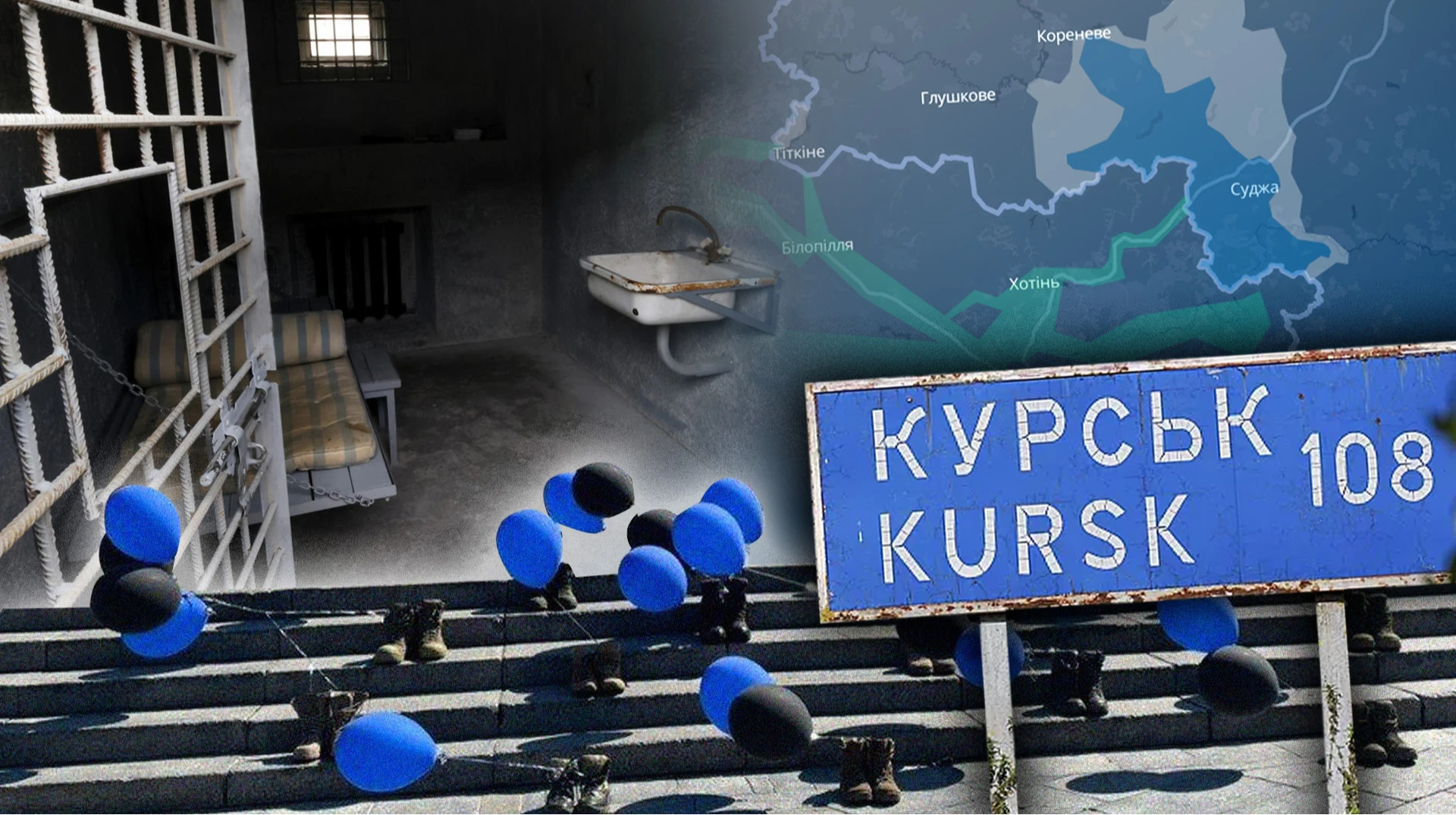
Prisoners of War Tried as Terrorists: What Is Happening to Ukrainian Soldiers Captured in Russia’s Kursk Region
The number of Ukrainians captured by Russian forces in the Kursk region remains hidden by the fog of war and defenders may be considered missing in action for months before suddenly appearing in photographs posted on Telegram channels alongside other prisoners of war. Or, conversely, families may search those same channels every day for any trace of their loved one, only to one day receive the devastating news of their death.
Articles
ECtHR Case Law on the Consequences of the Armed Conflict in Ukraine: The Detention of Ukrainian Troops at the Chornobyl Nuclear Power Plant
At the start of Russia’s full-scale invasion, one of the primary objectives of the Russian armed forces was to seize control of the Chornobyl Nuclear Power Plant (ChNPP). In February 2022, Russian troops occupied the facility and detained everyone there, including both civilian personnel responsible for maintaining the operation of the plant and members of the National Guard of Ukraine (NGU), who were responsible for the facility’s security.