On 5 December 2024, the Verkhovna Rada of Ukraine adopted the draft laws ‘On Criminal Liability for International Crimes’ (No. 11538 of 02.09.2024) and ‘On Amendments to the Criminal Code and the Criminal Procedure Code of Ukraine in connection with the adoption of the Law of Ukraine “On Criminal Liability for International Crimes” (No. 11539 of 02.09.2024) as a basis in the first reading.
We, the representatives of human rights organisations that for year have been involved in efforts to ensure accountability for international crimes committed in the context of armed aggression against Ukraine, believe that the adoption of draft laws No. 11538 and No. 11539 not only do not facilitate future investigations, but also calls into question the prospects of existing cases.
The approach proposed in the draft laws – to regulate the consideration of international crimes at the national level by a separate law – is unjustified; the drafts themselves do not take into account opinions of judges, prosecutors and investigators, as well as civil society, and in practice will nullify many effective justice-related efforts.
We urge members of the Ukrainian Parliament not to support the adoption of draft laws No. 11538 and No. 11539 for the following reasons.
1. The drafts will undermine the investigation of the most serious crimes in Ukraine. Proceedings will be slowed down, with more errors and procedural violations occurring. This means that the already overwhelmed justice system will become even more so, especially given the vast caseload, which keeps on growing.
If Draft Laws No. 11538 and No. 11539 are adopted, investigators, prosecutors and judges will need to apply the new separate law to facts that occurred after the adoption of Draft Laws No. 11538 and No. 11539, and the Criminal Code and the Criminal Procedure Code (CC/CP) to those that occurred before. These are two mutually exclusive approaches that one needs to learn how to apply simultaneously in the absence of practice in applying such decisions. Another challenge would be with investigating continuous crimes, which is to determine the point until which the investigation should be conducted under the CC/CCP and after which the new law starts to apply.
The draft laws contain confusing terminology that is sometimes inconsistent with international law, in particular the Rome Statute.
More detailed definitions of international crimes without a thorough analysis of their elements does not help to better understand the essence of the violation, but rather creates more room for interpretation in the process of application.
Procedural inconsistencies will arise, which will require addressing and will worsen the quality of justice, create new risks in practice and increase the likelihood of procedural violations, which can then be used by the defence to challenge decisions and bury cases.
Detailed analysis of the draft laws:
https://ccl.org.ua/wp-content/uploads/2024/12/hroniky-narodzhennya-odnogo-kargo-kultu.pdf
2. Draft laws No. 11538 and No. 11539, if adopted, may be declared unconstitutional. This means that the enactment of the laws will not guarantee that they will be sustainably implemented in the justice administration process.
The Constitution of Ukraine enshrines the principle of the rule of law and stipulates that laws are adopted on the basis of the Constitution of Ukraine and must comply with it. Its implementation in practice also requires legal certainty, which obliges the application of legal norms to be predictable and not subject to arbitrary interpretation.
In accordance with the general principles of the Criminal Code of Ukraine, the latter acts as the only legislation on criminal liability, and any amendments to it should be incorporated into the Criminal Code of Ukraine after they enter into force.
Thus, Ukrainian law does not provide for the possibility of establishing criminal liability or its specification other than through amendments to the current Criminal Code of Ukraine. The adoption of a separate law that, in parallel with the Criminal Code of Ukraine, will determine the principles of administration of justice in respect of a particular category of crimes, may lead to a violation of legal certainty in practice, and create a challenge for investigators, prosecutors and judges in terms of applying the law.
This is also stated in the scientific-expert opinion of the Verkhovna Rada of Ukraine Secretariat, which was apparently overlooked when the draft law was considered.
Doubts about the constitutionality of the draft laws and its compliance with Ukrainian law will further slow down the process of improving Ukrainian legislation on the prosecution of international crimes committed in context of the war and shift the focus from improving legislation to the fight for the survival of the law itself.
The existing problems with the draft laws cannot be resolved by amendments between the first and second readings, as they relate to their very essence. Parliamentary rules of procedure do not allow for such a fundamental reworking of draft laws between the first and second readings. In addition, the authors of draft laws No. 11538 and No. 11539 did not seem to be open to discussion before, so it is unlikely that radical changes will be agreed upon, especially in such a short period left for amendments before the second reading.
All of this contradicts the goals set by the state and the high expectations of Ukrainian society, the majority of which believes that just punishment of perpetrators should be a priority and demands that trials be initiated and conducted as soon as possible. Weakening the national system with these draft laws will increase doubts about its capacity and discourage victims from seeking help from law enforcement agencies.
We call on the members of the Ukrainian Parliament not to adopt draft law No. 11538 and related draft law No. 11539 of 02.09.2024 and to resume in-depth discussions to find the best way to implement the provisions of the Rome Statute into Ukrainian legislation.
Read next
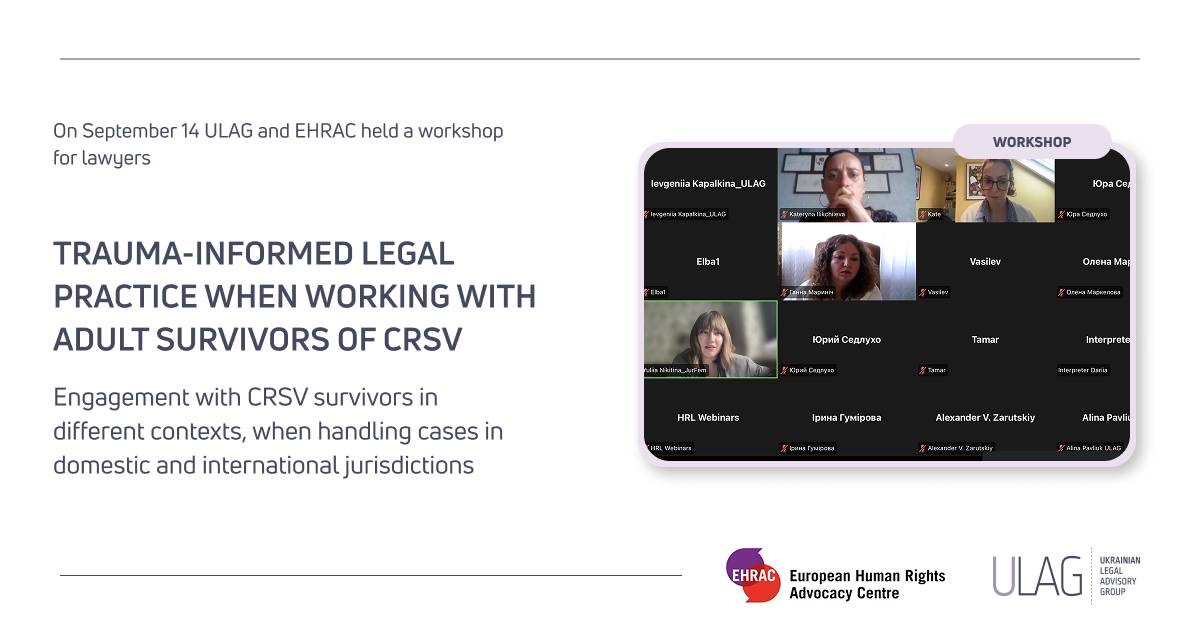
Workshop for lawyers: trauma-informed legal practice when working with adult survivors of CRSV
On September 14, the European Human Rights Advocacy Centre (EHRAC) and ULAG held a joint workshop for lawyers working with adult survivors of conflict-related sexual violence (CRSV).
Articles
The voices of Ukrainians must be heard
The letter was published in May 2026 on the website of our long-time partner ECCHR, in the Living Open Archive section. It is a collection of personal impressions and stories from ECCHR staff and partners about the projects they work on, the injustices and contexts they experience, and the world they envision. They share intimate reflections in letters to their colleagues, allies, and the world.
Articles
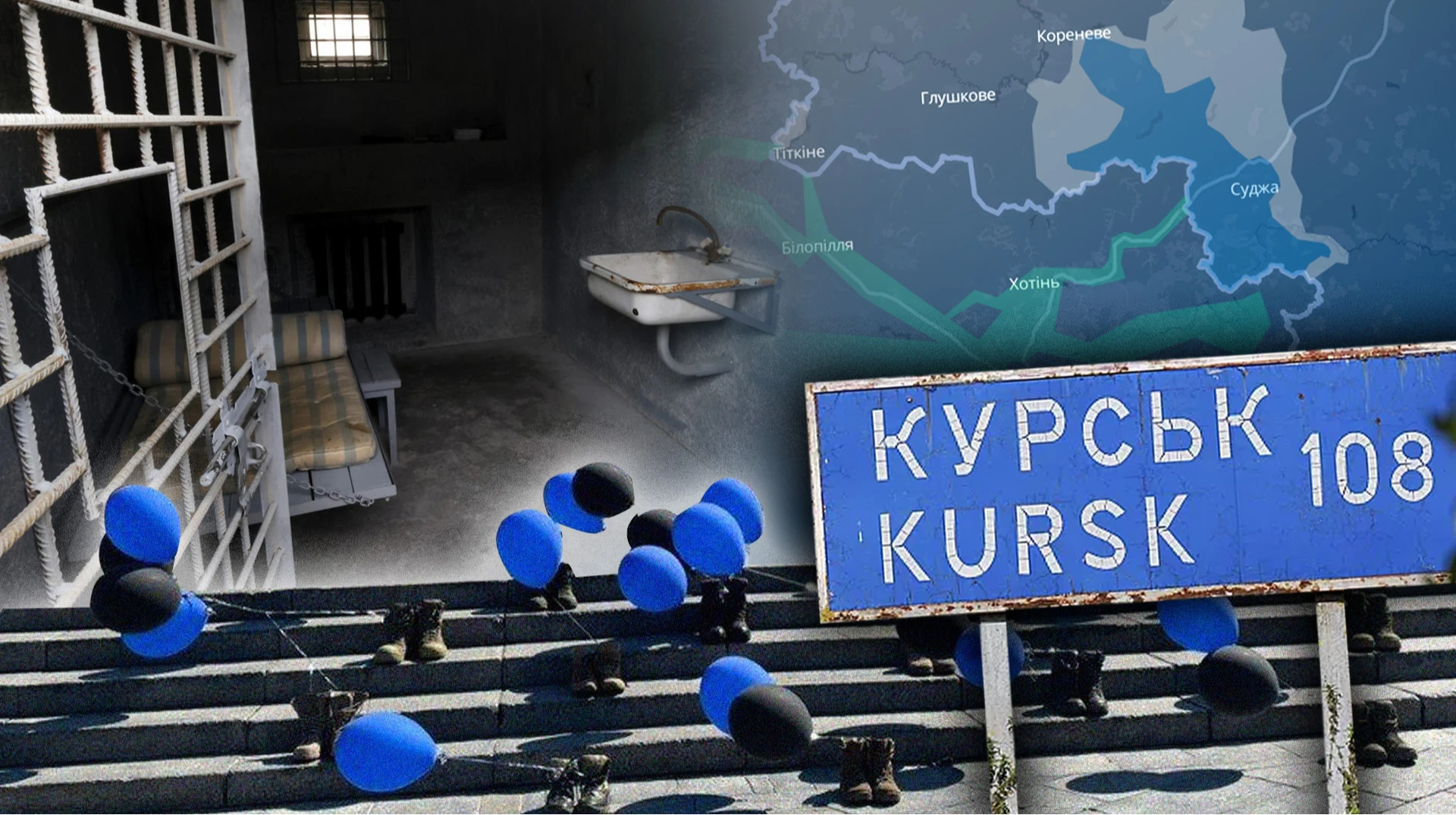
Prisoners of War Tried as Terrorists: What Is Happening to Ukrainian Soldiers Captured in Russia’s Kursk Region
The number of Ukrainians captured by Russian forces in the Kursk region remains hidden by the fog of war and defenders may be considered missing in action for months before suddenly appearing in photographs posted on Telegram channels alongside other prisoners of war. Or, conversely, families may search those same channels every day for any trace of their loved one, only to one day receive the devastating news of their death.