By Kateryna Ilikchiieva and Kate Levine
The existing mechanisms for restoring the rights of CRSV survivors are imperfect. They require significant changes at both the national and international levels. Changes are required in policy, legislation, and practice.
At the policy level, it is necessary to recognise CRSV as a social phenomenon that frequently arises during conflicts, particularly when it is sanctioned or provoked by military-political leadership or commanders. However, its prevalence does not mean it is inevitable—CRSV is preventable through effective leadership, clear norms, accountability mechanisms, and survivor-centred approaches. Preventing such violence requires acknowledging its systemic nature and actively addressing the conditions that enable it. It is also important to provide a precise and comprehensive definition of CRSV by consolidating the jurisprudence of international tribunals, national jurisdictions, and the work of human rights organisations, and to establish this concept within an international legal framework.
For Ukraine today, it is essential to amend the Criminal Code of Ukraine and specify the objective elements of Article 438 to explicitly include CRSV as a distinct form or by introducing a separate new provision establishing liability for this war crime. The investigative practice for CRSV also requires changes. In particular, the Criminal Procedure Code should determine the jurisdiction for investigating this category of cases: whether it falls under the National Police of Ukraine or the Security Service of Ukraine; additionally, psychological assessment of survivors should be included in the list of mandatory expert examinations to determine the degree of trauma and moral damage; am effective reparations mechanism for CRSV survivors should be developed, drawing on the experiences of other countries, particularly Kosovo and Bosnia and Herzegovina.
Overall, each of the mechanisms considered has its advantages and disadvantages in terms of restoring the rights and protecting the interests of CRSV survivors. In particular:
One of the key challenges regarding CRSV today is the issue of reparations. As of late 2024 – early 2025, the question of reparations is still not resolved completely, except for urgent interim reparations for CRSV survivors, the procedure for which has been partially regulated by the recently adopted law “On the Legal and Social Protection of Persons Affected by Sexual Violence Related to the Armed Aggression of the Russian Federation Against Ukraine and the Provision of Urgent Interim Reparations to Them.” However, it is worth noting that the text of the law is rather general and only regulates basic provisions. Effective implementation of this law will require the development of a series of subordinate regulatory acts to ensure the regulation of various issues and new measures introduced by the law. These include Regulations on the Commission for Examining Issues Related to the Recognition of Persons as Survivors, the Procedure for Making a Decision on Recognising a Person as a Survivor, the Procedure for Assigning and Paying Urgent Compensation to Survivors, sources for funding interim reparations, and so on.
On 16–17 May 2023, the Council of Europe established the Register of Damage Caused by the Aggression of the Russian Federation Against Ukraine. On 17 July 2023, the Secretary General of the Council of Europe signed an Agreement with the Kingdom of the Netherlands, as the host country, on the location of the Register of Damage Caused by the Aggression of the Russian Federation Against Ukraine. On 22 March 2024, the Register opened an office in Kyiv, and on 2 April 2024, the Register of Damage began accepting claims in one category: damage to or destruction of residential property. On 13 December 2024, the Register adopted its first decisions involving 800 claims concerning destruction of property. On 10–14 June 2024 and 16 July 2024, the Register of Damage in Ukraine published claim forms and rules for twelve new categories of damage, officially approved by the Conference of Participants. These claim categories concern the death and disappearance of close family members, serious personal injury, forced internal displacement, and, in particular, the category of sexual violence was approved. This latter category also includes serious personal injury as a result of sexual violence (however, this injury can also be submitted under a separate category of serious personal injury). The claim covers acts of sexual violence (defined broadly), and includes expenses directly related to the serious personal injury as a consequence of sexual violence, including the costs of medical treatment and rehabilitation. On 16 January 2025, the Register began accepting claims concerning deaths of family members, on 12 March 2025 began accepting claims for missing family members, and on 19 March began accepting claims for sexual violence, serious personal injury, forced internal displacement, and torture or inhuman or degrading treatment or punishment, amongst others. The Register is explicitly implementing a gender perspective and “is committed to addressing gendered barriers to bringing forward evidence of sexual violence and accurately reflecting the gendered differences in the types of harm inflicted on sexual violence victims/survivors”
The Register will only provide an official record of the claim against eligibility criteria and will not evaluate the merits of the claims or award compensation . These latter functions will be the responsibility of a separate claims commision which is yet to be establishedThe international community is still debating the exact mechanism for compensating the damages caused by Russia during the war, and how this will be funded (including whether frozen Russian assets can be used). In March 2025, there will begin formal treaty negotiations for this claims commission. In our view, when developing such a mechanism, it is strategically important to establish a compensation procedure for CRSV survivors at both the international and national levels.
2. Ensure Survivor-Centred Support and Protection
3. Establish and Implement Effective Reparations
4. Advance International Justice and Accountability
5. Promote International Legal and Policy Reform
Read next
News
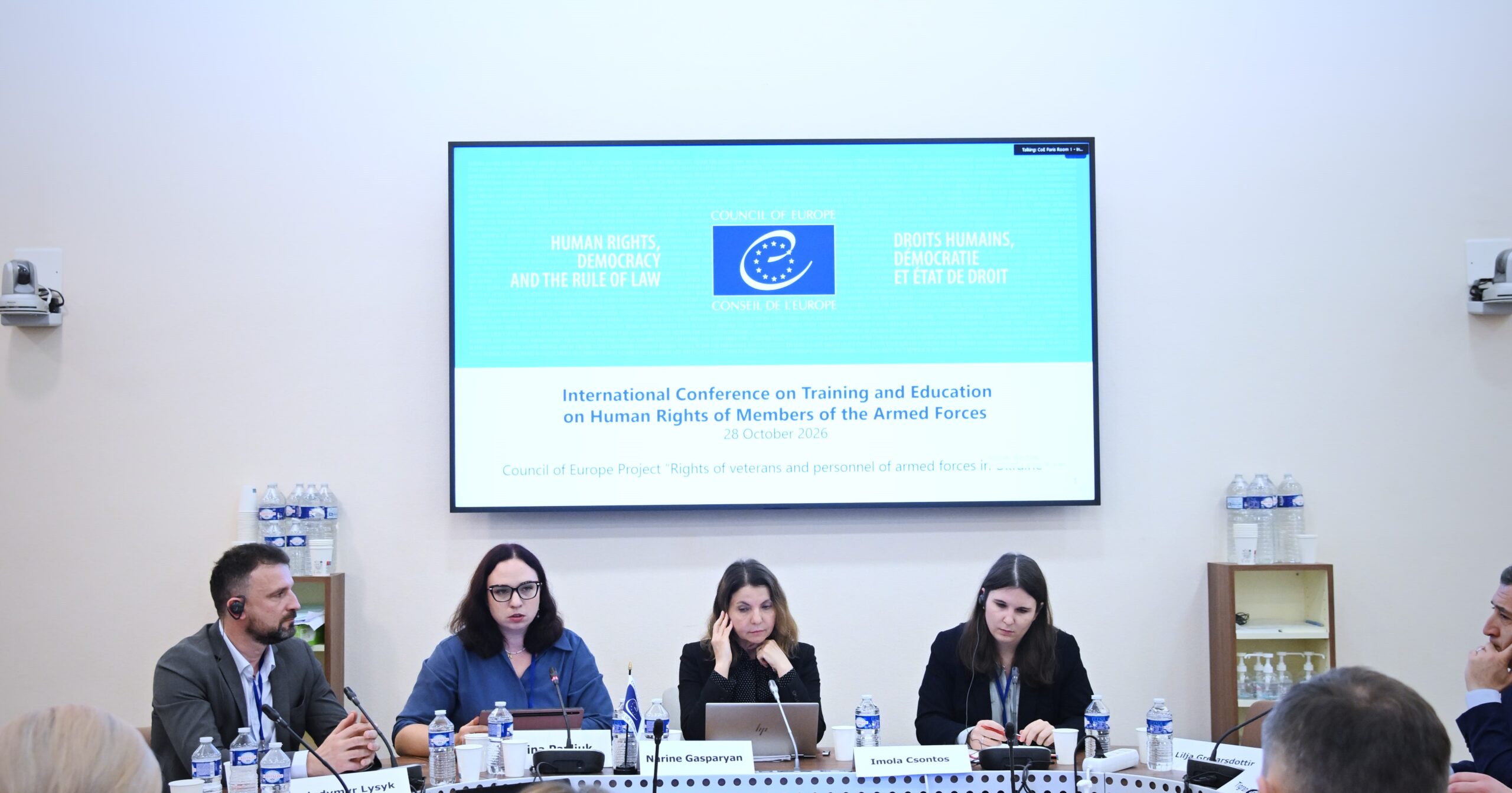
Protecting the Rights of Prisoners of War and Monitoring Human Rights in the Armed Forces: ULAG at a Council of Europe Conference
Alina Pavliuk, ULAG Analyst and Legal Coordinator, spoke at the International Conference on Training and Education on Human Rights of Members of the Armed Conflict. The event was organised by the Council of Europe in Paris on 28 of October.
News
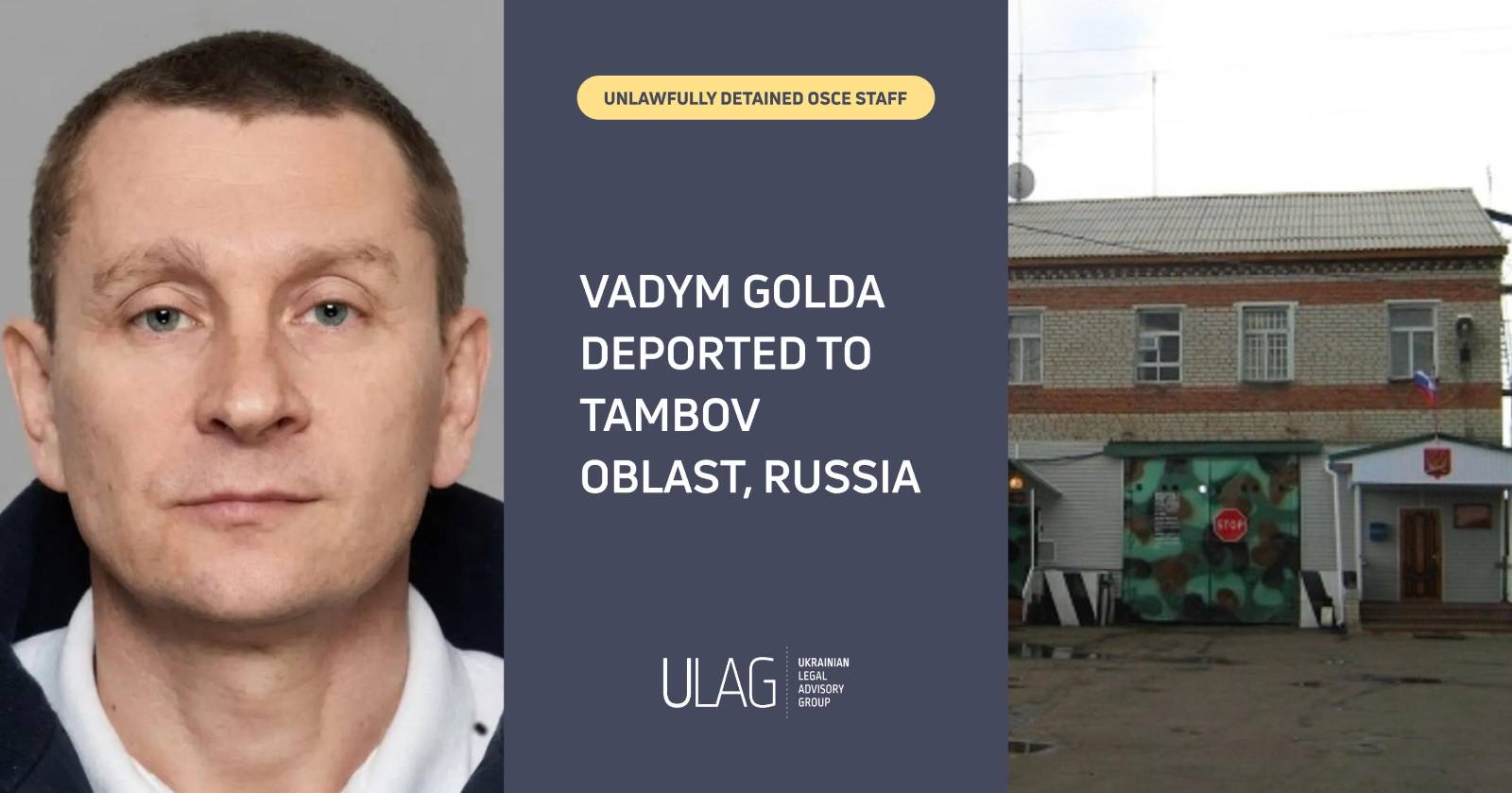
OSCE SMM staff member Vadym Golda deported to Russia
Vadym Golda’s family has reported that he was transferred from temporarily occupied Donetsk region to Medical Correctional Institution No. 7 of the Russian Federal Penitentiary Service in Tambov Oblast. Reports of his likely transfer had emerged earlier: before the transfer, Vadym was last in contact on 15 October 2026 and expected to be moved on […]
News
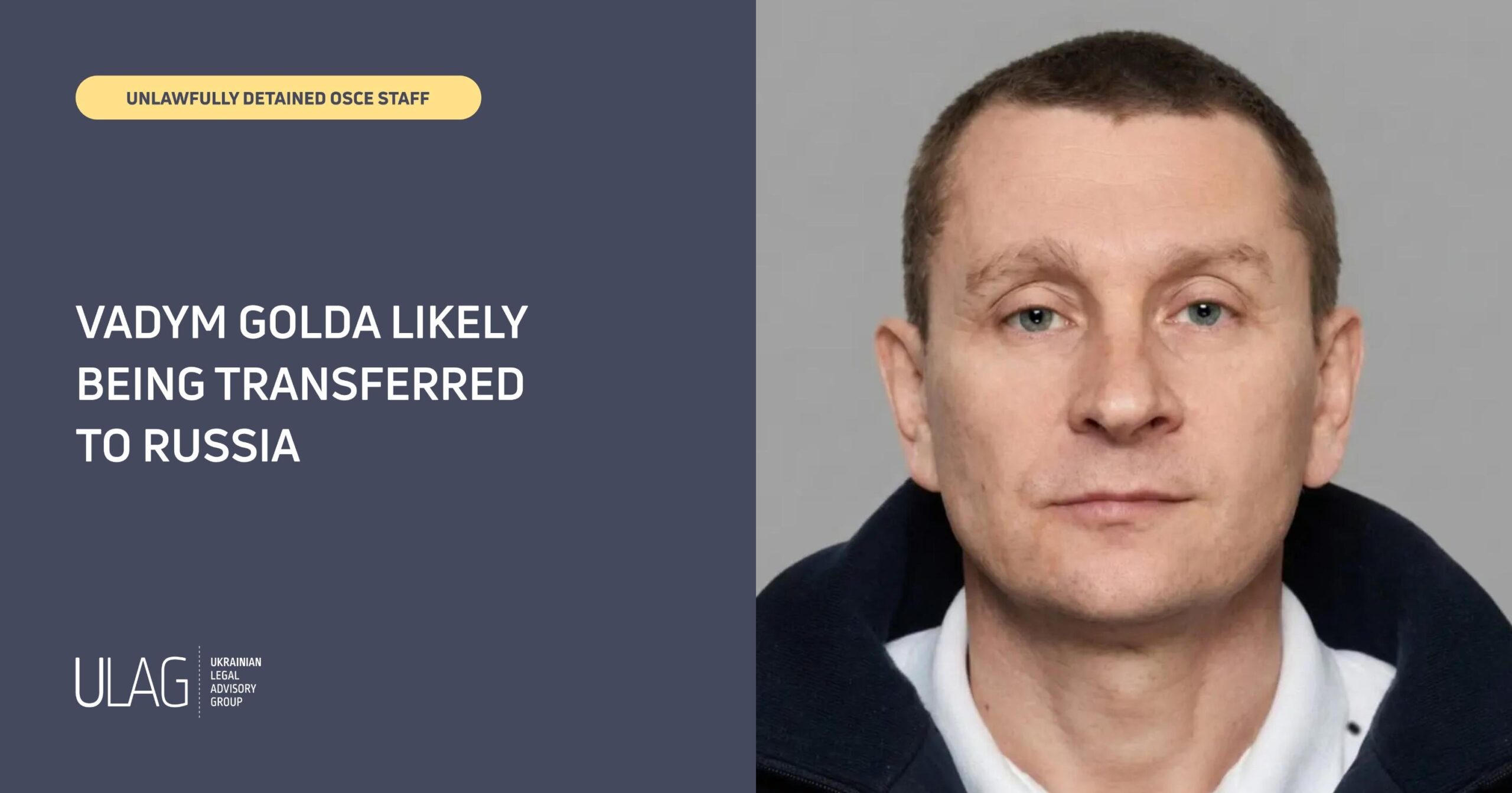
Vadym Golda, OSCE SMM staff member, likely being transferred from temporarily occupied Donetsk Oblast to Russia
According to his family, Vadym, who had been held in temporarily occupied Donetsk region, was last in touch with them on 15 October 2026. He had previously told them that for several months there had been rumours of an “evacuation” of convicted prisoners to Siberia, and that since August 2026 people had been regularly taken […]