To H.E. Kaja Kallas, the High Representative for Foreign Affairs and Security Policy and Vice-President of the European Commission
We are the Ukrainian civil society organisations working on justice and accountability in the context of Russia’s war against Ukraine, representing victims of grave crimes, documenting human rights violations and supporting efforts to strengthen international justice efforts in Ukraine and globally.
We genuinely commend the long-standing and systemic commitment to justice for victims of the war Russia is waging against Ukraine that you and the European Union have been showing systemically.
The ICC is a legitimate independent judicial institution mandated to investigate international crimes around the world, and entrusted with this task by 125 countries, including all 27 members of the EU. Imposing sanctions (through the Illegitimate Court Counteraction Act, potential US President executive order or in any other way) would be a devastating and unacceptable act of a political attack against the system of international justice.
Such a decision would jeopardise efforts to protect victims around the globe, including Ukraine. Given the United States (US)’s sanctioning power It could paralyse the work of the ICC across all situations, including in Ukraine. The Court not only directly administers justice, but also acts as an important stakeholder in promoting international justice standards through its engagement with states under the complementarity principle. Sanctions against the court and its officials could chill cooperation, undermining justice efforts before national courts, as in Ukraine, and weakening the possibility of effective execution of arrest warrants, including ones issued against Vladimir Putin and other Russian officials.
The majority of Ukrainian CSOs involved in justice and accountability efforts engage with the Court in one way or another. Depending on how sanctions are used by the US, it could put them at risk not just in context of the ICC-related work, but will also risk stripping them of financial support and operational capacity more broadly.
All of this undermines the hope for meaningful justice for victims of crimes committed in the course of the Russia-Ukraine war. Potential peace negotiations are already causing concerns for a possibility of justice becoming a bargaining chip. Weakening the ICC only increases the likelihood of such a scenario.
To this end, we support the recommendations mentioned in the statement of the Coalition for the ICC and call on the EU Member States:
Your Excellency, the EU should be among the strongest advocates for victims of grave crimes, and consequently – the ICC, especially in times of existential threats it faces. We urge you to support the Court, and ensure the EU acts accordingly.
Signatory Organisations:
Association of relatives of political prisoners of the Kremlin
Blue Bird
Center for Civil Liberties
Clear: Center of Law Enforcement Activities Research
CrimeaSOS
Crimean Process NGO
Human Rights Centre ZMINA
Human Rights Platform
International Partnership for Human Rights
Kharkiv Anticorruption Center
Kharkiv Human Rights Protection Group
The Media Initiative for Human Rights
The Reckoning Project
Truth Hounds
Ukrainian Legal Advisory Group
Read next
Articles
The voices of Ukrainians must be heard
The letter was published in May 2026 on the website of our long-time partner ECCHR, in the Living Open Archive section. It is a collection of personal impressions and stories from ECCHR staff and partners about the projects they work on, the injustices and contexts they experience, and the world they envision. They share intimate reflections in letters to their colleagues, allies, and the world.
Articles
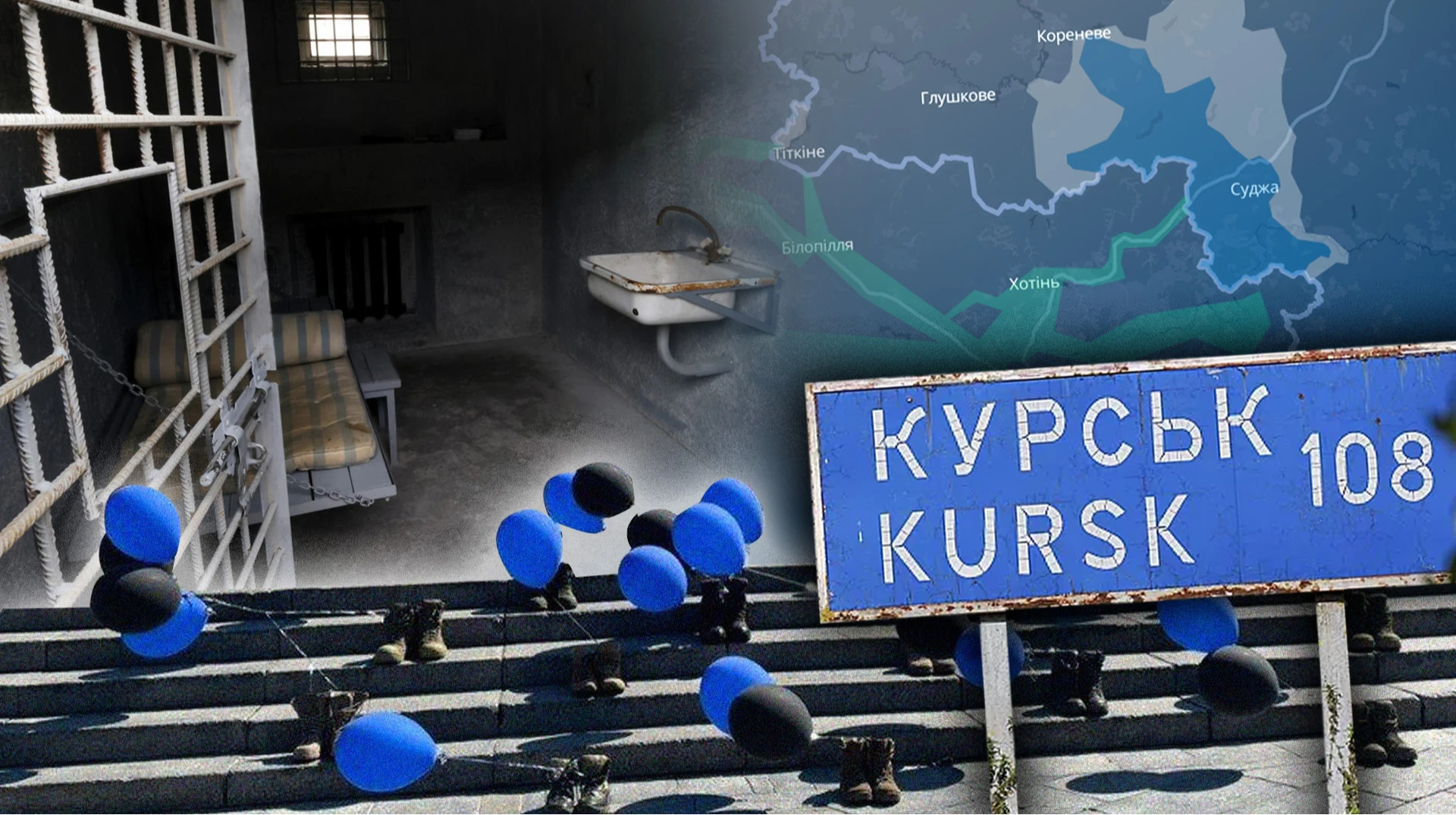
Prisoners of War Tried as Terrorists: What Is Happening to Ukrainian Soldiers Captured in Russia’s Kursk Region
The number of Ukrainians captured by Russian forces in the Kursk region remains hidden by the fog of war and defenders may be considered missing in action for months before suddenly appearing in photographs posted on Telegram channels alongside other prisoners of war. Or, conversely, families may search those same channels every day for any trace of their loved one, only to one day receive the devastating news of their death.
Articles
ECtHR Case Law on the Consequences of the Armed Conflict in Ukraine: The Detention of Ukrainian Troops at the Chornobyl Nuclear Power Plant
At the start of Russia’s full-scale invasion, one of the primary objectives of the Russian armed forces was to seize control of the Chornobyl Nuclear Power Plant (ChNPP). In February 2022, Russian troops occupied the facility and detained everyone there, including both civilian personnel responsible for maintaining the operation of the plant and members of the National Guard of Ukraine (NGU), who were responsible for the facility’s security.